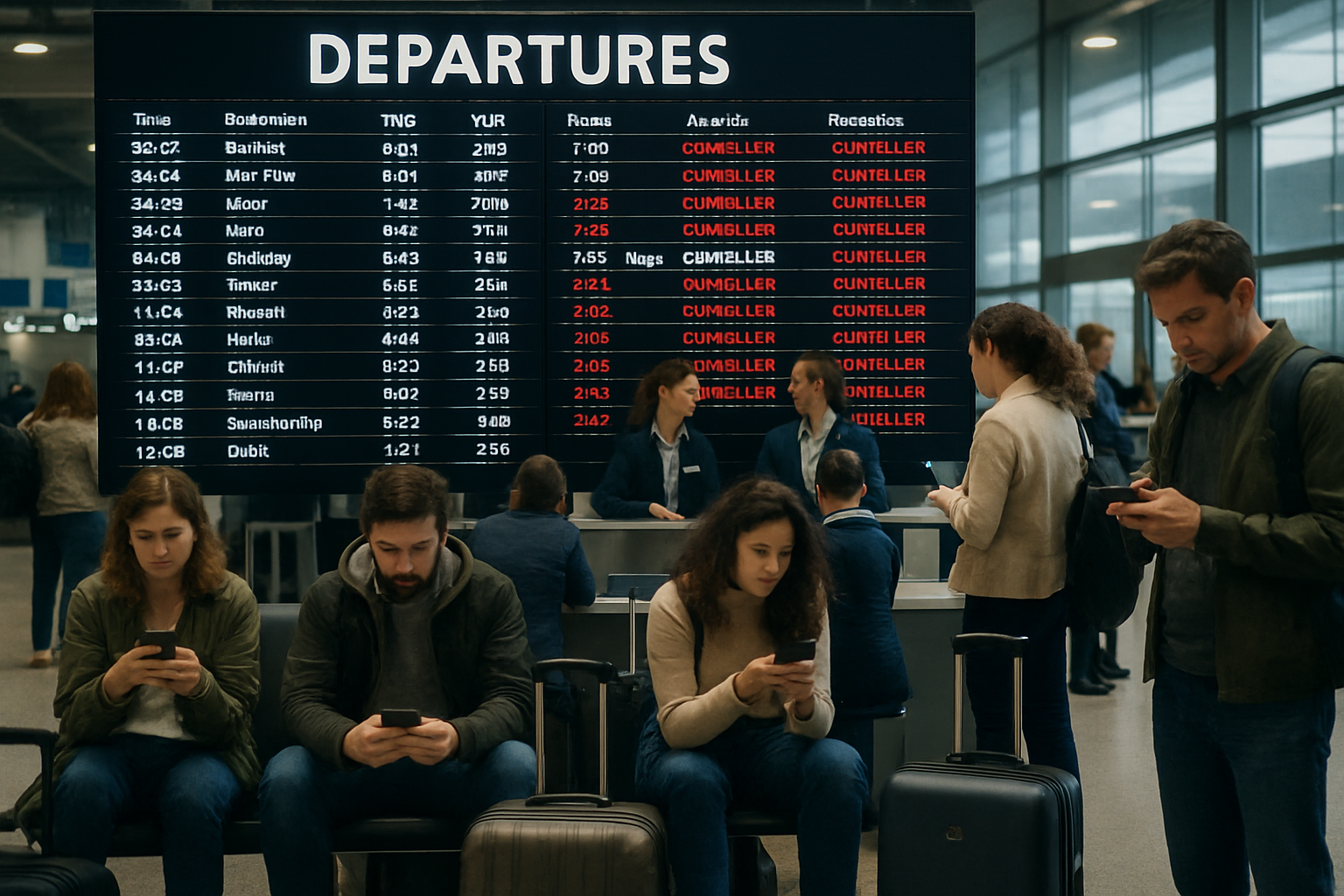
The largest coordinated international evacuation operation since the Arab Spring of 2011 is underway as nations worldwide race to extract over 500,000 citizens from Middle East conflict zones, following the escalation of the Iran crisis and subsequent regional warfare that has created the most dangerous international situation since the end of the Cold War.
As of March 6, 2026, the evacuation operations have reached historic proportions, with Romania confirming over 1,000 citizens have been successfully repatriated from the Middle East, while Canadian officials report 3,500 nationals have requested assistance to leave the region.
Unprecedented Scale of Evacuation Operations
The current crisis began on March 1, 2026, following the confirmed death of Iran's Supreme Leader Ali Khamenei in a coordinated US-Israeli military operation dubbed "Operation Epic Fury" - the largest Middle East military action since the 2003 Iraq invasion. This triggered massive Iranian retaliation through "Operation True Promise 4," with the Islamic Revolutionary Guard Corps declaring "no red lines remain."
The evacuation numbers are staggering across the globe:
- Australia: 115,000 nationals trapped in the region
- Germany: 30,000 tourists stranded
- Canada: 3,500 citizens requesting evacuation assistance
- Cyprus: First-ever activation of the ESTIA national evacuation plan for 2,000+ nationals
- Romania: Over 1,000 citizens successfully evacuated, including 95 children in a single flight
- New Zealand: Defense Force plane dispatched to assist stranded citizens
- Lithuania: Multiple evacuation flights from Dubai to Vilnius
"The number of citizens who have returned to Romania from the Middle East has exceeded the threshold of 1,000 people," announced Romanian Foreign Minister Oana Țoiu. "We are preparing the next evacuation flight for vulnerable cases in risky situations."
Aviation Crisis Compounds Evacuation Challenges
The evacuation efforts are taking place against the backdrop of an unprecedented global aviation crisis. Over 18,000 flights have been cancelled worldwide - the most extensive aviation disruption since the COVID-19 pandemic. Eight Middle Eastern countries simultaneously closed their airspace: Iran, Iraq, Israel, UAE, Qatar, Syria, Kuwait, and Bahrain.
Dubai International Airport, the world's busiest with over 86 million passengers annually, remains completely shut down after sustaining missile damage during Iranian strikes. This has eliminated a critical Europe-Asia hub, creating cascading effects throughout the global aviation network.
Major carriers including Emirates, Air France-KLM, Wizz Air, and Bulgaria Air have suspended Middle East operations indefinitely, affecting hundreds of thousands of passengers globally.
Romanian Success Story
Romania has emerged as one of the most successful evacuation operations, with two aircraft arriving in Bucharest on Friday afternoon. One evacuation flight from Oman carried 127 Romanian citizens, including 95 children, in a repatriation organized by the Ministry of Foreign Affairs with costs largely supported by the European Union.
The successful return of Romanian families, particularly the 95 children, has been described as ending a "nightmare" for dozens of families who had been separated during the crisis.
Canadian Response and International Coordination
Canadian Foreign Affairs Minister Anita Anand announced that 3,500 Canadians have requested help to leave the Middle East. The government is providing multiple options, including charter flights from Dubai and commercial airline seats from Dubai and Beirut.
Canadians arriving on flights from Dubai to Toronto have expressed relief at making it back amid the travel uncertainty. The Canadian response reflects the broader international coordination effort, with nations sharing resources and evacuation routes.
Energy Crisis Compounds Global Impact
The evacuation crisis is unfolding alongside a severe global energy security crisis. Iran has declared the Strait of Hormuz "unsafe," affecting 40% of global oil transit. Oil prices have surged 10% past $80 per barrel, while natural gas prices have increased 24% in Europe and 78% in the United States.
Major shipping companies including Maersk and MSC have suspended operations in the Persian Gulf, leaving over 150 tankers stranded with billions of dollars worth of cargo.
European Union Leadership
The European Union has demonstrated unprecedented coordination in the crisis response. Cyprus activated its ESTIA evacuation plan for the first time in history, coordinating evacuations for both European and third-country nationals. This marks a watershed moment in EU crisis management capabilities.
Multiple European nations have implemented coordinated evacuation schedules, sharing resources and flight arrangements in what officials describe as the most significant test of European crisis response mechanisms in the modern era.
Individual Stories of Resilience
Behind the statistics are countless individual stories of families caught in the crisis. Swedish traveler Emily Grosser paid $560 for alternative routing from Paris to Australia, while Norwegian families have described living under constant threat of missile alerts and explosions.
The human cost extends beyond inconvenience - Iranian Red Crescent reports indicate over 787 civilians have been killed in the conflict, adding urgency to evacuation operations for remaining foreign nationals.
Template-Setting Crisis Management
The current evacuations represent a template-setting moment for 21st-century crisis management. Unlike weather-related disruptions with predictable timelines, the recovery depends entirely on military operations resolution and diplomatic normalization.
Aviation industry experts note this crisis exposes the vulnerability of modern transportation networks to geopolitical instability, forcing fundamental reconsideration of route planning, risk assessment, and international cooperation frameworks.
Nuclear Diplomacy Collapse Context
The evacuation crisis stems from the complete collapse of US-Iran nuclear negotiations despite achieving "broad agreement on guiding principles" - the most progress since the JCPOA collapse in 2018. Fundamental disagreements over Iran's ballistic missiles and regional proxies versus US demands for comprehensive agreements including human rights proved insurmountable.
This diplomatic breakdown occurred amid broader nuclear governance challenges, including the expiration of the New START treaty on February 5, 2026 - the first time in over 50 years without US-Russia nuclear constraints.
Looking Ahead
As evacuation operations continue, the international community faces critical decisions about containing what UN Secretary-General António Guterres has called a "serious threat to international peace and security." The success or failure of these massive evacuation efforts will provide a template for future international crisis management in an increasingly volatile multipolar world.
The operations demonstrate both the strengths of international cooperation and the limitations of existing frameworks for protecting civilians during regional conflicts. Recovery timelines remain uncertain, dependent on political and military developments rather than the predictable patterns of natural disasters.
With over 500,000 citizens affected across dozens of countries, the Middle East evacuation crisis of March 2026 represents the most significant test of international crisis management capabilities in the modern era, with implications extending far beyond the current emergency to reshape approaches to conflict resolution and civilian protection for decades to come.