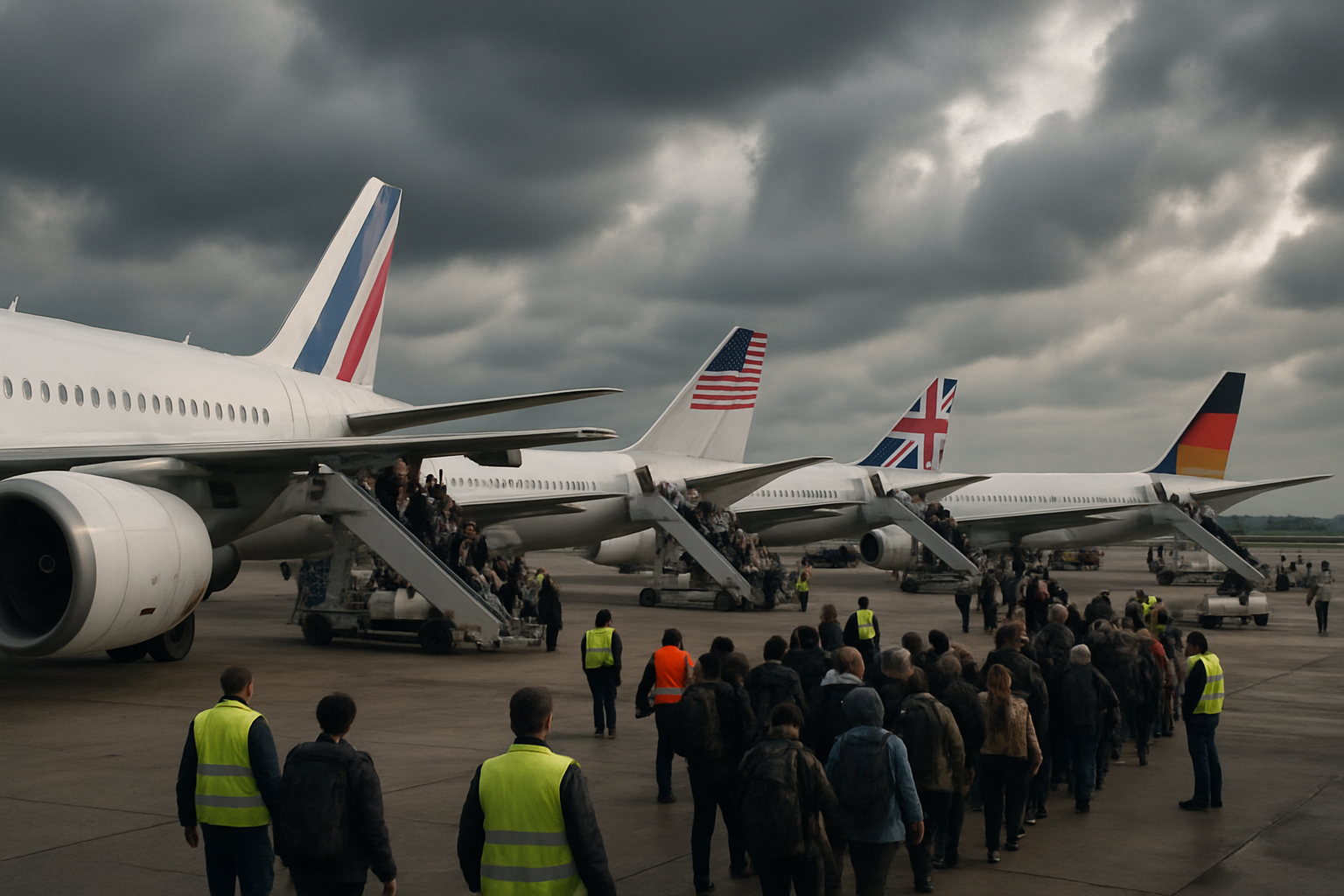
An unprecedented international evacuation crisis is unfolding across the Middle East, with multiple countries scrambling to extract their citizens from conflict zones as airlines cancel thousands of flights and diplomatic missions issue urgent travel warnings. The scale and coordination of this response marks the largest civilian protection operation since the Arab Spring of 2011.
Over the past week, a cascade of evacuations has begun across the region, with nations from Australia to Kazakhstan implementing emergency repatriation protocols. The crisis has been compounded by simultaneous airspace closures affecting critical aviation hubs, creating the most comprehensive travel disruption since the COVID-19 pandemic.
Scale of Evacuations Reaches Historic Proportions
Kazakhstan has emerged as one of the most active nations in evacuation efforts, with the Foreign Ministry reporting that over 7,300 Kazakh citizens have been successfully evacuated from Middle East countries since the start of the regional escalation. The operation represents one of the largest single-country evacuations in the nation's recent history.
Australia has faced an even more challenging situation, with an estimated 115,000 nationals trapped in various Middle East locations, requiring innovative solutions including overland routes through Qatar and Saudi Arabia when traditional flight paths became unavailable.
"The security situation in the Middle East has deteriorated significantly, prompting us to update our travel warnings and urge all our citizens to consider leaving while commercial options remain available."
— Australian Foreign Minister Penny Wong
European nations have implemented coordinated response mechanisms at an unprecedented level. Estonia has completed multiple evacuation flights, with Foreign Minister Margus Tsahkna confirming that over 1,000 people have been repatriated on seven extraordinary flights, though approximately 400 Estonian citizens remain in the region.
Aviation Crisis Compounds Evacuation Challenges
The situation has been severely complicated by widespread flight cancellations across the region. Cyprus airports have been particularly affected, with 38 flights cancelled at Larnaca airport alone on a single day, including routes to and from Israel, Lebanon, and the United Arab Emirates.
Airlines are resuming limited services where possible, with Germany's Lufthansa adjusting its network by reassigning capacity from cancelled Middle East routes to destinations like Singapore and Bangkok, where demand has increased due to disrupted regional connections.
The disruption extends beyond regional carriers. Major international airlines have suspended or significantly reduced operations to affected areas, forcing passengers to seek alternative routes at considerable additional cost and travel time.
Diplomatic Missions Respond with Urgency
The United States has taken decisive action, ordering diplomatic personnel to leave Saudi Arabia amid rising regional tensions. This follows a pattern of embassy staff reductions across multiple Middle Eastern countries as security concerns escalate.
Belgium has successfully completed its first repatriation flight from Oman, with 195 Belgian nationals and dozens of other European citizens arriving at Brussels Airport. Passengers described scenes of relief and applause upon landing after days of uncertainty.
Norway has also conducted successful evacuation operations, with 127 Norwegian passengers arriving at Gardermoen Airport from Oman, including emotional family reunions as some met newborn relatives for the first time after being stranded abroad.
European Union Activates Emergency Protocols
Romania has made history by becoming the first country to activate the European RescEU mechanism since its creation in 2019. Two evacuation flights on the Muscat-Bucharest route successfully landed in Bucharest, demonstrating the practical application of EU emergency response systems under real crisis conditions.
Monaco has announced that all Monegasque nationals who were stranded in the Middle East have now safely returned to the Principality. The final group arrived after departing from Doha and Dubai, where they had been stranded since regional tensions first erupted in late February.
Individual Nations Implement Creative Solutions
Singapore has deployed Royal Singapore Air Force aircraft to evacuate Singaporeans from Saudi Arabia, with a second repatriation flight planned. This military involvement demonstrates the seriousness with which governments are treating the crisis.
Serbia has conducted multiple evacuation operations, with Air Serbia flights from Dubai successfully returning 266 Serbian citizens to Belgrade. The operations represent significant logistical coordination between government agencies and commercial airlines.
Regional Impact and Energy Security Concerns
The crisis extends beyond human displacement to affect global energy markets and supply chains. The disruption to Middle Eastern aviation hubs, which serve as critical connection points for Europe-Asia travel, has forced airlines to implement complex rerouting strategies that increase costs and journey times.
The situation has also highlighted the vulnerability of global transportation networks to geopolitical instability, particularly given that Russian and Ukrainian airspace remain closed due to the ongoing conflict there, further limiting alternative routing options.
Coordination Challenges and Successes
While individual nations have demonstrated remarkable rapid response capabilities, the crisis has also revealed limitations in unified international coordination mechanisms for mass civilian protection during regional conflicts. Some countries have shown more preparedness than others, leading to varying evacuation timeframes and success rates.
The European Union's response has been particularly noteworthy, with the Cyprus ESTIA plan representing the first-time activation of a comprehensive framework designed to coordinate EU nationals and third-country citizens' evacuation during international emergencies.
Long-term Implications for International Travel
Aviation industry experts predict that this crisis will accelerate discussions about route diversification and reduced dependency on single regional hubs for international connectivity. The over-reliance on Middle Eastern airports for Europe-Asia connections has been starkly exposed by these events.
Airlines are expected to implement enhanced contingency planning and conflict-related insurance as standard practice, while governments may develop more robust frameworks for rapid citizen evacuation in volatile international situations.
Recovery Timeline Remains Uncertain
Unlike weather-related travel disruptions that typically have predictable recovery timelines, this crisis depends entirely on the resolution of underlying political and security tensions in the region. Airlines are conducting daily operational reviews but cannot make long-term scheduling decisions while security conditions remain volatile.
The successful evacuation operations demonstrate the international community's capacity for rapid humanitarian response while highlighting the need for improved coordination mechanisms to protect civilians during global security crises.
As the situation continues to evolve, the template being set by these evacuation operations will likely influence international emergency response protocols for years to come, providing valuable lessons for civilian protection in an increasingly volatile multipolar world.