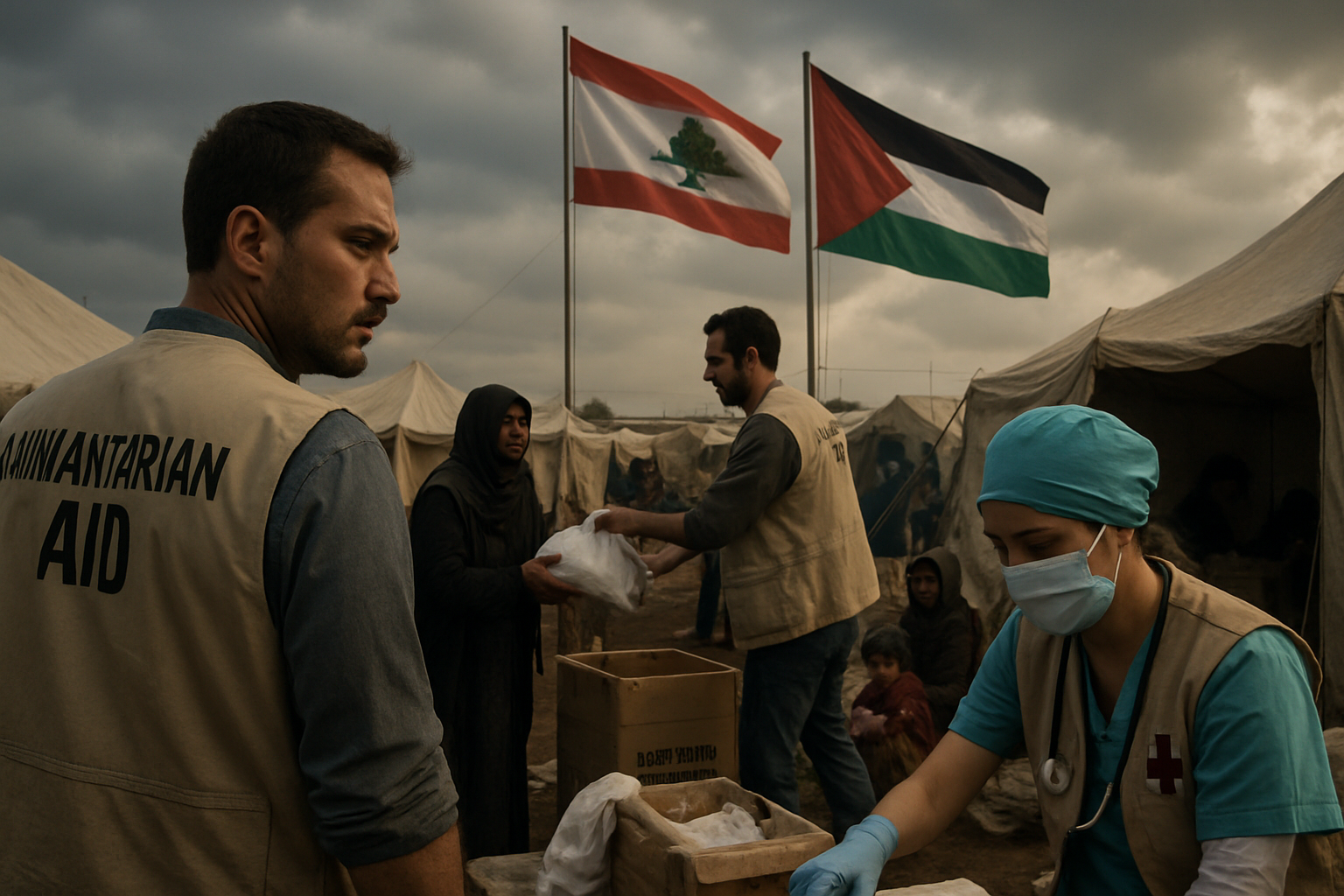
Humanitarian organizations are issuing urgent warnings about deteriorating conditions across the Middle East as multiple conflicts have displaced millions and strained international aid resources to breaking points, creating what experts describe as the region's most severe humanitarian crisis since the Cold War ended.
The convergence of crises spanning Afghanistan, Gaza, Lebanon, and Iran has created an unprecedented challenge for relief organizations already struggling with funding shortfalls and access restrictions. Recent assessments reveal the scope of a catastrophe that now affects over 15 million people across the region.
Afghanistan's Women and Girls Face Intensifying Restrictions
UNICEF has raised fresh alarm over the deteriorating situation for women and girls in Afghanistan, warning that the Taliban's systematic exclusion policies are creating long-term damage that will extend far beyond the current crisis. The agency's latest report documents how education and work bans are not only devastating daily life but also undermining women's ability to contribute to society's recovery.
The restrictions have effectively eliminated women from public life, with girls banned from secondary education and women prohibited from most employment. This has created a generation gap that humanitarian experts warn could take decades to repair, even if policies change.
"These policies are creating a lost generation of Afghan women and girls whose potential is being systematically destroyed."
— UNICEF Regional Director
The international community continues to struggle with how to provide humanitarian aid while avoiding legitimizing Taliban governance, creating additional barriers for organizations trying to reach vulnerable populations.
Gaza Faces Public Health Emergency
In Gaza, Palestinian health authorities are warning of an emerging public health crisis as summer approaches. The Palestinian Information Center reports that rat and insect infestations in displacement camps are creating daily threats to thousands of families, with children particularly vulnerable to disease outbreaks.
Palestinian Health Minister Majed Abu Ramadan has issued warnings about escalating health risks facing Gaza's population, citing widespread rodent proliferation amid severe environmental deterioration. The accumulation of untreated waste and rubble has created ideal breeding conditions for disease vectors.
Health Ministry officials confirm that environmental degradation and untreated waste accumulation have reached critical levels, threatening to trigger widespread disease outbreaks among displaced populations living in overcrowded temporary shelters.
Lebanon's Humanitarian Catastrophe Deepens
Meanwhile, Lebanon faces one of its most severe humanitarian crises as reported by international aid organizations. Médecins Sans Frontières coordinators describe a situation where families are forced to choose between basic necessities like food and medicine, highlighting the depth of the economic collapse.
The organization has lost colleagues in the ongoing violence, underscoring the dangerous conditions facing humanitarian workers attempting to deliver aid. The security situation has severely complicated relief efforts, with many areas becoming inaccessible to international organizations.
Emergency shelters across Lebanon have reached capacity, with thousands of displaced families sleeping on Beirut's streets. The November 2024 ceasefire that had provided temporary stability completely collapsed in March 2026, triggering a new wave of displacement.
Medical System Under Attack
Particularly concerning is the systematic targeting of medical personnel and facilities. Since March 2026, Lebanese health authorities report 26 paramedics killed and 51 wounded, raising serious questions about compliance with international humanitarian law.
The deadliest single attack at the Burj Qalaouiyah healthcare center killed 12 medical workers, prompting investigations into potential Geneva Conventions violations. Israeli military spokespeople have threatened strikes against ambulances and medical facilities, claiming Hezbollah usage without providing evidence.
Regional Aid System Overwhelmed
The Flemish government's announcement of €100,000 in emergency aid for Lebanon through its Humanitarian Emergency Aid Fund, while welcome, illustrates the scale mismatch between needs and resources. Working with the Flemish Red Cross, the funding will support the Lebanese Red Cross ambulance service, but represents a fraction of what's required.
International evacuation operations have reached levels not seen since the Arab Spring in 2011, with Australia reporting 115,000 citizens trapped in the region and Germany evacuating 30,000 stranded tourists.
"We're seeing humanitarian needs on a scale that's overwhelming our traditional response capabilities."
— UN Official (speaking anonymously)
Iran Crisis Compounds Regional Suffering
The broader Iran-Israel conflict, which erupted following the death of Iran's Supreme Leader Ali Khamenei in March 2026, has created cascading effects throughout the region. The Iranian Red Crescent reports over 787 civilian casualties, including the devastating Minab school attack that killed between 53-85 students and staff.
The conflict has triggered the largest population displacement in the Middle East since the Arab Spring, with up to 3.2 million people internally displaced within Iran according to UN High Commissioner for Refugees reports.
Global Economic Impact
The humanitarian crisis is compounded by broader economic disruptions. Oil prices have surged past $100 per barrel for the first time since 2014, while the closure of the Strait of Hormuz affects 40% of global oil transit. Over 18,000 flights have been cancelled worldwide, creating what aviation experts describe as the most severe disruption since COVID-19.
International Response Struggles
UN Secretary-General António Guterres has called the situation "the greatest test of multilateral cooperation in the modern era." The international community faces what many describe as a template-setting moment for 21st-century crisis management.
Diplomatic efforts continue, with French President Emmanuel Macron offering to host direct Israel-Lebanon talks in Paris—the first such negotiations since the ceasefire collapse. However, the sheer scope of simultaneous crises is stretching international diplomatic and humanitarian resources beyond traditional capacities.
Funding Crisis
Traditional donor countries are struggling to meet funding requirements across multiple emergencies. The European Union's activation of its ESTIA evacuation protocol for Cyprus represents the first time the bloc has used these emergency procedures, highlighting the unprecedented nature of the current crisis.
Long-term Implications
Humanitarian experts warn that the current crisis could reshape the Middle East for decades. The combination of population displacement, infrastructure destruction, and economic collapse is creating conditions that will require sustained international engagement long after current conflicts end.
The systematic targeting of medical facilities and personnel, documented across multiple conflict zones, represents a particular threat to long-term recovery. Healthcare systems that take decades to build can be destroyed in weeks, with consequences lasting generations.
"What we're witnessing is not just a humanitarian crisis, but a fundamental challenge to the international order and our collective ability to protect civilian populations."
— Senior Humanitarian Official
Climate Factor
Adding to the complexity, the region continues to experience its 18th consecutive month of temperatures above 1.5°C, exacerbating conditions in displacement camps and straining already limited water resources. Climate displacement is increasingly becoming a factor in population movements across the region.
Looking Ahead
As the crisis enters what many describe as its most dangerous phase, the international community faces critical decisions about resource allocation, diplomatic intervention, and long-term commitment to regional stability.
The coming weeks will be crucial in determining whether diplomatic intervention can contain the expanding crisis or if the region faces a broader war that could affect millions more civilians. Success or failure in managing this crisis will likely establish precedents for international crisis response in the multipolar era.
With traditional conflict resolution mechanisms struggling to address simultaneous emergencies, the Middle East humanitarian crisis represents both an immediate tragedy and a fundamental test of global governance in the 21st century.