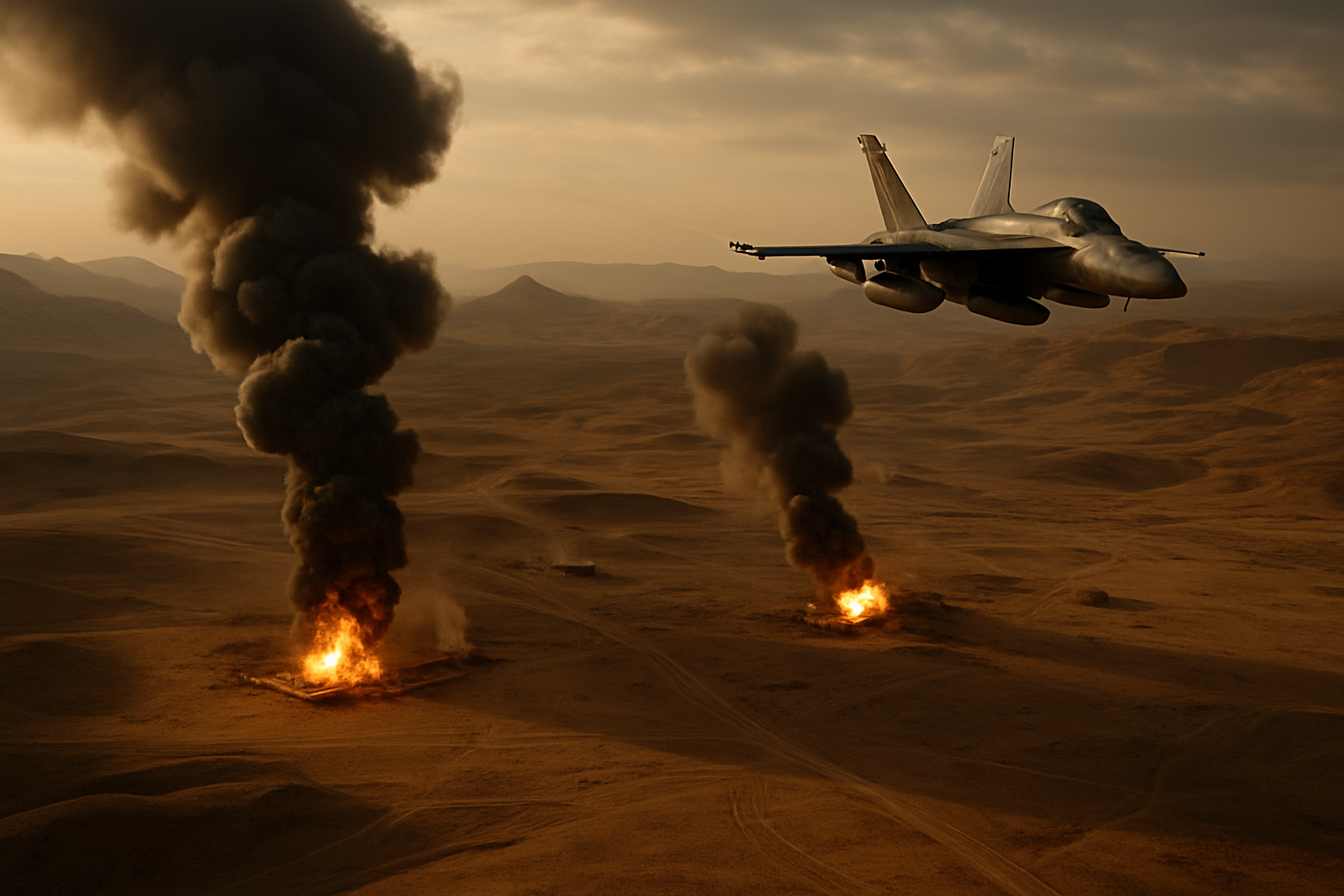
Israeli Defense Forces announced targeted strikes against multiple Hezbollah positions in southern Lebanon on February 15, 2026, while US forces simultaneously conducted retaliatory operations against ISIS targets in Syria under "Operation Hawkeye," reflecting a dramatic escalation in Middle East military operations amid ongoing regional tensions.
The coordinated nature of these military actions, occurring within hours of each other across two active conflict zones, highlights the complex security challenges facing the region as multiple actors respond to perceived threats through kinetic operations.
Israeli Operations Against Hezbollah Infrastructure
Israeli military officials confirmed strikes against weapons depots and rocket launchers belonging to the Lebanese Shiite movement Hezbollah in several areas of southern Lebanon. The Israel Defense Forces (IDF) justified the operations through their Telegram channel, stating that "the presence of weapons that were targeted represents a violation of the ceasefire agreement between Israel and Lebanon."
The strikes targeted multiple facilities across southern Lebanon, focusing on what Israeli intelligence identified as active weapons storage sites and launch platforms. While the IDF declined to provide specific details about the scale of the operations, the announcement represents the most significant Israeli military action in Lebanon since recent ceasefire arrangements were established.
"The weapons systems targeted in our operations pose a direct threat to Israeli civilian populations and violate existing agreements."
— IDF Spokesperson, Official Statement
These strikes occur against the backdrop of deteriorating Israel-Lebanon relations, with previous tensions escalating over allegations of chemical spraying along border areas and diplomatic disputes involving US officials. The Lebanese government has yet to issue an official response to the latest Israeli military actions.
US Anti-ISIS Operations Intensify in Syria
Simultaneously, US military forces launched "Operation Hawkeye" against ISIS targets across Syria, marking one of the most intensive American military campaigns against the terrorist organization in recent months. According to Al Jazeera's reporting, the operation resulted in over 50 ISIS fighters killed or captured while striking approximately 100 targets.
The US operations represent a significant escalation in American military engagement in Syria, targeting ISIS infrastructure, command facilities, and operational bases across multiple governorates. The timing of these strikes, coinciding with Israeli operations in Lebanon, reflects the broader regional security challenges facing Middle Eastern stability.
Operation Hawkeye utilized a combination of air strikes, special operations forces, and coordinated ground operations to systematically target ISIS strongholds that had been reconstituting in remote Syrian territories. The comprehensive nature of the campaign suggests extensive intelligence preparation and coordination with regional partners.
Regional Context and Strategic Implications
These military operations unfold within a complex regional environment characterized by multiple simultaneous crises. The broader Middle East context includes ongoing Iran-US nuclear negotiations in Geneva, unprecedented military tensions with dual US aircraft carrier deployment, and systematic regional diplomatic efforts to prevent broader conflict escalation.
Recent intelligence indicates that both Hezbollah and ISIS have been attempting to rebuild their operational capabilities following previous military setbacks. Israeli intelligence sources suggest Hezbollah has been systematically repositioning weapons systems in southern Lebanon, while US Central Command reports indicate ISIS cells have been reconstituting in remote Syrian territories.
The coordination of these operations reflects a broader pattern of regional powers addressing security threats through direct military action while simultaneously engaging in diplomatic processes aimed at preventing wider regional conflict.
International Response and Diplomatic Implications
The dual military operations come at a particularly sensitive moment for Middle East diplomacy, occurring alongside critical nuclear negotiations between Iran and the United States in Geneva. Regional powers including Saudi Arabia, UAE, Qatar, and Egypt have been supporting diplomatic processes aimed at preventing military confrontation across multiple conflict zones.
European diplomatic sources expressed concern about the timing of these operations, given the delicate state of ongoing peace initiatives. However, both Israeli and US officials emphasized that these were defensive operations responding to immediate security threats rather than escalatory actions designed to derail diplomatic processes.
"Military operations targeting terrorist infrastructure serve regional stability rather than undermining diplomatic efforts."
— Senior US Defense Official, Speaking on Condition of Anonymity
The operations also occur against the backdrop of broader regional military developments, including the deployment of USS Gerald R. Ford and USS Abraham Lincoln carrier strike groups, creating the largest US naval presence in Middle Eastern waters in recent years.
Operational Effectiveness and Future Implications
Preliminary assessments suggest both operations achieved their immediate tactical objectives, with Israeli forces successfully degrading Hezbollah weapons capabilities while US operations significantly disrupted ISIS command and control networks. However, the strategic implications extend far beyond immediate battlefield results.
Defense analysts note that these operations represent a shift toward more assertive military responses to regional threats, potentially setting precedents for future security challenges. The coordination of timing, while officially coincidental, demonstrates the complex interconnected nature of Middle Eastern security dynamics.
Regional security experts warn that while these operations may temporarily degrade immediate threats, they also risk triggering retaliatory actions that could complicate ongoing diplomatic initiatives. The challenge for regional powers will be managing the balance between necessary security operations and diplomatic progress.
Looking Forward: Stability Challenges
The dual military operations highlight the persistent security challenges facing the Middle East, where state and non-state actors continue to pose threats requiring military responses even as diplomatic processes attempt to address broader regional tensions.
International observers will be monitoring closely for any retaliatory actions by targeted groups, which could escalate regional tensions at a critical moment for diplomatic initiatives. The success of ongoing peace processes may depend on the ability of all parties to distinguish between defensive security operations and escalatory actions.
As the region navigates these complex security dynamics, the international community continues to emphasize the importance of diplomatic solutions while acknowledging the legitimate security concerns that drive military responses. The coming weeks will be crucial for determining whether these operations contribute to regional stability or become catalysts for broader conflict escalation.