The global energy crisis has reached unprecedented levels as Qatar's Energy Minister Saad Al Kaabi issued a stark warning that Gulf states could be forced to halt all energy exports within weeks if the Iran war continues, potentially driving oil prices to $150 per barrel and threatening to "bring down the economies of the world."
The crisis has escalated dramatically following Iran's effective closure of the Strait of Hormuz, the world's most critical energy chokepoint handling 40% of global seaborne oil transit. Oil prices have surged past $80 per barrel, representing a 10% increase, while natural gas prices have exploded by 24% in Europe and 78% in the United States.
Qatar's Dire Warning
Qatar's Energy Minister Saad Al Kaabi delivered the most alarming assessment yet in an interview with the Financial Times, warning that the ongoing Iran war could force all Gulf energy exporters to declare force majeure "within poche settimane" (within a few weeks). Qatar, which controls approximately 20% of global LNG exports, has already halted production at its Ras Laffan and Mesaid facilities following Iranian drone attacks.
"We expect that all who have not yet declared force majeure will do so in the next few days if the situation does not change. All exporters in the Persian Gulf region will be forced to declare force majeure."
— Saad Al Kaabi, Qatar Energy Minister
The minister's warning carries significant weight given Qatar's position as the world's largest LNG producer and a crucial supplier to European and Asian markets. The potential halt of Gulf energy exports would create a supply shock far exceeding any previous oil crisis.
Japan's Emergency Response
The crisis has already forced major energy-consuming nations to consider emergency measures. Japan, which relies on the Middle East for around 95% of its oil supplies with approximately 70% transiting through the now-closed Strait of Hormuz, is reportedly considering tapping into its national oil stockpile for the first time since the 2011 Fukushima disaster.
This marks a critical juncture for Japan's energy security, as the country's strategic petroleum reserves were designed as a buffer for exactly such geopolitical disruptions. The potential deployment of these reserves underscores the severity of the current supply crisis.
Global Market Collapse
Financial markets worldwide have responded with panic, registering some of the most severe losses in recent history. The Pakistan Stock Exchange's KSE-100 index crashed by over 3,700 points in a single session, representing a 2.3% decline amid what market analysts describe as "relentless selling pressure" driven by deepening fears of geopolitical escalation in the Gulf.
European markets are experiencing similar turmoil, with analysts warning of "massive" natural gas price shocks that could devastate energy-intensive industries. The crisis threatens to reverse years of economic recovery and force central banks to reconsider monetary policy approaches.
Energy Infrastructure Under Attack
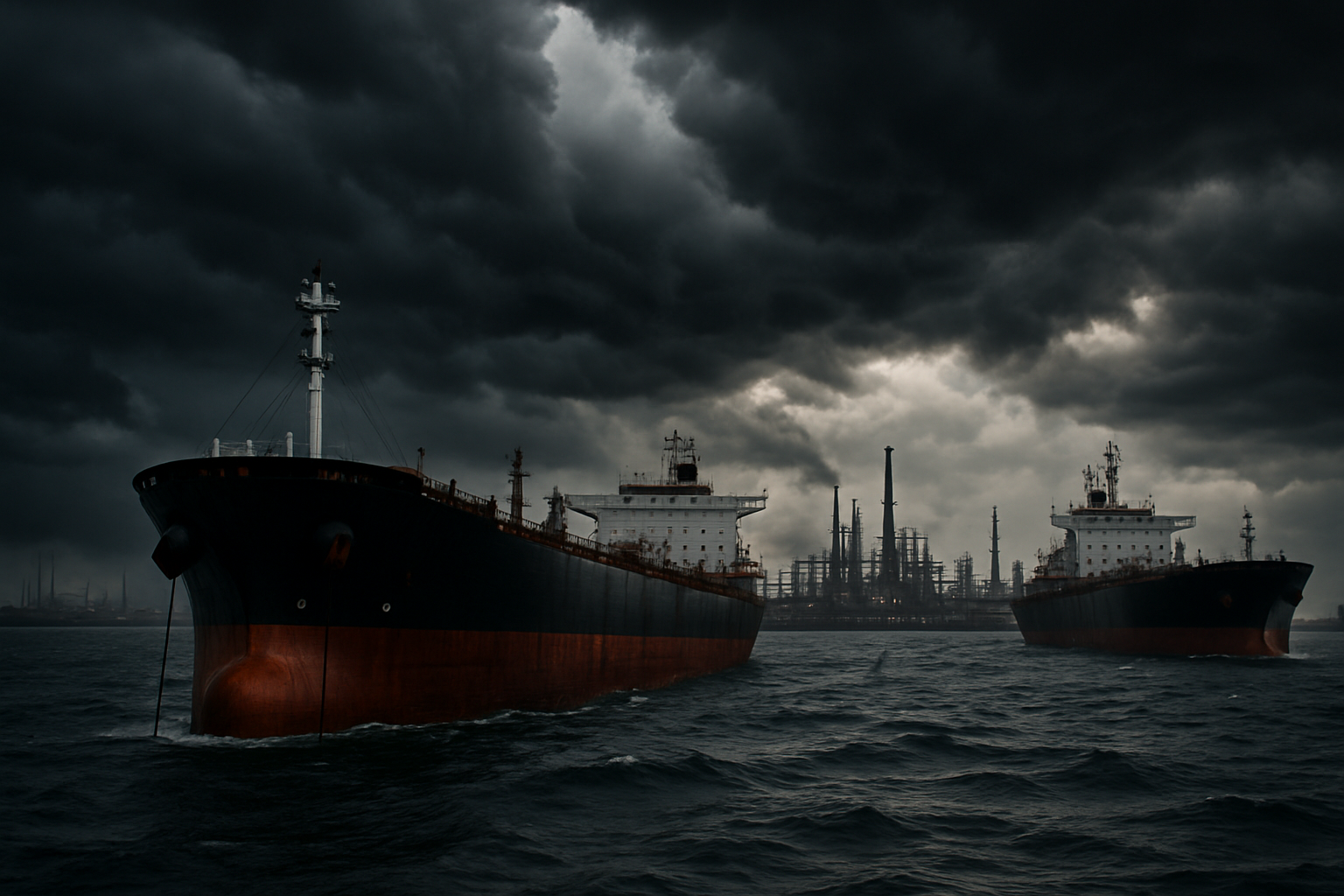
The crisis stems from Iran's systematic targeting of regional energy infrastructure as part of "Operation True Promise 4," its massive retaliation against the US-Israeli "Operation Epic Fury" strikes. Major shipping companies including Maersk and MSC have suspended all Persian Gulf operations, leaving over 150 oil and LNG tankers stranded with billions of dollars in cargo unable to reach global markets.
The aviation industry faces parallel disruption, with over 18,000 flights cancelled worldwide as eight Middle Eastern countries simultaneously closed their airspace. Dubai International Airport, the world's busiest with over 86 million annual passengers, remains completely shut down due to missile damage.
OPEC's Inadequate Response
Despite emergency measures, OPEC+ has proven unable to offset the supply disruption. The organization's emergency production increase of 206,000 barrels per day is widely considered insufficient to compensate for the Strait of Hormuz closure. Alternative routing through Arabian Peninsula pipelines cannot match the capacity and efficiency of maritime transport through the strategic waterway.
Energy analysts note that increased production is meaningless if tankers cannot safely transit to global markets, highlighting the fundamental vulnerability of the current global energy architecture to single chokepoint disruptions.
European Energy Security Crisis
European Union officials are rapidly developing emergency response options as the continent faces its most severe energy crisis since the Ukraine conflict. High Representative Kaja Kallas is coordinating crisis management protocols, including state aid programs for energy-intensive industries and accelerated green transition elements.
Sweden has already predicted electricity price increases of 10-20 öre and gasoline price rises of 1-2 kronor, with the southern Malmö region most exposed due to continental European market integration. Heavy industries across Europe are reporting factory closures due to unviable energy costs.
Consumer Impact Spreads Globally
The crisis is rapidly translating into consumer price increases worldwide. New Zealand faces petrol prices exceeding $3 per liter, while Mexico confronts the specter of another "gasolinazo" fuel price surge. Ireland's opposition deputies have slammed what they term a "brazen rip-off" in heating oil and motor fuel prices.
Austria has seen fuel costs increase by 20%, prompting criticism from trade unions about potential profiteering during the crisis. The global nature of these increases demonstrates the interconnected vulnerability of modern energy markets to geopolitical disruptions.
Nuclear Diplomacy Collapse Context
The energy crisis erupted following the complete breakdown of nuclear diplomacy between the US and Iran, despite achieving what negotiators described as "broad agreement on guiding principles" in Geneva talks—the most progress since the JCPOA collapse in 2018. The fundamental disagreement over scope—Iran's exclusion of ballistic missiles and regional proxies as "red lines" versus US demands for comprehensive agreements—proved insurmountable.
This diplomatic failure has broader implications for nuclear governance in an era where the New START treaty has expired and China continues its nuclear expansion, with UN Secretary-General António Guterres warning that nuclear risks are at their "highest in decades."
Template-Setting Moment for 21st Century
Energy security experts describe the current crisis as a "template-setting moment" for 21st-century conflict resolution and energy architecture. The rapid transition from diplomatic breakthrough to military escalation demonstrates the fragility of crisis management mechanisms in a multipolar world.
The crisis exposes the dangerous over-dependence on strategic chokepoints with limited alternatives. The 21-mile-wide Strait of Hormuz represents a single point of failure for modern global logistics, affecting not just energy supplies but consumer goods and industrial materials worldwide.
Long-term Implications
Success in containing the current crisis could provide a framework for future nuclear and territorial disputes, strengthening diplomatic precedents for conflict resolution. However, failure may accelerate the adoption of military solutions over diplomatic engagement, potentially reshaping Middle Eastern geopolitics for decades while encouraging nuclear proliferation globally.
The crisis also highlights the urgent need for fundamental restructuring of global energy security architecture to reduce dependence on volatile geopolitical regions. Strategic petroleum reserves, while providing temporary buffers, prove inadequate for sustained disruptions of this magnitude.
As the situation continues to evolve, the international community faces its greatest test of multilateral cooperation and crisis management in the modern era. The stakes extend far beyond immediate energy supplies, encompassing regional war prevention, nuclear governance credibility, and the enforcement of international law in the post-WWII order.
The coming days and weeks will determine whether this crisis represents a manageable disruption or marks the beginning of a broader transformation in global energy markets and international relations that could define the remainder of the 21st century.