Regional security concerns across the Middle East have escalated dramatically as violence spreads far beyond the central Iran-US conflict, with Gulf states bearing civilian casualties and European territory coming under attack for the first time since World War II.
The widening crisis has fundamentally altered the security landscape across multiple nations, with Kuwait's Deputy Prime Minister and Interior Minister Sheikh Fahd Youssef Saoud Al-Sabah visiting wounded ministry personnel injured during "the criminal Iranian aggression" while carrying out their national duties. The attacks have forced Kuwait to relocate Jazeera Airways operations to Saudi Arabia due to repeated drone strikes on its international airport.
Unprecedented Regional Coalition Under Strain
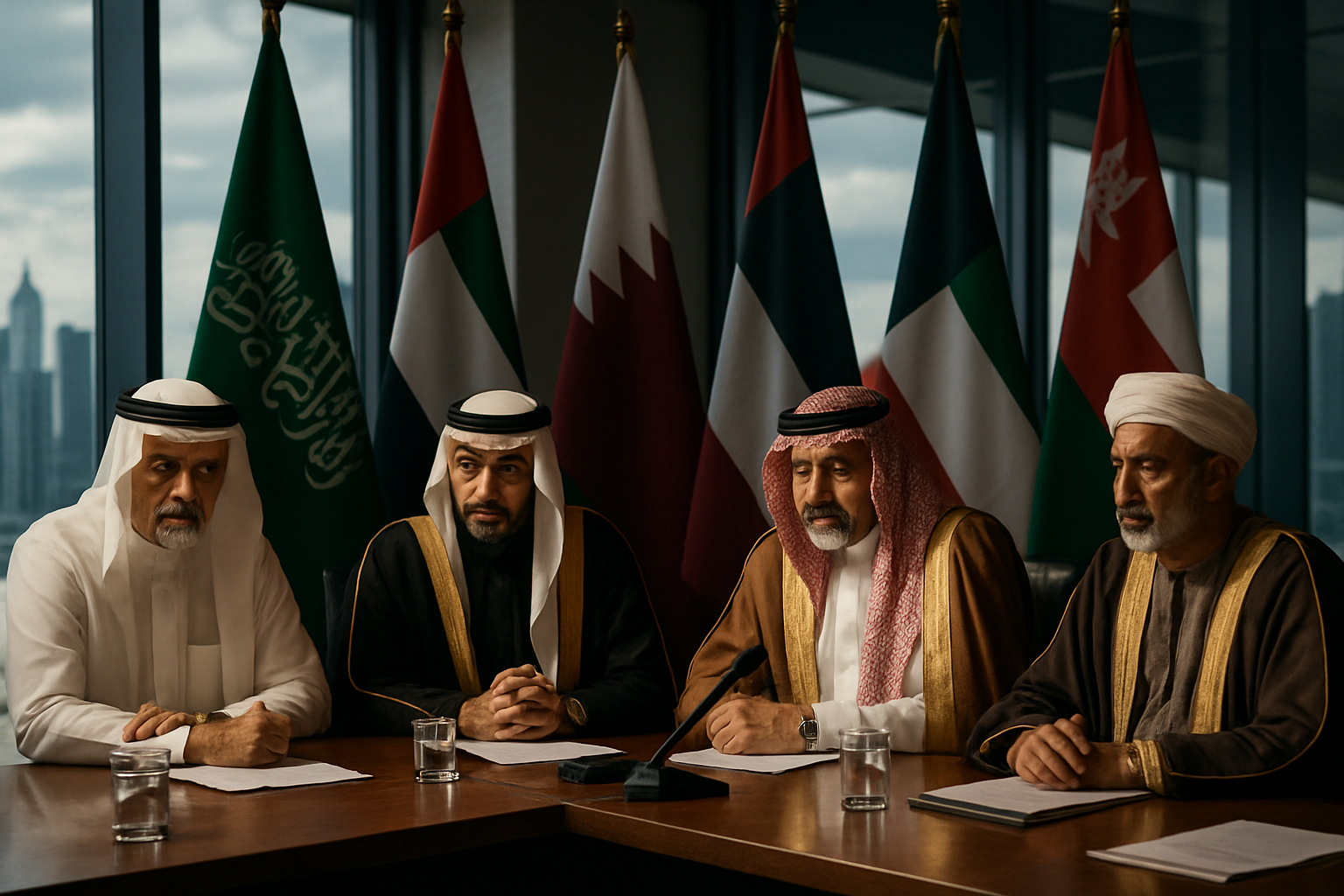
What began as an extraordinary diplomatic consensus among Saudi Arabia, UAE, Qatar, and Egypt supporting peaceful resolution has become severely strained as Iranian retaliation operations target member territories directly. The previously unified approach, described by diplomatic sources as "unprecedented Middle Eastern cooperation," faces its greatest test as each nation grapples with direct security threats.
Kuwait's Foreign Minister has engaged with Italian Defense Minister Guido Crosetto to discuss developments in the Arabian Gulf and "Iran's blatant and unjustified attacks on Gulf states and their implications for regional security and international stability, threatening maritime security and its repercussions on the global economy." The bilateral discussions underscore how regional conflicts now demand global diplomatic coordination.
Cyprus: Europe's Unwilling Entry Into Middle East Conflict
In a development that has sent shockwaves through European capitals, Iranian drones struck RAF Akrotiri in Cyprus, marking the first attack on European territory since World War II. The strike on the British sovereign base has activated unprecedented continental defense mechanisms, with the EU implementing its ESTIA evacuation plan for the first time in bloc history.
The attack has prompted an extraordinary naval coalition response featuring HMS Dragon alongside Spanish, Italian, French, Dutch, and Greek vessels - the largest Eastern Mediterranean military mobilization since 1974. This European territorial breach represents a fundamental escalation that extends the Middle East crisis into continental security planning.
UNIFIL Peacekeepers Under Fire
Adding to regional security concerns, three UN peacekeeping personnel were injured in a blast in southern Lebanon, with the Israeli Defense Forces attributing the rocket attack to Hezbollah. Two UNIFIL troops suffered serious injuries in what represents a significant breach of international peacekeeping protocols.
The incident highlights the deteriorating security situation for international observers, with UN forces increasingly caught between escalating military operations that have effectively collapsed the November 2024 ceasefire arrangements.
Civilian Infrastructure Becomes Military Target
The conflict's expansion has systematically targeted civilian infrastructure across the region. Dubai's Easter masses were cancelled due to the ongoing war, affecting religious communities across the UAE as churches cited "government directives" and "safety and community well-being" concerns following missile strikes in the coastal Jebel Ali area.
"Parishioners are requested to refrain from visiting the Church premises, in the interest of safety and community well-being."
— St Francis of Assisi Church, Dubai
The targeting of civilian areas represents a significant escalation from military-focused operations, with Iranian Revolutionary Guard forces declaring "no red lines remain" in their systematic targeting approach. This shift affects daily life for millions across the Gulf region, forcing fundamental changes to religious observances, commercial operations, and international travel.
Syrian Border Tensions Escalate
Violence has also spread to the Syrian-Israeli border, where a young Syrian man was killed by Israeli tank fire west of Zur'a farms in the Quneitra countryside. The incident reflects the multi-front nature of the current crisis, with traditional conflict zones experiencing renewed violence alongside the primary Iran-US confrontation.
Israeli occupation forces have closed several roads in the Syrian Golan Heights, implementing military restrictions that further destabilize an already volatile border region. These developments demonstrate how regional conflicts quickly expand beyond their original scope, affecting civilian populations across multiple countries.
Global Energy Security at Risk
The regional security crisis has created unprecedented challenges for global energy markets, with the Strait of Hormuz - through which 40% of global oil transit passes - effectively closed due to Iranian naval mining operations. Over 150 tankers carrying billions in cargo remain stranded in Persian Gulf waters as major shipping companies Maersk and MSC have suspended operations.
Economic Ripple Effects
The crisis has triggered significant economic disruption beyond energy markets. Pakistan's stock exchange recorded its largest single-day decline in history, falling 8.97%, while consumer impacts are being felt globally from Sweden to Bangladesh, where 170 million people face fuel rationing measures.
Aviation has been particularly affected, with over 18,000 flights cancelled worldwide in what experts describe as the most severe disruption since COVID-19. Eight Middle Eastern countries maintain simultaneous airspace closures, creating what analysts call an "aviation black hole" that has severed critical Europe-Asia corridors.
Diplomatic Initiatives Under Pressure
Despite the escalating violence, diplomatic efforts continue across multiple channels. France's President Macron has offered to host direct Israel-Lebanon talks in Paris - the first such negotiations since the November 2024 ceasefire collapse. These initiatives represent critical attempts to contain the crisis before it expands into full-scale regional warfare.
Pakistan has emerged as a potential mediator, with Prime Minister Shehbaz Sharif offering to host "meaningful conclusive talks" for comprehensive regional settlement. The four-nation diplomatic summit involving Pakistan, Saudi Arabia, Turkey, and Egypt demonstrates how regional powers are seeking alternatives to traditional great power mediation.
Template-Setting Crisis for 21st Century
UN Secretary-General António Guterres has described the situation as the "greatest test of multilateral cooperation in the modern era." The crisis is establishing new precedents for how regional conflicts in a multipolar world can rapidly escalate beyond traditional boundaries, affecting global energy security, international aviation, and continental defense planning simultaneously.
The rapid transformation from diplomatic engagement to military confrontation demonstrates the fragility of crisis management mechanisms in an interconnected world. Success in containing the current escalation could provide frameworks for future nuclear and territorial disputes, while failure may accelerate military solutions that reshape Middle Eastern geopolitics for decades.
Humanitarian Concerns Mount
The human cost continues to escalate across multiple theaters. In Lebanon, over 800,000 people remain displaced - nearly 20% of the population - with emergency shelters overwhelmed and thousands sleeping on Beirut's streets. Systematic targeting of medical personnel has resulted in 26 paramedics killed and 51 wounded since March, raising serious international humanitarian law concerns.
The crisis affects religious observances during one of the year's most significant periods, with both Christian Easter celebrations and Muslim Ramadan occurring simultaneously amid regional warfare - an unprecedented situation affecting all three Abrahamic faiths.
Looking Forward
The current crisis represents a watershed moment that extends far beyond the immediate Iran-US confrontation. Regional security arrangements built over decades face their most severe test, with implications for international law enforcement, nuclear governance credibility, and global conflict resolution approaches in the 21st century.
As violence continues to spread beyond traditional conflict zones, the international community faces critical decisions about crisis management, humanitarian protection, and the sustainability of diplomatic frameworks in an increasingly volatile multipolar world. The coming weeks will be decisive in determining whether innovative diplomatic solutions can contain this regional crisis or whether it expands into the broader Middle Eastern war that many experts fear.