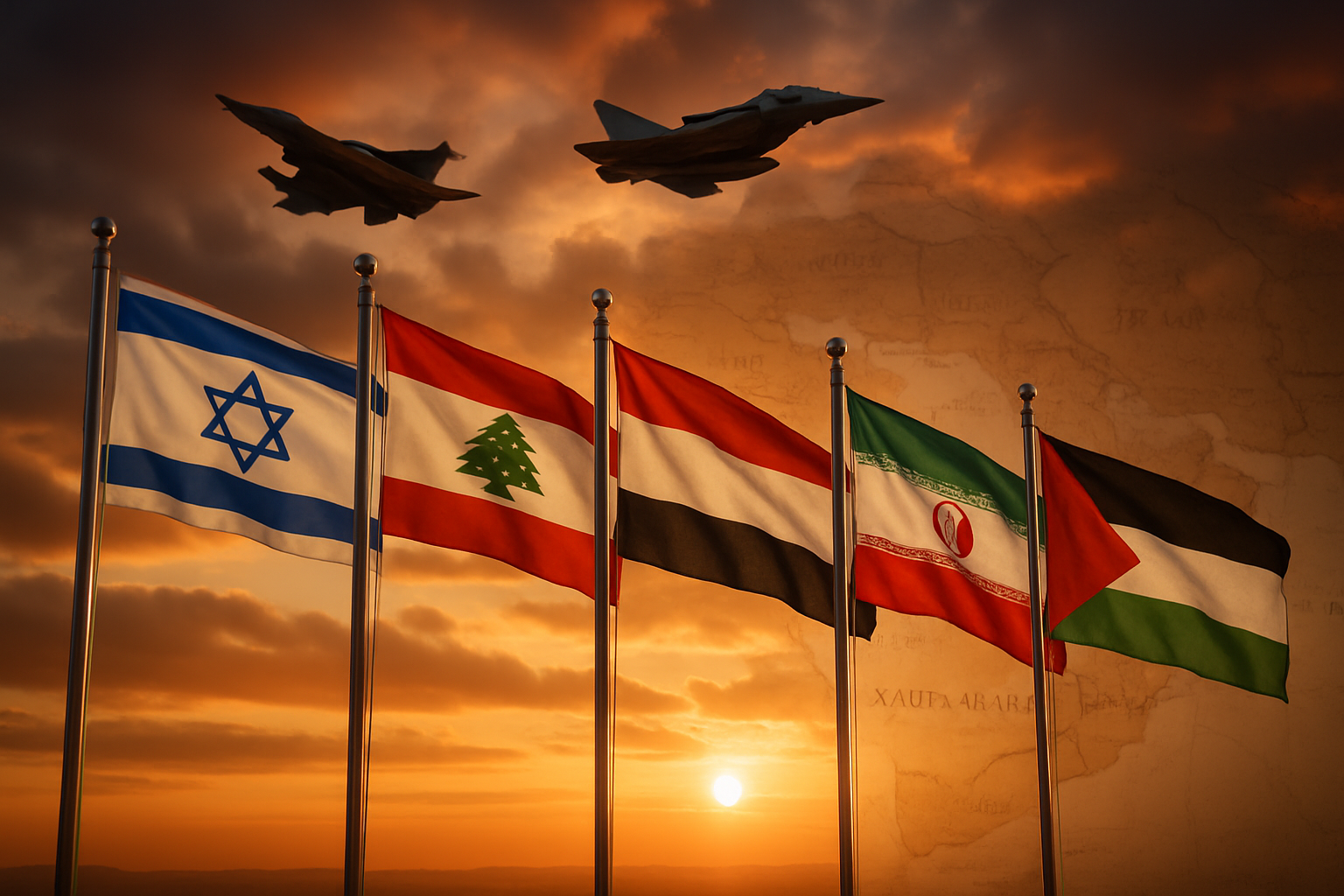
Regional tensions in the Middle East reached a critical new phase on Saturday as Yemen's Iran-backed Houthis launched their fifth missile attack on Israel since the outbreak of regional conflict, while casualty figures from Lebanon surpassed 1,400 deaths according to multiple health ministry reports.
Israeli military forces confirmed that air defense systems were activated to intercept a missile fired from Yemen toward Israeli territory, marking the latest escalation in what has become a multi-front regional crisis that began with the broader Iran-Israel conflict in February 2026.
Expanding Theater of Operations
The Houthi missile attack represents the fifth such assault since the beginning of the current regional war, according to Greek media reports citing Israeli Defense Forces statements. The Iran-aligned group has increasingly positioned itself as a key player in the expanding conflict that now encompasses multiple theaters across the Middle East.
This latest strike comes as the conflict has evolved far beyond its original bilateral dimensions, now involving Lebanon, Yemen, and various Gulf states in what UN Secretary-General António Guterres has described as "the greatest test of multilateral cooperation in the modern era."
Lebanon Humanitarian Catastrophe
Lebanese health authorities report that the death toll from Israeli airstrikes has now exceeded 1,400 people, including 126 children, 54 healthcare workers, and 93 women, according to Italian news agency ANSA. This represents a significant escalation from earlier casualty figures and underscores the devastating humanitarian impact of the expanded conflict.

Palestinian media sources confirm that an Israeli soldier was killed and another seriously wounded in a friendly fire incident during overnight operations in southern Lebanon. The incident occurred during a raid by Israeli commando units in the border town of Shebaa, highlighting the intense and dangerous nature of ground operations.
Additionally, Israeli forces have systematically destroyed 17 surveillance cameras belonging to the United Nations Interim Force in Lebanon (UNIFIL) headquarters in the coastal town of Naqoura within a 24-hour period, according to UN security sources speaking to AFP.
Gulf Region Under Pressure
Kuwait's Ministry of Defense reported that armed forces detected eight ballistic missiles and 19 hostile drones in Kuwaiti airspace over the past 24 hours, all of which were intercepted according to established protocols without causing casualties or material damage.
"The situation requires constant vigilance and coordinated responses across the region,"
— Kuwaiti Ministry of Defense Spokesperson
The Kuwaiti Ministry of Interior separately announced that explosive ordnance disposal teams dealt with 20 reports related to debris from defensive interceptions, bringing the total number of such incidents to 669 since the beginning of what officials term "Iranian aggression."
Air Defense Activations
Warning sirens were activated three times in Kuwait during the past 24 hours, bringing the total number of alerts to 167 since the conflict began. This pattern demonstrates the sustained pressure regional allies face as the crisis continues to expand beyond traditional bilateral confrontations.
International Diplomatic Response
The escalating regional tensions have prompted significant international concern, with various diplomatic initiatives attempting to contain what experts describe as the most dangerous Middle East crisis since the end of the Cold War.
According to historical context gathered from previous diplomatic efforts, Pakistan has emerged as a key mediator, with Foreign Minister Ishaq Dar facilitating "indirect talks" between the US and Iran through a "message relay system" including a 15-point peace proposal currently under consideration.
Global Economic Impact
The expanding conflict continues to have severe global economic implications, particularly affecting energy markets and international aviation. Over 18,000 flights have been cancelled worldwide due to airspace restrictions, representing the most significant aviation disruption since the COVID-19 pandemic.
Oil prices have surged past $100 per barrel for the first time since 2014, with the Strait of Hormuz effectively compromised, affecting approximately 40% of global oil transit. The International Energy Agency has implemented its largest strategic petroleum reserve release in the organization's 50-year history, releasing 400 million barrels in response to the crisis.
Nuclear Diplomacy Breakdown
The current crisis emerged following the complete breakdown of nuclear negotiations between the United States and Iran, despite achieving what negotiators described as "broad agreement on guiding principles" - representing the most significant diplomatic progress since the Joint Comprehensive Plan of Action (JCPOA) collapsed in 2018.
Iran continues uranium enrichment at 60% purity, significantly beyond the 3.67% JCPOA limit and approaching the 90% weapons-grade threshold. Intelligence assessments suggest Iran now possesses over 400 kilograms of enriched uranium, sufficient for multiple weapons if processed to weapons-grade levels.
Humanitarian Crisis Mounting
The Iran Red Crescent has documented 787+ civilian casualties from US-Israeli strikes, including a devastating attack on the Minab elementary school that killed between 53-85 students and staff according to Pentagon confirmations of responsibility for the incident, which officials attributed to "outdated targeting data."
International evacuations are now occurring on a scale not seen since the Arab Spring of 2011, with Australia reporting 115,000 nationals trapped in the region and Germany coordinating the extraction of 30,000 stranded citizens.
Revolutionary Changes in Iran
The crisis has been compounded by historic changes within Iran itself, where Mojtaba Khamenei has become the first hereditary Supreme Leader in the Islamic Republic's 47-year history following the death of Ali Khamenei on March 1. This represents an unprecedented shift from clerical to military governance, with the Revolutionary Guards assuming unprecedented control over state apparatus.
Looking Forward
As the crisis enters its second month, international observers warn that the window for diplomatic resolution is rapidly closing. The template-setting nature of this conflict will likely influence approaches to 21st-century crisis management for decades to come.
The stakes extend far beyond the Middle East, affecting global energy security, nuclear governance credibility, and the effectiveness of international law enforcement mechanisms established in the post-World War II order.
With multiple theaters of operation now active and civilian casualties mounting across the region, the coming weeks will be decisive in determining whether diplomatic interventions can prevent further escalation or if the Middle East is heading toward a broader regional conflict with global implications for international stability and economic security.