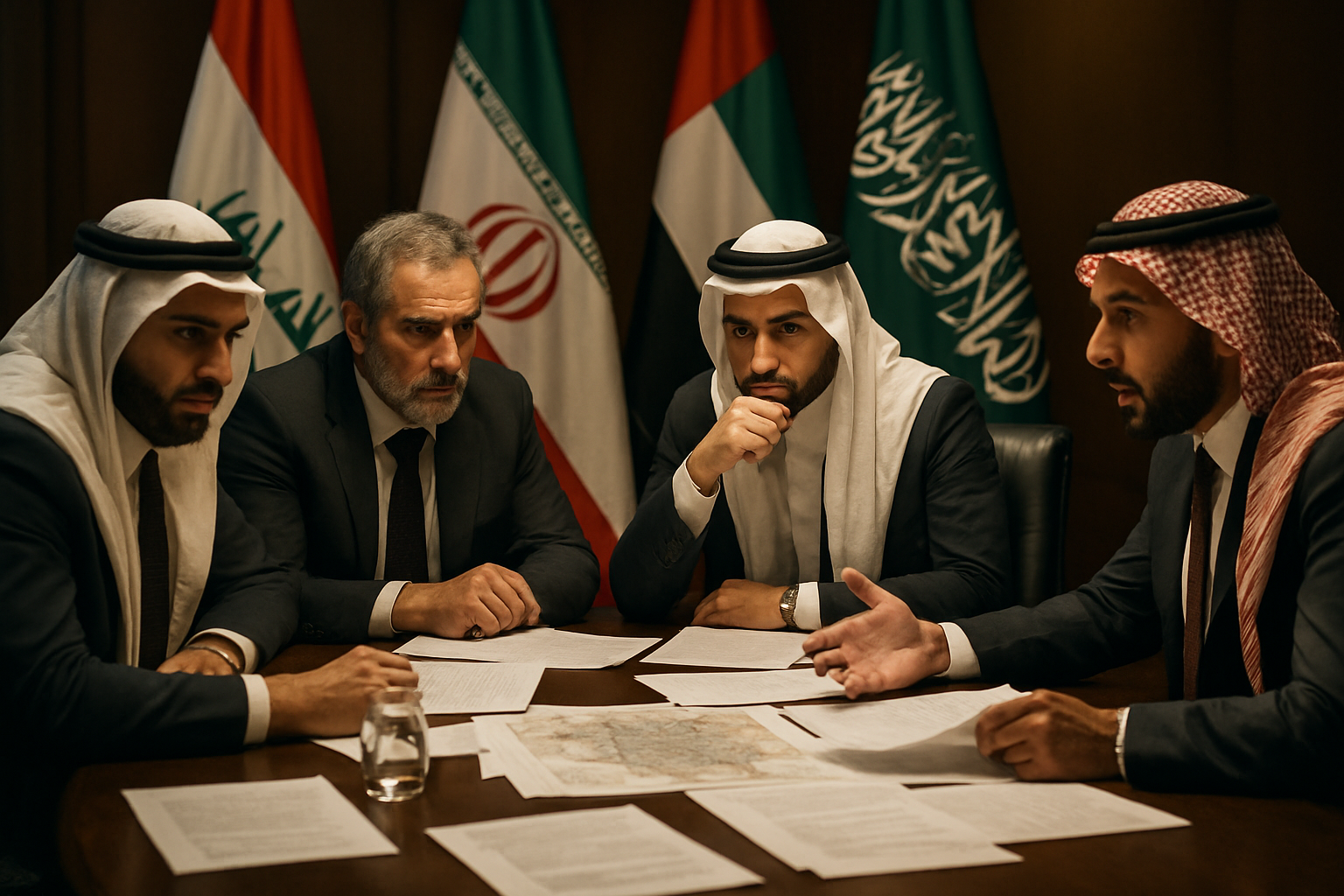
The Middle East faces its most complex security crisis in decades as tensions radiating from the Iran war have created a dangerous web of regional conflicts, testing diplomatic relationships and security arrangements from the Caucasus to the Arabian Peninsula.
The crisis has evolved far beyond the initial Iran-Israel confrontation that began in late February 2026, now encompassing multiple theaters that threaten to destabilize the entire region. From Azerbaijan's drone attacks and Iranian agent arrests to Turkey's strained alliance with Azerbaijan over Israel, the conflict's ripple effects demonstrate how quickly regional tensions can cascade across traditional boundaries.
Turkey-Azerbaijan Alliance Under Strain
One of the most significant developments is the growing tension within the Turkey-Azerbaijan defense alliance. As Azerbaijan reports drone attacks and claims its security forces have arrested Iranian agents planning attacks against Israeli interests, Turkey finds itself in an increasingly uncomfortable position.
"Turkey's relationship with Baku is complicated by the latter's close ties with Israel."
— RFI International Report
This tension reflects a broader challenge facing regional powers as they navigate competing loyalties and security concerns. Turkey, which maintains a defense alliance with Azerbaijan, must balance its commitment to Baku against its own complex relationship with Israel and growing concerns about regional stability.
The situation has been further complicated by fears that Iran's regional proxy network may be expanding operations into the Caucasus, potentially opening new fronts in an already volatile region. Azerbaijan's claims of Iranian agent infiltration suggest Tehran may be seeking to pressure Israeli interests through third countries, raising concerns about the conflict's geographical expansion.
Lebanon's Ongoing Proxy Dilemma
Meanwhile, Lebanon continues to grapple with the consequences of Hezbollah's alignment with Iran's regional agenda. The organization, described by many Lebanese as having "triggered a war on behalf of Tehran," faces criticism for prioritizing Iranian interests over Lebanese sovereignty and stability.
The November 2024 ceasefire that had held for over a year has completely collapsed, with Hezbollah choosing to support Iran following the death of Supreme Leader Ali Khamenei in March 2026. This decision has pulled Lebanon into a broader regional conflict, affecting over 800,000 displaced civilians and testing the country's already fragile institutions.
Lebanese health authorities report systematic targeting of medical personnel, with 26 paramedics killed and 51 wounded since March. The targeting of healthcare infrastructure has raised serious concerns about violations of international humanitarian law and the Geneva Conventions.
Houthis Enter the Fray
The crisis reached a new dangerous phase with Yemen's Iran-backed Houthis launching their first missile attack on Israel since the broader regional conflict began. This represents a significant escalation that could threaten both Red Sea shipping routes and create a third major front in the expanding regional war.
Swedish defense analyst Peter Haldén warns that Houthi involvement "risks having both political and economic effects," noting that it "reinforces the image of a situation that is slipping out of U.S. hands."
The Houthis' entry into the conflict creates particular concern for global commerce, as the group has previously demonstrated capability to disrupt international shipping through the strategic Bab al-Mandab strait, which handles approximately 12% of global trade.
Diplomatic Efforts Amid Chaos
Despite the escalating military situation, diplomatic efforts continue across multiple channels. Pakistan has emerged as a key mediator, with Foreign Minister Ishaq Dar publicly acknowledging his country's role in facilitating "indirect talks" between the United States and Iran through a "message relay system."
Regional powers including Saudi Arabia, UAE, Qatar, and Egypt have maintained unprecedented consensus in supporting diplomatic processes, though this coalition has come under severe strain as Iranian retaliation has directly targeted member territories.
France has offered to host direct Israel-Lebanon talks in Paris, marking the first such negotiations since the ceasefire collapsed. However, with over 18,000 flights cancelled globally and oil prices surging past $100 per barrel, the economic pressure for a resolution continues to mount.
Nuclear Diplomacy's Collapse
The current crisis emerged from the complete breakdown of nuclear negotiations between the United States and Iran, despite earlier achieving "broad agreement on guiding principles" in Geneva talks. The fundamental disagreement over scope – Iran's exclusion of ballistic missiles and regional proxies versus U.S. demands for comprehensive agreements – proved insurmountable.
Iran continues uranium enrichment at 60% purity, approaching weapons-grade levels, while possessing over 400 kilograms of enriched uranium. The collapse of diplomacy has occurred against the backdrop of broader nuclear governance crisis, with the New START treaty having expired for the first time in over 50 years without U.S.-Russia nuclear constraints.
Energy Security and Global Impact
The regional crisis has created unprecedented disruption to global energy markets. Iran's mining of the Strait of Hormuz with an estimated 2,000-6,000 naval mines has effectively closed a waterway that handles 40% of global oil transit. The International Energy Agency has released a record 400 million barrels from strategic reserves – the largest intervention in the agency's 50-year history.
Aviation networks have suffered similarly severe disruption, with Dubai International Airport – the world's busiest – remaining closed due to missile damage. The coordinated closure of airspace across eight Middle Eastern countries has created cascading effects throughout global transportation networks.
Regional Security Architecture Under Test
The crisis represents what UN Secretary-General António Guterres has called "the greatest test of multilateral cooperation in the modern era." The rapid transition from diplomacy to military confrontation demonstrates the fragility of crisis management mechanisms in the current multipolar international system.
European territory was attacked for the first time since World War II when Iranian drones struck RAF Akrotiri in Cyprus, prompting an unprecedented naval coalition response involving vessels from the UK, Spain, Italy, France, Netherlands, and Greece. The EU activated its ESTIA evacuation protocol for the first time in the bloc's history.
Looking Forward
As the crisis enters its second month, the stakes have grown to encompass regional war prevention, global energy security, nuclear governance credibility, and international law enforcement. The template being set by this crisis will likely influence conflict resolution approaches for decades to come.
The success or failure of current diplomatic initiatives – from Pakistani mediation to French hosting proposals – will determine whether the region can step back from a broader war that could reshape Middle Eastern geopolitics for generations. With revolutionary changes in Iranian leadership following the first hereditary succession in the Islamic Republic's history, and regional coalitions under severe strain, the international community faces urgent challenges in containing a crisis that has already demonstrated its capacity for rapid and dangerous escalation.
The coming weeks will be crucial in determining whether innovative diplomatic solutions can bridge longstanding regional disagreements, or whether the Middle East will descend into its most serious conflict since the Cold War era – with implications extending far beyond the region's borders.