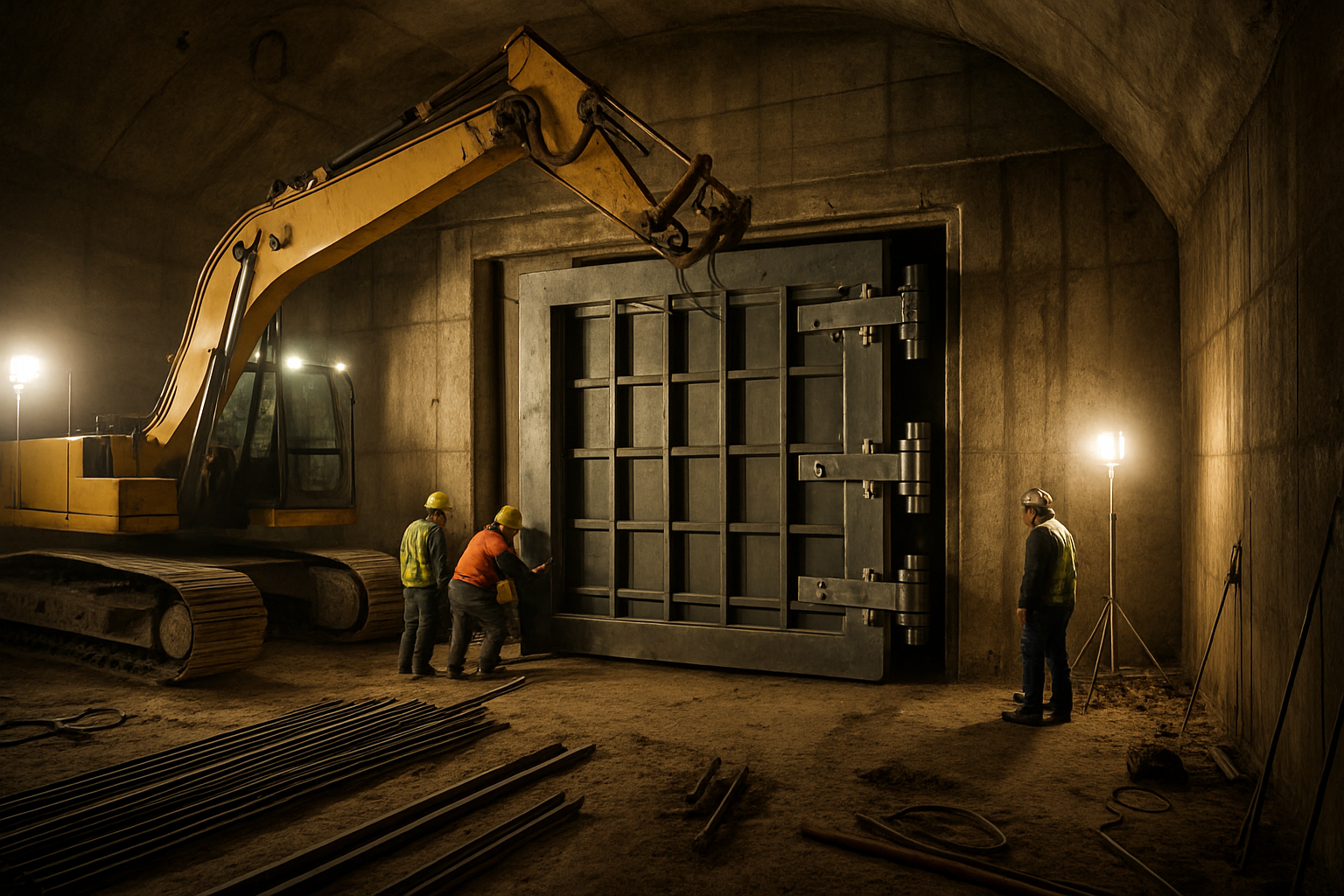
Since the Middle East conflict began escalating dramatically in March 2026, private bomb shelter companies have experienced unprecedented demand as civilians worldwide prepare for potential nuclear fallout and air raids, marking the largest surge in emergency preparedness infrastructure since the Cold War.
Ron Hubbard, owner of a prominent bomb shelter company in Texas, reports that his phone has been ringing non-stop since the crisis began nearly two weeks ago. Both foreign and US clients are rushing to purchase his bunkers, seeking refuge in case of air raids, nuclear fallout, or broader regional conflict escalation.
Gulf Nations Lead Surge in Demand
With the United States and Israel conducting "Operation Epic Fury" against Iran, and Tehran retaliating with widespread strikes across the region through "Operation True Promise 4," Hubbard has witnessed demand for his products soar dramatically. The majority of new orders are coming from Gulf nation clients in Bahrain, Qatar, Kuwait, and the United Arab Emirates - countries that have found themselves directly in the crosshairs of Iranian retaliation.
The Iranian Revolutionary Guard's declaration that "no red lines remain" has particularly alarmed civilian populations across the Gulf states. The UAE reported one civilian death in Abu Dhabi from missile debris, while Kuwait suffered 32 injuries at its airport from drone strikes. Qatar intercepted 65 missiles and 12 drones using Patriot systems, with eight people injured by falling fragments.
"People are witnessing missiles flying over their neighborhoods and explosions at major airports. This isn't theoretical anymore - it's happening right outside their windows."
— Security Industry Expert
Historical Context of Regional Tensions
The current crisis represents the culmination of months of escalating tensions that began with the breakdown of nuclear negotiations between the United States and Iran. Despite achieving what diplomats called "broad agreement on guiding principles" - the most significant progress since the JCPOA collapse in 2018 - fundamental disagreements over Iran's ballistic missile program and regional proxy forces proved insurmountable.
The situation reached a critical turning point with the confirmed death of Iran's Supreme Leader Ali Khamenei during coordinated US-Israeli strikes - the largest Middle East military operation since the 2003 Iraq invasion. This unprecedented targeting of Iran's highest leadership has fundamentally altered the regional security landscape.
Global Emergency Preparedness Response
The bunker construction boom extends far beyond the immediate conflict zone. Emergency preparedness experts note that the crisis has triggered the largest coordinated international evacuation since the Arab Spring of 2011, with over 500,000 citizens extracted from Middle East conflict zones.
Cyprus activated its national "ESTIA" evacuation plan for the first time in history, coordinating the extraction of over 2,000 European and third-country nationals from the UAE. The European Union's unprecedented crisis response has demonstrated both the strengths and limitations of multilateral emergency coordination frameworks.
Nuclear Governance Crisis
Adding to civilian anxiety is the broader nuclear governance crisis unfolding globally. The New START Treaty between the United States and Russia expired in February 2026, marking the first time in over 50 years that the world lacks formal constraints on the two nations that control 80% of global nuclear weapons.
UN Secretary-General António Guterres has warned that nuclear risks are at their "highest in decades," while Iran continues uranium enrichment at 60% purity with over 400 kilograms of weapons-grade material - sufficient for multiple nuclear weapons according to experts.
Infrastructure and Economic Impact
The crisis has exposed fundamental vulnerabilities in global infrastructure networks. Iran's closure of the Strait of Hormuz, which handles 40% of global seaborne oil transit, has triggered the most severe energy security crisis in decades. Oil prices have surged past $100 per barrel, while natural gas prices have increased by 24% in Europe and 78% in the United States.
The aviation industry faces unprecedented disruption, with over 18,000 flights cancelled worldwide - the most extensive disruption since the COVID-19 pandemic. Eight Middle Eastern countries have simultaneously closed their airspace, with Dubai International Airport - the world's busiest - completely shut down due to missile damage.
Private Security Market Evolution
The surge in bunker demand reflects a broader evolution in private security markets, as individuals and families take personal responsibility for emergency preparedness in an increasingly unstable geopolitical environment. Modern bunkers feature sophisticated air filtration systems, NBC (nuclear, biological, chemical) protection, and can sustain occupants for weeks or months.
Industry experts note that today's clients are seeking more than basic protection - they want comprehensive survival systems that can maintain communication with the outside world, provide comfortable living conditions, and ensure long-term sustainability during extended crises.
"We're seeing orders for bunkers that are essentially underground luxury apartments with military-grade protection. People want to maintain their quality of life even during the worst-case scenarios."
— Ron Hubbard, Bomb Shelter Company Owner
Regional Coalition Under Strain
The crisis has severely strained the unprecedented regional coalition of Saudi Arabia, the UAE, Qatar, and Egypt that had supported diplomatic solutions. Egyptian President Abdel Fattah el-Sisi condemned Iranian attacks on "sisterly Arab countries," warning of "comprehensive chaos" if the conflict escalates further.
This diplomatic fragmentation has heightened civilian anxiety across the region, as traditional security partnerships face their most severe test since the Cold War. The failure of diplomatic mechanisms that had shown promise just weeks earlier has reinforced public perception that military solutions may dominate future conflict resolution.
Long-term Security Implications
The current crisis represents what security analysts describe as a "template-setting moment" for 21st-century international relations. The rapid transition from diplomatic breakthrough to military confrontation demonstrates the fragility of crisis management mechanisms in an increasingly multipolar world.
Success in containing the current escalation could provide a framework for future nuclear crisis resolution and strengthen diplomatic precedents. However, failure may accelerate the trend toward military solutions, potentially reshaping Middle Eastern geopolitics for decades while encouraging nuclear proliferation globally.
Future of Emergency Preparedness
As the Middle East crisis continues to unfold, the boom in private bunker construction reflects deeper changes in how civilians worldwide perceive security threats. The interconnected nature of modern crises - combining nuclear risks, energy security, supply chain vulnerabilities, and regional conflicts - has created new categories of existential risk for ordinary citizens.
Emergency preparedness experts predict that the current crisis will fundamentally alter approaches to civilian protection, infrastructure resilience, and international cooperation mechanisms. The lessons learned from this unprecedented global response will likely influence emergency planning frameworks for years to come.
The surge in bunker construction, while addressing immediate civilian security concerns, also represents a sobering acknowledgment that traditional diplomatic and security arrangements may be insufficient to address the complex, interconnected threats of the modern era. As Ron Hubbard's phone continues ringing with orders from around the world, the demand for private protection reflects broader questions about collective security in an increasingly uncertain global landscape.