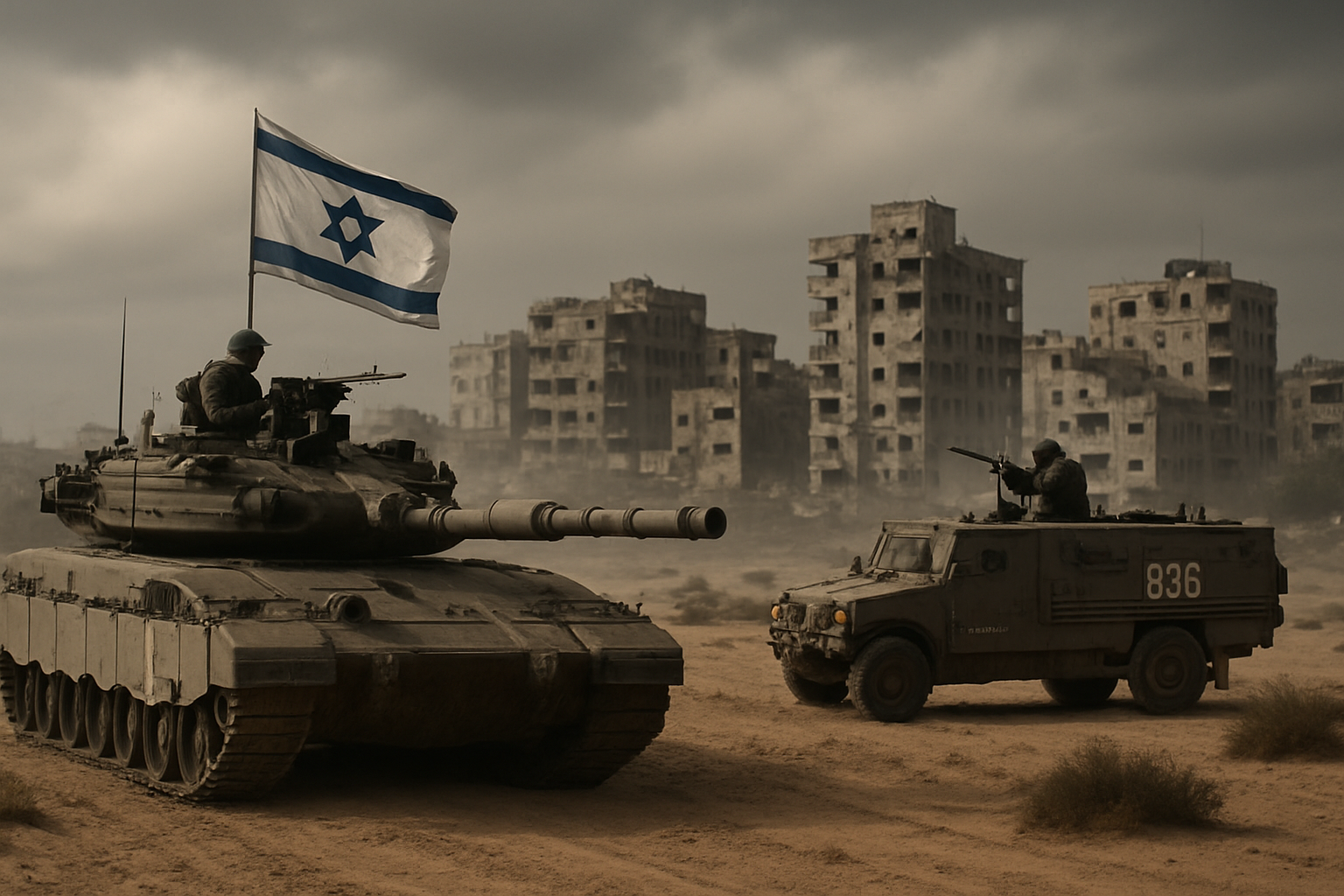
Israeli military operations across Lebanon, Gaza, and the West Bank have intensified dramatically, marking a significant escalation in Middle East tensions as regional conflicts converge with mounting international diplomatic pressure and humanitarian concerns.
Israeli Strikes Target Hezbollah Infrastructure
The Israel Defense Forces (IDF) confirmed the killing of a senior Hezbollah operative accused of rebuilding the organization's infrastructure in southern Lebanon. The targeted strike represents part of Israel's continued efforts to dismantle Hezbollah's military capabilities despite the fragile ceasefire arrangements in place since the October 2025 truce.
Separately, Israeli forces opened fire on multiple settlements in southern Lebanon, including the towns of Yarun and Adaisseh, according to Armenian media reports. The cross-border incidents highlight the volatile security situation along Israel's northern frontier, where tensions with Hezbollah remain elevated despite international monitoring efforts.
In an unusual incident, two fringe activists advocating for Israeli settlement in Lebanon crossed the border to plant trees before being returned to Israel by military forces. The episode underscores the complex dynamics surrounding territorial control and settlement expansion that extend beyond traditional conflict zones.
West Bank Violence Reaches Critical Levels
Palestinian monitoring organizations documented over 1,197 violations by Israeli occupation forces and settlers across the West Bank during a single week from February 6-12, 2026. The Palestinian Information Center "Mata" reported that these incidents resulted in 57 injuries and included attacks on civilians, home raids, and severe movement restrictions.
The most serious incident occurred in Talfit town, south of Nablus, where coordinated settler attacks injured 25 Palestinians, including several with gunshot wounds. Hamas condemned the attacks as "criminal aggression" carried out by settlers alongside occupation forces, describing systematic efforts to terrorize Palestinian residents with live ammunition.
Adding to tensions, Israeli National Security Minister Itamar Ben-Gvir conducted an unprecedented raid on Ofer Prison near Ramallah, entering prisoner cells and threatening executions. The provocative action, documented by Israeli media, showed scenes of violence against Palestinian detainees during the minister's visit.
Gaza Crisis Deepens Despite Ceasefire
The humanitarian situation in Gaza has deteriorated further as Israeli forces conducted demolition operations east of the "yellow line" in Khan Yunis, destroying remaining residential buildings. Loud explosions echoed across the southern Gaza Strip as occupation forces systematically demolished structures in areas under their control.
Gaza's Civil Defense spokesman Mahmoud Basal confirmed that approximately 8,000 bodies remain buried under rubble throughout the Strip, despite ongoing rescue operations. The staggering figure represents one of the war's most devastating humanitarian challenges, with over 3,000 people still missing and presumed dead.
Health officials conducted a mass burial for 53 unidentified Palestinians and dozens of organs and remains, highlighting the scale of casualties that have overwhelmed Gaza's medical and administrative systems. The total death toll has reached 71,800, according to local health authorities.
The Rafah crossing with Egypt, which reopened in February after nearly two years of closure, continues to operate at severely limited capacity. Only 27 Palestinians crossed on the first day against a planned quota of 200, with Hamas condemning "systematic harassment" by Israeli security forces that denied entry to 38 of 50 planned returnees. An estimated 20,000 Palestinians still await medical evacuation.
International Condemnation Intensifies
The Czech Republic joined other European nations in demanding the resignation of UN Special Rapporteur Francesca Albanese, accusing the independent expert of referring to Israel as a "common enemy" of humanity. The UN human rights office expressed concern about mounting pressure on international oversight mechanisms, calling such campaigns "worrying" for democratic accountability.
Eight Arab nations—Saudi Arabia, Jordan, Egypt, UAE, Qatar, Indonesia, Pakistan, and Turkey—issued a joint condemnation calling Israeli actions violations of international law "aimed at imposing unlawful Israeli sovereignty" that undermine prospects for a two-state solution.
The Organization of Islamic Cooperation (OIC) condemned what it termed "continuing massacres," citing dangerous escalation in the region. Over 400 European Union diplomats called for increased pressure on Israeli authorities, while a European Left Coalition petition against EU-Israel partnerships has exceeded 400,000 signatures.
Human Rights Organizations Sound Alarm
The Geneva Center for Democracy and Human Rights, along with the International Union of Lawyers, warned of escalating recruitment and arming of minors in eastern Gaza's "yellow zones" under Israeli occupation control. The organizations documented what they describe as severe violations of international humanitarian law and human rights conventions.
The joint statement confirmed that armed militias are actively recruiting children in Israeli-controlled areas, representing a "serious and compound violation" of international legal frameworks governing occupied territories and child protection.
Internal Israeli Political Crisis
Former Shin Bet security chiefs and senior military officials issued an unprecedented condemnation of "attacks" on Israel's domestic security agency by Prime Minister Netanyahu and his allies. The former officials accused Netanyahu's circle of attempting to absolve the leader of responsibility for the October 7 attacks while convincing his political base that no state commission of inquiry is necessary.
The extraordinary public criticism from Israel's security establishment highlights deepening divisions within the country's leadership over accountability for intelligence failures and strategic decision-making during the ongoing conflict.
Regional Military Exercises Amid Tensions
Israeli occupation forces conducted military exercises in the Red Sea resort city of Eilat, occurring against the backdrop of escalating tensions between Iran and the United States. The exercises coincided with Washington's increased military presence in the Middle East, including the deployment of aircraft carrier strike groups to the region.
The timing of the military drills, amid accusations that Iran seeks to develop nuclear weapons, reflects the broader regional security concerns that extend far beyond the immediate Israeli-Palestinian conflict zone.
Diplomatic Challenges Mount
The escalating violence occurs as international diplomatic efforts struggle to maintain momentum. The Trump administration's proposed "Board of Peace" initiative, scheduled for February 19 with over $1 billion in Gaza reconstruction commitments, faces serious obstacles due to ongoing security deterioration.
Regional mediators, including Qatar and Egypt, continue efforts to facilitate dialogue, but the systematic nature of violations and the expansion of Israeli operations across multiple fronts complicate peace-building initiatives.
The current crisis represents a comprehensive challenge to Palestinian statehood aspirations, regional stability, and international law enforcement credibility. With violence escalating simultaneously in Gaza, the West Bank, and along the Lebanese border, the conflict has evolved into a multi-front crisis that defies traditional diplomatic frameworks.
As international pressure mounts and humanitarian conditions deteriorate, the coming weeks will prove decisive in determining whether diplomatic intervention can arrest the escalating violence or if the region will witness further deterioration into broader regional conflict.