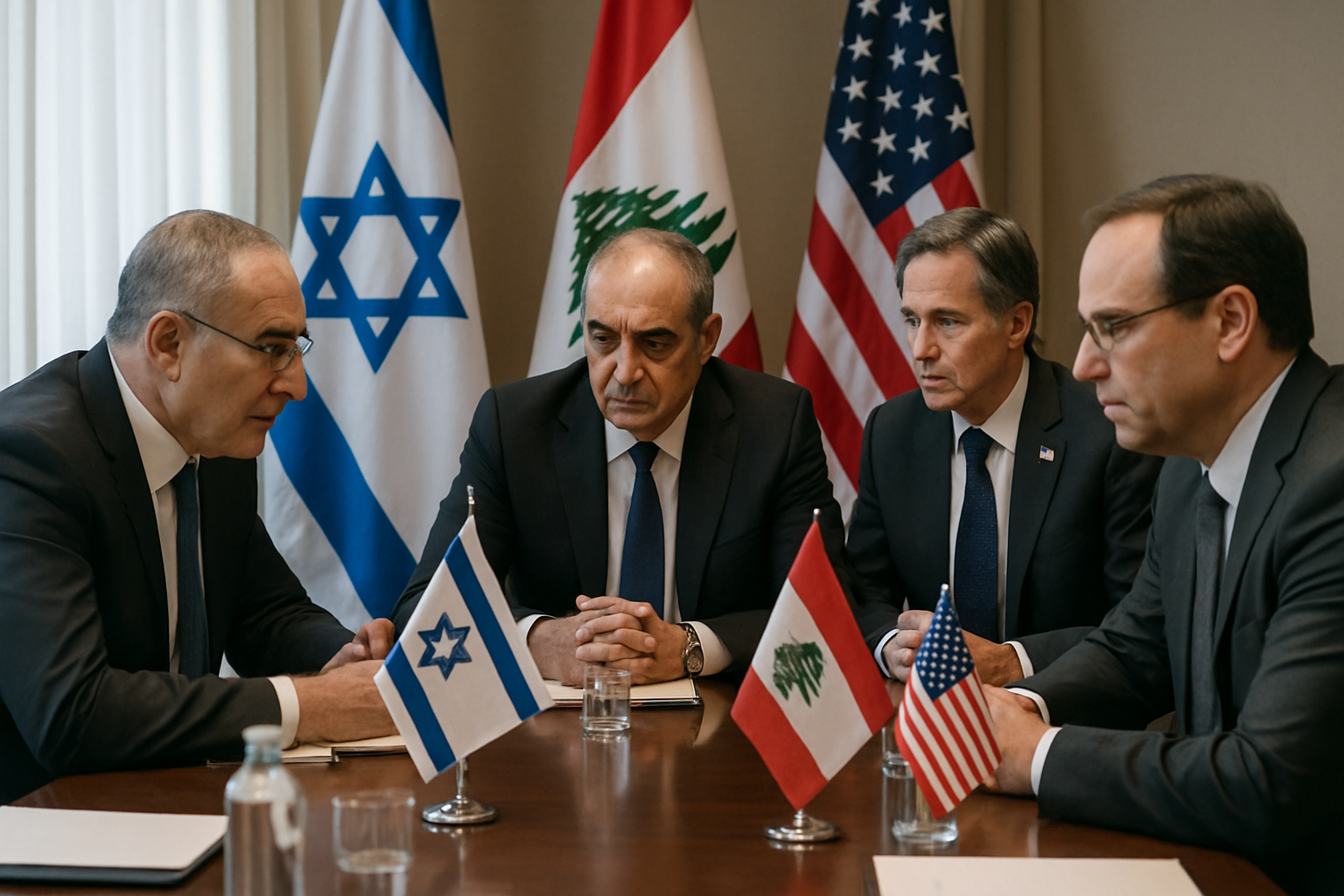
Diplomatic tensions in the Middle East have intensified this week as Lebanon formally accused Israel of deploying chemical substances in border areas, while US-Lebanese military cooperation faces unprecedented strain following a contentious meeting between American Senator Lindsey Graham and Lebanese General Rodolphe Haykal.
The escalating disputes come at a critical juncture for regional stability, occurring amid broader diplomatic efforts to maintain fragile ceasefires and prevent the outbreak of wider conflict across the Middle East. These developments underscore the complex web of territorial, political, and security challenges that continue to define the region's volatile dynamics.
Border Incident Sparks Chemical Weapons Allegations
Lebanese authorities have leveled serious accusations against Israel following footage showing Israeli light aircraft deploying unidentified substances over southern Syria and border areas with Lebanon. According to reports from The Times of Israel, the Lebanese government claims Israel has been spraying herbicide in contested border regions.
The Israeli Defense Forces (IDF) has declined to comment on the allegations, though sources indicate the military has been engaged in vegetation clearing operations along Israel's northern frontier. These activities appear to be part of broader security measures aimed at improving visibility and reducing potential cover for hostile activities along the volatile border.
The deployment of chemical substances, even for agricultural or security purposes, carries significant diplomatic implications in a region where chemical weapons usage has been a persistent concern. Lebanon's formal accusation represents a serious escalation in rhetoric between the two nations, which remain technically at war despite periods of relative calm.
US-Lebanese Military Relations Reach Breaking Point
Parallel to the border incident, a diplomatic crisis has erupted between Washington and Beirut following a failed meeting between US Senator Lindsey Graham and Lebanese General Rodolphe Haykal. The encounter, reported by Lebanese media outlet Libnanews, ended abruptly when General Haykal refused to categorically designate Hezbollah as a "terrorist organization within the Lebanese context."
"The meeting between Senator Graham and General Haykal turned into a disaster after the refusal to qualify Hezbollah as a terrorist organization 'within the context of Lebanon.'"
— Libnanews Report
This confrontation has reignited broader tensions between Washington and Beirut regarding the role of Hezbollah in Lebanese politics and security structures. The incident highlights the fundamental disagreements between American and Lebanese perspectives on how to address the Iran-backed organization, which maintains significant political and military influence within Lebanon.
The timing of this diplomatic rupture is particularly concerning given the fragile nature of the ceasefire arrangements across the region and ongoing discussions about military aid and security cooperation between the United States and Lebanon.
Regional Context and Historical Tensions
These incidents occur against the backdrop of broader Middle Eastern diplomatic turbulence. The region has witnessed unprecedented diplomatic activity in recent months, including confirmed Iran-US nuclear talks scheduled for February 7, 2026, in Oman, and ongoing efforts to maintain ceasefire arrangements in Gaza.
The Israel-Lebanon border has been a flashpoint for decades, with periodic escalations involving cross-border incidents, disputed territory claims, and proxy conflicts involving Hezbollah. The current allegations of chemical spraying add a new dimension to these longstanding tensions, potentially complicating international efforts to maintain stability in the region.
Historical context reveals a pattern of accusations and counter-accusations between Israel and Lebanon regarding border activities. Previous incidents have included disputes over maritime boundaries, alleged infiltration attempts, and disagreements over UN peacekeeping forces' roles in monitoring the volatile frontier.
Implications for Regional Stability
The convergence of these diplomatic incidents poses significant challenges for regional stability efforts. The Lebanon-Israel border has been monitored by the United Nations Interim Force in Lebanon (UNIFIL) since 1978, with varying degrees of effectiveness in preventing escalation.
The current tensions threaten to undermine broader diplomatic initiatives aimed at preventing regional conflict. With ongoing negotiations between Iran and the United States, the deterioration of US-Lebanese relations could complicate efforts to address the multifaceted security challenges facing the Middle East.
Military analysts note that the combination of border incidents and diplomatic breakdowns creates conditions for potential miscalculation or unintended escalation. The involvement of chemical substances, even for non-combat purposes, adds particular sensitivity to the situation given the region's history with such weapons.
International Response and Future Implications
The international community has yet to issue comprehensive responses to either incident, though diplomatic sources indicate monitoring of developments by major powers including the United States, European Union, and United Nations.
The Lebanese government's formal accusation regarding chemical spraying may prompt calls for international investigation or monitoring, potentially involving organizations such as the Organisation for the Prohibition of Chemical Weapons (OPCW) or United Nations inspectors.
Meanwhile, the breakdown in US-Lebanese military dialogue raises questions about future security cooperation and military aid arrangements. The United States has provided significant military assistance to Lebanese armed forces, viewing them as a counterbalance to Hezbollah's influence within the country.
As diplomatic efforts continue across the broader Middle East, the resolution of these specific tensions between Israel and Lebanon, and between the United States and Lebanon, will likely serve as indicators of the region's capacity for managing complex, interconnected conflicts through diplomatic rather than military means.
The coming weeks will be critical in determining whether these incidents represent temporary diplomatic setbacks or the beginning of more serious deterioration in regional relationships that could affect broader stability efforts across the Middle East.