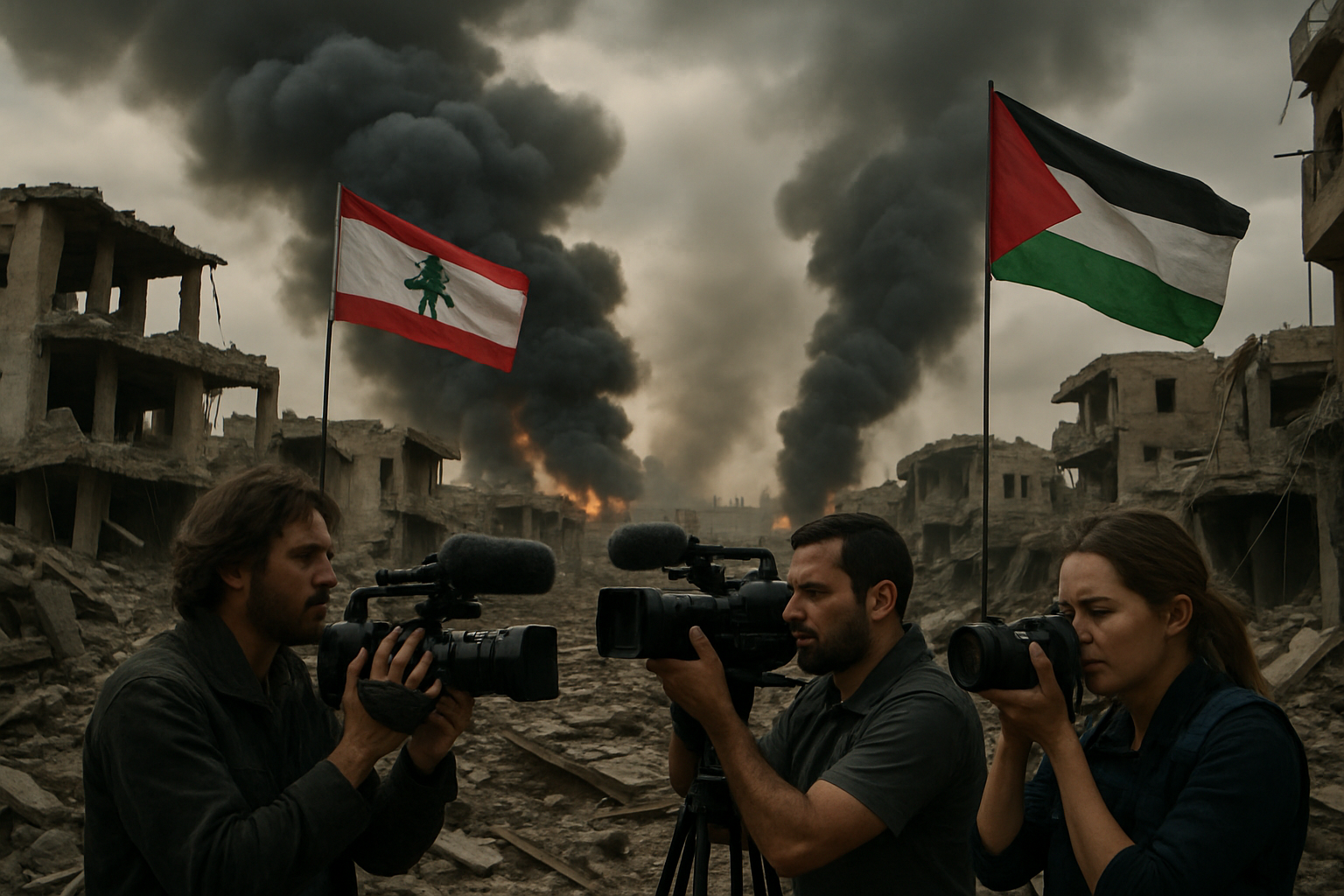
Israeli airstrikes across Lebanon killed at least eight Hezbollah operatives on Friday, marking the deadliest cross-border violence since November 2024 ceasefire agreements, while Palestinian casualties continue mounting in Gaza and the West Bank amid systematic violations of truce arrangements.
The coordinated Israeli military operations targeted Hezbollah command centers in eastern Lebanon's Bekaa Valley and Hamas-linked positions in southern regions, representing a significant escalation in Middle East tensions at a time when international diplomatic efforts are struggling to maintain fragile peace arrangements across multiple fronts.
Lebanese President Michel Aoun condemned the Friday strikes as violations of Lebanese sovereignty, while Hezbollah officials declared that "resistance is the only option" in response to what they characterized as Israeli aggression against Lebanese territory and civilian infrastructure.
Escalating Violence Across Multiple Fronts
The Lebanese strikes occurred amid a broader pattern of deteriorating security conditions throughout the Middle East. In Gaza, Israeli forces killed two Palestinians during early Ramadan observances, bringing the total death toll since the October 2025 "ceasefire" to 614 people, according to Palestinian health authorities.
West Bank violence has intensified dramatically, with four Palestinians injured in Saturday attacks by Israeli forces and settlers, including a child wounded in operations spanning from al-Burj Bedouin community north of Ramallah to agricultural areas in the Jordan Valley. Israeli authorities and settler groups coordinated attacks that included burning agricultural facilities and forcing Palestinian families from their homes.
The systematic nature of these violations has drawn unprecedented international condemnation. UN Relief and Works Agency (UNRWA) warned that continued violence, displacement, and Israeli restrictions on humanitarian operations are severely hampering aid delivery to Palestinian civilians across occupied territories.
FIFA Announces Gaza Stadium Project Amid Devastation
In a controversial development highlighting the complex intersection of sports and politics in the region, FIFA announced plans to fund construction of a new national football stadium in Gaza worth approximately $50 million. The announcement comes despite widespread destruction throughout the Strip from more than two years of intensive Israeli military operations.
"The project includes establishing a stadium capable of hosting international matches, along with training facilities and youth development centers."
— FIFA spokesperson, as reported by The Independent
Palestinian officials have questioned the timing and priorities of such infrastructure projects while basic humanitarian needs remain unmet. Critics argue that stadium construction represents misplaced international attention while hospitals, schools, and water treatment facilities remain in ruins throughout Gaza.
Diplomatic Framework Under Severe Strain
The escalating violence threatens multiple international peace initiatives, including recent diplomatic efforts by the Trump administration and various European Union mediation attempts. Regional powers including Qatar, Egypt, and Jordan have maintained continuous dialogue efforts, but systematic violations across Gaza, the West Bank, and Lebanon are undermining confidence in negotiated solutions.
Finnish media reports indicate growing concern among European Union member states about the sustainability of current ceasefire arrangements. The systematic nature of violations suggests structural problems with enforcement mechanisms rather than isolated incidents of violence.
France 24 reported that Hezbollah officials characterized Friday's strikes as crossing "red lines" that would necessitate military responses, potentially triggering a broader regional escalation that could draw in multiple state and non-state actors across the Middle East.
International Response and Regional Implications
The latest violence occurs against the backdrop of broader regional tensions involving Iran, Syria, and various proxy groups throughout the Levant. Intelligence sources suggest that Israeli strikes targeted weapons storage facilities and command structures linked to Iranian support networks, indicating concerns about arms smuggling and militant group capabilities restoration.
Yemen-based media outlets reported that Lebanese authorities are coordinating with international observers to document ceasefire violations and civilian casualties. The Lebanese government has submitted formal complaints to United Nations peacekeeping forces stationed in southern Lebanon, though the mandate of these forces remains limited to specific geographic areas.
Regional diplomatic sources indicate that Saudi Arabia, United Arab Emirates, and other Gulf states are privately expressing concern about escalation risks while publicly maintaining support for diplomatic resolution efforts. The involvement of multiple regional powers complicates conflict management and increases the potential for miscalculation leading to broader military confrontation.
Humanitarian Crisis Deepens
The violence is occurring during Ramadan, Islam's holiest month, adding religious sensitivities to an already volatile situation. Palestinian families attempting to observe traditional fasting and prayer schedules face continued displacement, movement restrictions, and security threats that interfere with religious observances.
Medical facilities throughout Gaza and the West Bank report increasing patient loads from both direct violence and secondary health effects of prolonged conflict conditions. International medical organizations have suspended operations in several areas due to security concerns, limiting healthcare access for civilian populations.
UNRWA officials indicate that continued restrictions on humanitarian aid distribution are creating food insecurity conditions affecting hundreds of thousands of Palestinian civilians, particularly children and elderly populations most vulnerable to malnutrition and medical complications.
Looking Forward: Regional Stability at Risk
The current escalation represents the most serious threat to Middle East stability since the November 2024 ceasefire agreements that temporarily reduced violence levels across multiple conflict zones. The systematic nature of violations suggests that underlying political and territorial disputes remain unresolved despite international mediation efforts.
Military analysts warn that continued escalation could trigger broader regional conflict involving multiple state actors and proxy forces throughout the Middle East. The involvement of Iranian-backed groups in Lebanon and Gaza, combined with Israeli security concerns about weapons smuggling and terrorist infrastructure, creates potential for sustained military operations with unpredictable consequences.
International diplomatic efforts face the challenge of addressing immediate violence while simultaneously working toward comprehensive political solutions that address root causes of conflict. The failure of current ceasefire arrangements to prevent systematic violations raises fundamental questions about the effectiveness of negotiated peace agreements without robust enforcement mechanisms and political will for compliance from all parties.
As regional tensions continue escalating, the international community faces mounting pressure to develop more effective conflict prevention and resolution mechanisms capable of addressing the complex, interconnected nature of Middle East disputes before they spiral into broader military confrontations with global implications.