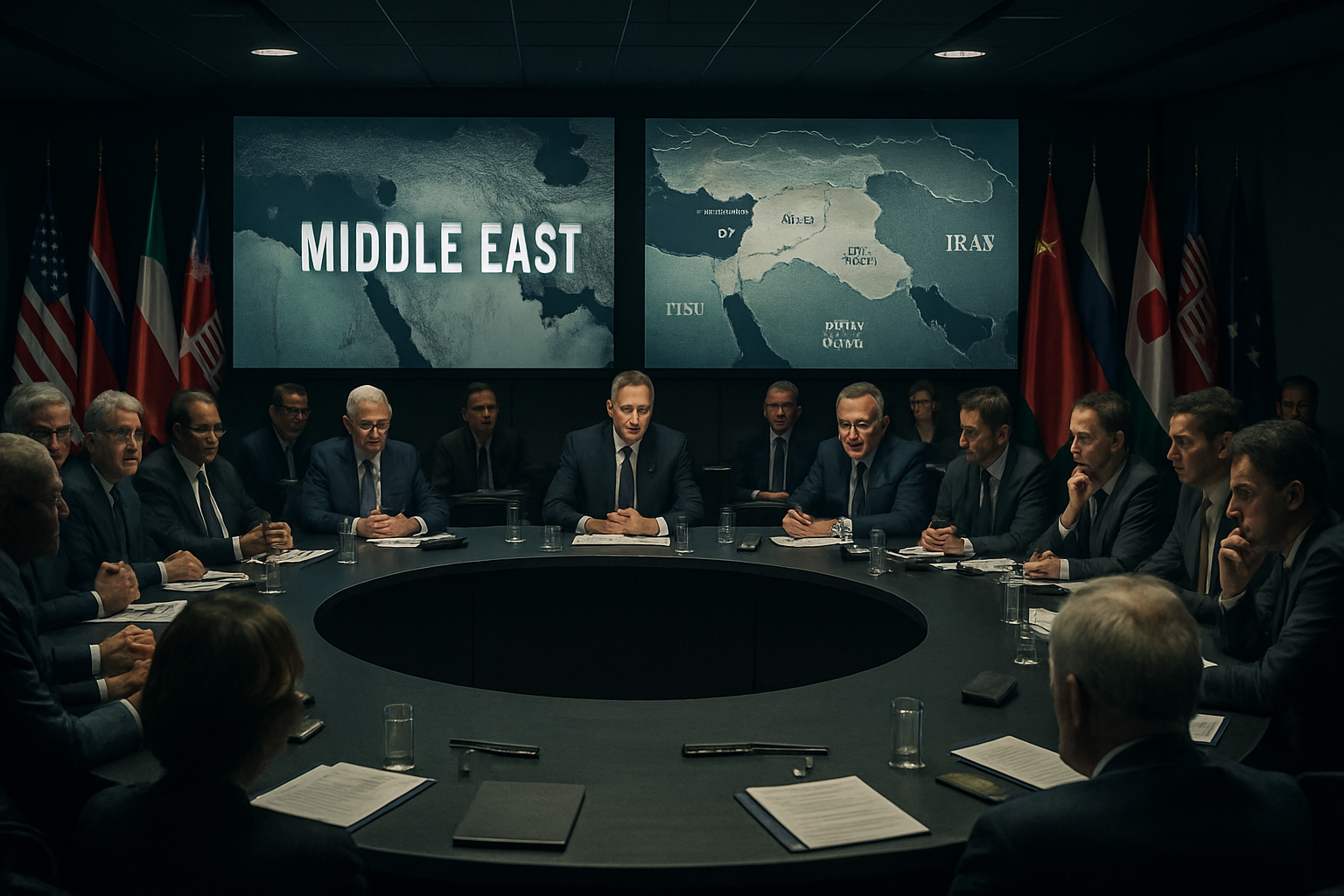
Two weeks after the United States and Israel launched Operation Epic Fury against Iran, the conflict has evolved into the most dangerous international crisis since the Cold War, with Iranian forces now threatening energy infrastructure across the Gulf region and regional powers desperately calling for de-escalation.
The escalation reached a new peak Saturday as Iran's Revolutionary Guards declared that U.S. interests in the United Arab Emirates, including ports, docks, and military locations, are "legitimate targets" following American strikes on Iranian islands. The IRGC urged UAE residents to evacuate ports and U.S. military shelters to avoid civilian casualties, marking the first time Iran has directly threatened Gulf energy infrastructure.
Shipping Crisis Deepens in Strategic Waterways
The conflict's impact on global trade has intensified dramatically, with major shipping lines announcing emergency fuel surcharges as the crisis disrupts key maritime routes. Maersk confirmed it will impose a temporary global Emergency Bunker Surcharge from March 25, citing disruption to fuel availability and cost linked to the situation around the Strait of Hormuz.
Thai naval authorities issued urgent warnings to shipping operators about potential sea mines in the Persian Gulf, Gulf of Oman, and Strait of Hormuz. The Royal Thai Navy's Maritime Traffic Control Centre warned of possible mine deployment, posing risks to one of the world's most important maritime trade routes carrying 40% of global oil shipments.
"The Navy urged Thai vessels and ship operators to avoid entering high-risk areas unless necessary, conduct risk assessments and strengthen security measures."
— Rear Adm. Parach Rattanachaiyaphan, Royal Thai Navy
Despite the mounting dangers, some vessels continue transiting the critical waterway. Two Indian-flagged ships carrying liquefied petroleum gas successfully crossed the Strait of Hormuz Saturday morning, according to India's Ministry of Ports and Shipping, though Iran has significantly curtailed navigation in this vital chokepoint.
Regional Powers Push for Diplomatic Solution
As the crisis enters its third week, regional leaders are intensifying diplomatic efforts to prevent further escalation. Egyptian President Abdel Fattah Al-Sisi held a crucial phone call Friday with Iranian President Masoud Pezeshkian, marking a significant diplomatic outreach amid rising tensions.
Sisi stressed Egypt's "categorical condemnation and rejection" of Iran's targeting of Gulf countries, emphasizing that these states "neither supported nor participated in the war against Iran, but instead worked to reduce tensions and support negotiations." The Egyptian leader called for an immediate halt to attacks to prevent further regional destabilization.
The conversation highlighted the delicate position of Arab nations caught between their traditional alliances with the United States and the need to maintain regional stability. Gulf states have found themselves directly in the crossfire, with the UAE suffering civilian casualties and Kuwait's international airport being struck by Iranian drones.
Economic Impact Spreads Globally
The conflict's economic ramifications extend far beyond the Middle East, with container shipping costs rising dramatically. Drewry's World Container Index increased 8% this week alone, while major carriers implement emergency surcharges worldwide. CMA CGM announced an Emergency Fuel Surcharge effective March 16, citing sharp increases in fuel costs and supply disruption.
The aviation industry continues to face unprecedented challenges, with over 18,000 flights cancelled worldwide since the conflict began - the most extensive disruption since the COVID-19 pandemic. Eight countries have simultaneously closed their airspace, effectively severing critical Asia-Europe flight corridors.
International Demonstrations and Domestic Response
Despite the external military pressure, Iran witnessed massive domestic rallies Friday as millions participated in International Quds Day demonstrations across the country. The marches, showing solidarity with Palestinians and condemning Israeli actions in Gaza, demonstrated the Iranian government's ability to mobilize public support even under intense international pressure.
The scale of these demonstrations, occurring while Iran faces the largest military operation against it since 2003, underscores the complex domestic dynamics within the Islamic Republic during this unprecedented crisis.
Energy Security Concerns Mount
European and Asian economies face mounting energy security concerns as the conflict threatens to disrupt not only oil flows but also liquefied natural gas exports from Qatar, which provides approximately 20% of global LNG supplies. The threat to UAE energy infrastructure adds another layer of uncertainty to already volatile markets.
Germany has evacuated 30,000 tourists from the region, while Australia reports 115,000 nationals remain trapped in affected areas. The European Union activated its ESTIA evacuation plan for Cyprus for the first time in the bloc's history after Iranian drones struck RAF Akrotiri, marking the first attack on European territory since World War II.
Nuclear Diplomacy Remains Stalled
The current military escalation emerged from the complete collapse of nuclear negotiations despite achieving a "broad agreement on guiding principles" in Geneva - the most significant progress since the 2018 JCPOA collapse. The fundamental disagreement persisted over scope, with Iran excluding ballistic missiles and regional proxies as "red lines" while the U.S. demanded a comprehensive agreement.
Iran continues enriching uranium to 60% purity with over 400 kilograms of material approaching weapons-grade levels, sufficient for multiple weapons if weaponized. The crisis occurs against the backdrop of broader nuclear governance breakdown, with the New START treaty having expired February 5, leaving the world without U.S.-Russia nuclear constraints for the first time in over 50 years.
Looking Ahead: Critical Decisions
As the conflict enters its third week, the international community faces what UN Secretary-General António Guterres has called "the greatest test of multilateral cooperation and crisis management in the modern era." The decisions made in coming days will reverberate through international relations for decades, establishing precedents for 21st-century conflict resolution.
The crisis represents a template-setting moment for whether diplomatic or military solutions will define international approaches to territorial and nuclear disputes. Success in containing the escalation could provide a framework for future crisis management, while failure may accelerate the preference for military solutions over diplomatic engagement globally.
"This conflict affects not just regional stability, but the fundamental principles of international law enforcement and energy security that have underpinned the post-World War II order."
— Senior European Diplomatic Source
With Iran now directly threatening Gulf energy infrastructure and regional powers calling for immediate de-escalation, the coming phase will determine whether this remains a contained regional confrontation or evolves into a broader Middle Eastern war with worldwide implications for energy markets, supply chains, and the international system itself.
The stakes could not be higher: regional war prevention, global energy security, nuclear governance credibility, and international law enforcement are all being tested simultaneously in what has become the most consequential international crisis affecting Middle East stability, global energy architecture, and conflict resolution approaches in decades.