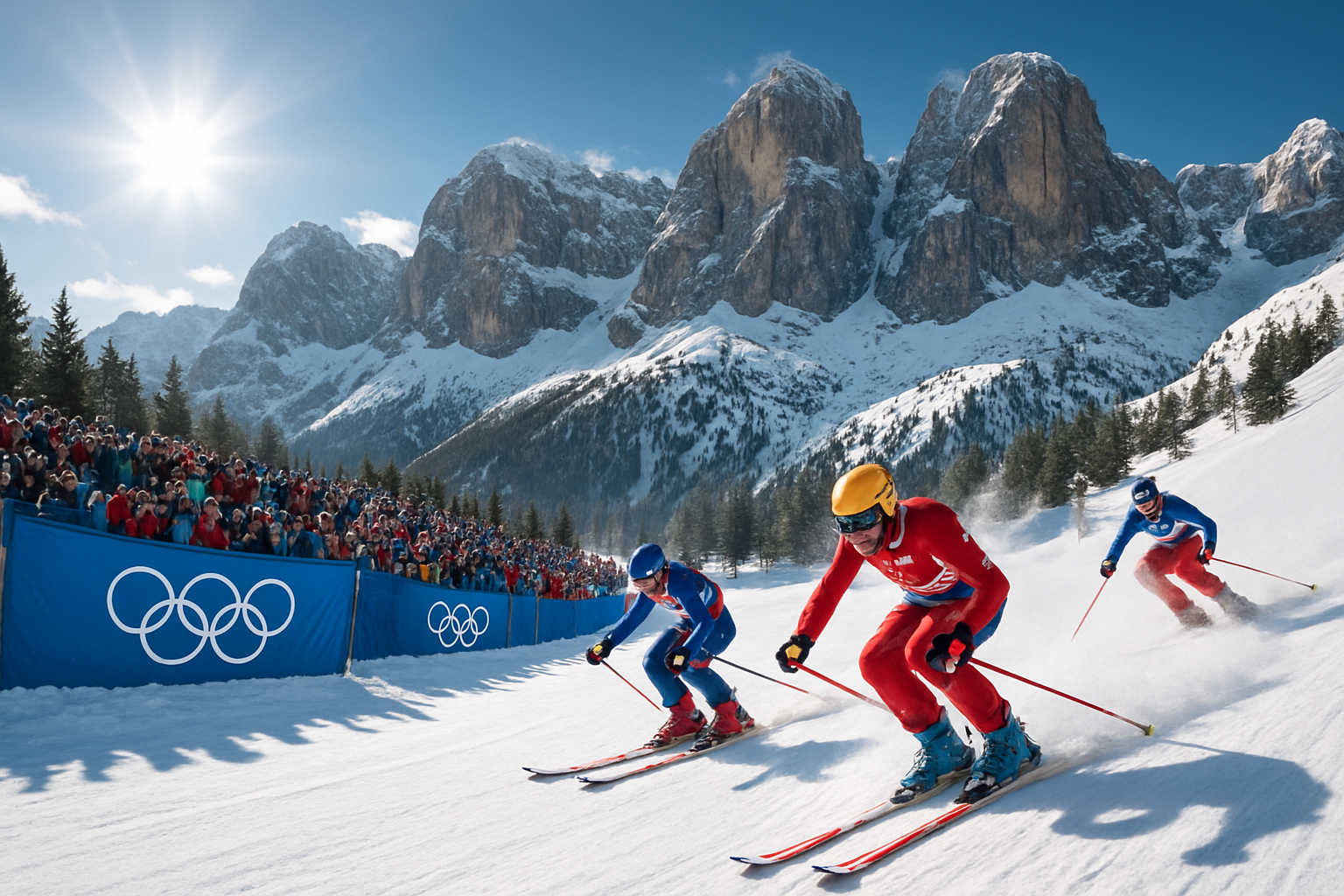
Competition continues at the Milan-Cortina 2026 Winter Olympics with intense battles across multiple disciplines as athletes from around the world push their limits in pursuit of Olympic glory across Italy's spectacular Alpine venues.
Tuesday, February 10, marked the fourth official day of competition at the most geographically dispersed Winter Olympics in history, with events spanning over 400 kilometers from Milan to Cortina d'Ampezzo. The Games have already delivered stunning performances, unexpected victories, and heartbreaking setbacks that define the Olympic spirit.
French Biathlon Excellence
France's Eric Perrot emerged as a standout performer, building on his mixed relay success to position himself as a favorite in the individual biathlon competition. The French delegation has shown remarkable strength in Nordic disciplines, with their biathlete already claiming relay gold and setting the stage for potential additional medals in the individual events.
The biathlon competitions have taken place at the Antholz-Anterselva venue, where the combination of precise shooting and cross-country skiing continues to captivate audiences. France's strong performance in this technically demanding sport reflects years of investment in winter sports infrastructure and athlete development.
German Ski Jumping Controversy
Germany's ski jumping team found itself at the center of controversy as reports emerged of an equipment scandal involving competitor suits. Philipp Raimund, the German Olympic champion, expressed disappointment with Norwegian colleagues regarding what has been described as an "anzugskandal" (suit scandal).
"Es ist, als ob man mir ins Gesicht gespuckt hat" (It's like being spat in the face)
— Philipp Raimund, German Ski Jumper
The controversy highlights the technical precision required in ski jumping, where aerodynamic equipment can mean the difference between gold and disappointment. The International Ski Federation has been monitoring equipment standards closely throughout the Games.
Global Participation Shines
The Games continue to showcase the global reach of winter sports. Belarusian cross-country skier Hanna Karaliova competed in the women's sprint classic, though she was unable to advance to the quarterfinals. Her participation represents the dedication of athletes from nations working to establish themselves in traditionally Nordic-dominated sports.
Canada's William Dandjinou made his Olympic debut in speed skating, competing in the men's 1,000-meter short track against strong competition from South Korea and Hungary. The event highlighted the fierce competition in speed skating, where fractions of seconds determine medal positions.
American Alpine Dreams
Team USA's alpine skiing hopes rest significantly on the team combined event, featuring the pairing of slalom specialist Mikaela Shiffrin with downhill champion Breezy Johnson. This innovative format, making its Olympic debut, combines the technical precision of slalom with the raw speed of downhill racing.
The American duo enters as medal favorites following Johnson's dramatic gold medal victory in the women's downhill, a race overshadowed by Lindsey Vonn's devastating crash that ended her remarkable comeback attempt.
Nordic Dominance Continues
Sweden maintained its traditional Nordic strength in cross-country skiing, with athletes setting the standard in sprint prologues. The Swedish cross-country team has been hunting medals in the Olympic sprint events, drawing on decades of expertise in the technically demanding discipline.
Norway, despite some dramatic moments with debutant athletes, continued to demonstrate why it remains the world's premier winter sports nation. Norwegian athletes have shown both the elation of victory and the pressure of high expectations at their home continent Games.
Swiss Alpine Success
Switzerland capitalized on early success in alpine skiing, with their athletes securing both gold and silver in the debut of the team combination format. The Swiss performance in alpine events reflects their natural advantage competing in familiar Alpine conditions and their long-standing tradition of excellence in mountain sports.
Today's women's team combination events see Swiss athletes well-positioned to add to their medal tally, though they face strong competition from American and European rivals.
Latvian Breakthrough Moments
Latvia's 68-member delegation, the largest in the nation's Olympic history, continued to make their mark with athletes qualifying for advanced rounds across multiple disciplines. Short track speed skaters Roberts Krūzbergs and Reinis Bērziņš successfully qualified for the quarterfinals in the men's 1,000-meter event.
However, Latvian cross-country skiers were unable to advance past the qualification rounds in the sprint classic, highlighting the depth of competition in Nordic events where established winter sports nations continue to dominate.
Infrastructure and Logistics Success
Despite early concerns about the unprecedented geographic spread of venues, the Milano-Cortina 2026 Games have demonstrated remarkable logistical coordination. Athletes and officials have successfully navigated the 400+ kilometer network of venues, from Milan's speed skating oval to Cortina's alpine courses.
The revolutionary dual-city hosting model has proven viable, though it requires extensive transportation coordination and precise scheduling. This approach may influence future Olympic hosting strategies as the International Olympic Committee emphasizes sustainability and use of existing facilities.
Technology Integration
The Games continue to showcase technological innovation, with Alibaba's Qwen AI system providing the first Olympic integration of large language model technology for broadcasting and spectator services. This artificial intelligence enhancement has improved real-time information delivery and multilingual support across venues.
OMEGA's AI-powered figure skating analysis has also garnered attention, providing judges and viewers with enhanced technical insights into the sport's complex scoring system.
Cultural Celebration
The Milano-Cortina Games have embraced Italy's rich cultural heritage while addressing the linguistic diversity of the Alpine regions. Bilingual place names in Alto Adige/South Tyrol acknowledge the region's German-speaking population, while the Milo and Tina "Gen Z" mascots have connected with younger audiences worldwide.
The sustainable Olympic villages, featuring greenhouse spaces and environmentally conscious design, demonstrate how major sporting events can align with climate responsibility.
Looking Ahead
With 13 days of competition remaining, the Milano-Cortina 2026 Winter Olympics continue to deliver the athletic excellence and human drama that define the Olympic movement. The Games have successfully combined traditional winter sports excellence with innovative hosting approaches and technological advancement.
As competition intensifies, athletes from 92 nations will continue to pursue their Olympic dreams across 116 medal events, writing new chapters in winter sports history while showcasing the enduring power of international cooperation through sport.
The Milano-Cortina 2026 Winter Olympics represent not just a return to the Alps after a 20-year absence, but a vision for sustainable, technology-enhanced Olympic hosting that maintains the Games' core values of athletic excellence and global unity.