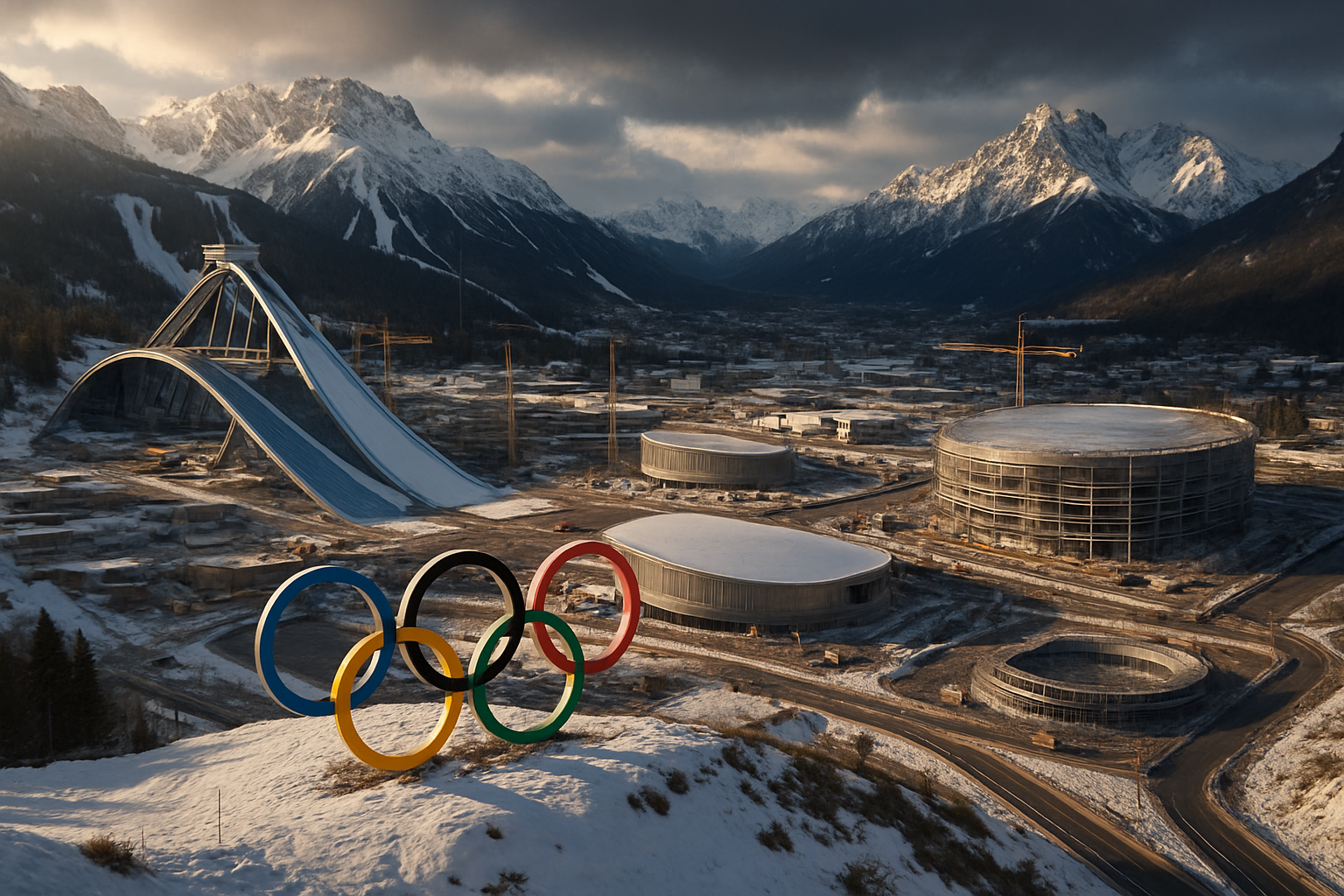
With just days remaining before the February 6 opening ceremony at Milan's San Siro stadium, the Milano-Cortina 2026 Winter Olympics are entering their final preparation phase amid a whirlwind of last-minute construction work, athlete announcements, and logistical challenges that organizers insist will not dampen what promises to be an unforgettable Games.
The 2026 Winter Olympics mark a historic return to the Alps after a 20-year absence, with Italy hosting the most geographically dispersed Winter Games ever staged. Events will unfold across seven sites spanning northern Italy's regions, from the fashion capital of Milan to the picturesque mountain resort of Cortina d'Ampezzo, creating what organizers describe as a unique Olympic experience that celebrates the diversity of Italian winter sports heritage.
Infrastructure Race Against Time
Perhaps nowhere is the pressure more intense than at the main ice hockey venue, where construction crews are working around the clock to ensure the facility is ready for the world's top players, including NHL stars Connor McDavid and Marie-Philip Poulin. According to reports from the BBC, the primary hockey arena faces significant completion challenges, prompting concerns about readiness for the Games' start.
However, veteran NHL players who have competed in less-than-ideal conditions worldwide are taking a pragmatic approach to the situation. As one report noted, many professional hockey players have "played in worse" conditions throughout their careers, suggesting that any remaining venue issues are unlikely to significantly impact the quality of competition.
The infrastructure challenges extend beyond hockey venues. In Cortina d'Ampezzo, the incomplete Apollonio-Socrepes cable car system has forced local authorities to implement school closures to manage transportation logistics during the Games. This represents one of several logistical hurdles organizers are navigating in the final days before competition begins.
Olympic Village: A Sustainable Marvel
Despite construction challenges elsewhere, the Olympic Village stands as a testament to sustainable design and international cooperation. The facility, designed to accommodate up to 3,500 athletes from around the world, features innovative green architecture including greenhouses, extensive use of sustainable wood materials, and a symbolic "signature for peace" that embodies the Olympic spirit of unity.
The village represents more than just accommodation; it serves as a microcosm of the global Olympic community, where athletes from diverse backgrounds and cultures come together under the Olympic rings. Italian media have described it as "the world in a village," highlighting its role as a cultural melting pot during the Games period.
Transportation: Navigating Italy's Most Spread-Out Olympics
The geographical distribution of venues across northern Italy presents unprecedented logistical challenges for spectators and officials alike. With events scattered across seven distinct locations, the question of transportation between venues has become a central concern for visitors planning to attend multiple competitions.
Local transportation authorities are implementing comprehensive solutions to address these challenges, though some question whether private vehicles will be necessary to fully experience the Games. The transportation network includes special Olympic shuttle services, enhanced public transit connections, and coordinated scheduling to minimize travel disruption between venues.
Athletic Stars and Last-Minute Drama
The pre-Olympic period has been marked by both inspiring comebacks and disappointing setbacks. American alpine skiing legend Lindsey Vonn has captured international attention with her determination to compete despite suffering a torn ACL in her left knee during a World Cup event on January 30. The injury, which would sideline most athletes, has not deterred the veteran skier from pursuing her Olympic dreams, demonstrating the extraordinary mental fortitude that defines Olympic-caliber competitors.
Meanwhile, flag bearer announcements continue to generate excitement among participating nations. Estonia has announced its flag bearers for the opening ceremony, recognizing two veterans of the country's Olympic program who will carry the national colors into San Siro stadium during Friday's festivities.
Opening Ceremony: Innovation Meets Tradition
The opening ceremony promises to blend Italy's rich cultural heritage with contemporary innovation, offering what organizers describe as "the same rich pageantry we've come to expect, with some new spins and geographic distance that will set the opening ceremony apart from previous outings."
Prince Albert II of Monaco's attendance at the 145th International Olympic Committee session at Milan's prestigious Teatro alla Scala on Monday underscores the international significance of these Games. The session brought together Olympic leadership just three days before the opening ceremony, with new IOC President Kirsty Coventry, the Zimbabwean former swimming champion who assumed office in 2024, presiding over her first Winter Olympics.
Italian President Sergio Mattarella's participation in the IOC session at La Scala further emphasizes the national importance of hosting these Games, representing Italy's commitment to delivering a world-class Olympic experience despite the various challenges that have emerged during the preparation period.
Regional Uniqueness and Cultural Integration
One of the most distinctive features of the Milano-Cortina Games is their accommodation of regional linguistic diversity. In Alto Adige (South Tyrol), where two-thirds of the population speaks German, Olympic organizers have implemented historic bilingual place names for the first time in Winter Olympic history. This cultural sensitivity reflects the Games' broader commitment to celebrating Italy's diverse regional identities while maintaining Olympic unity.
The Games will also feature Milo and Tina, stoat mascots that have been dubbed the "first openly Gen Z" Olympic mascots, representing a new generation's approach to Olympic symbolism and cultural expression.
International Participation and Global Reach
The Milano-Cortina Games have attracted participation from nations across the globe, with countries like Slovakia providing comprehensive competition schedules for their athletes and supporters. The international reach extends from traditional winter sports powerhouses to nations making historic Olympic commitments, demonstrating the Games' continued ability to inspire global participation in winter sports.
Switzerland, as a neighboring Alpine nation, has generated particular interest in the Games' outcomes, with local media speculating about potential medal counts and NHL star participation, reflecting the regional excitement surrounding this return of the Winter Olympics to the Alps.
Looking Ahead: Promise Despite Challenges
As construction crews work through the final hours and athletes make their last preparations, the Milano-Cortina 2026 Winter Olympics represent both the challenges and opportunities inherent in hosting mega-events in the modern era. While infrastructure concerns and last-minute preparations have dominated headlines, the underlying foundation for a successful Games remains strong.
The combination of Italy's deep winter sports tradition, the Alpine region's natural beauty, and the international Olympic community's resilience suggests that despite current challenges, the Milano-Cortina Games will deliver the memorable experiences that define Olympic competition. From the opening ceremony at San Siro to the closing events in the Italian Alps, these Games promise to showcase both athletic excellence and Italian hospitality on the world stage.
With curling competition beginning February 5 and women's downhill training starting February 6, the sporting action will soon overshadow the construction concerns and logistical challenges that have characterized the final preparation period. As organizers have consistently maintained, the focus will ultimately return to what matters most: celebrating the world's finest winter athletes competing at the highest level in one of the world's most beautiful mountain settings.