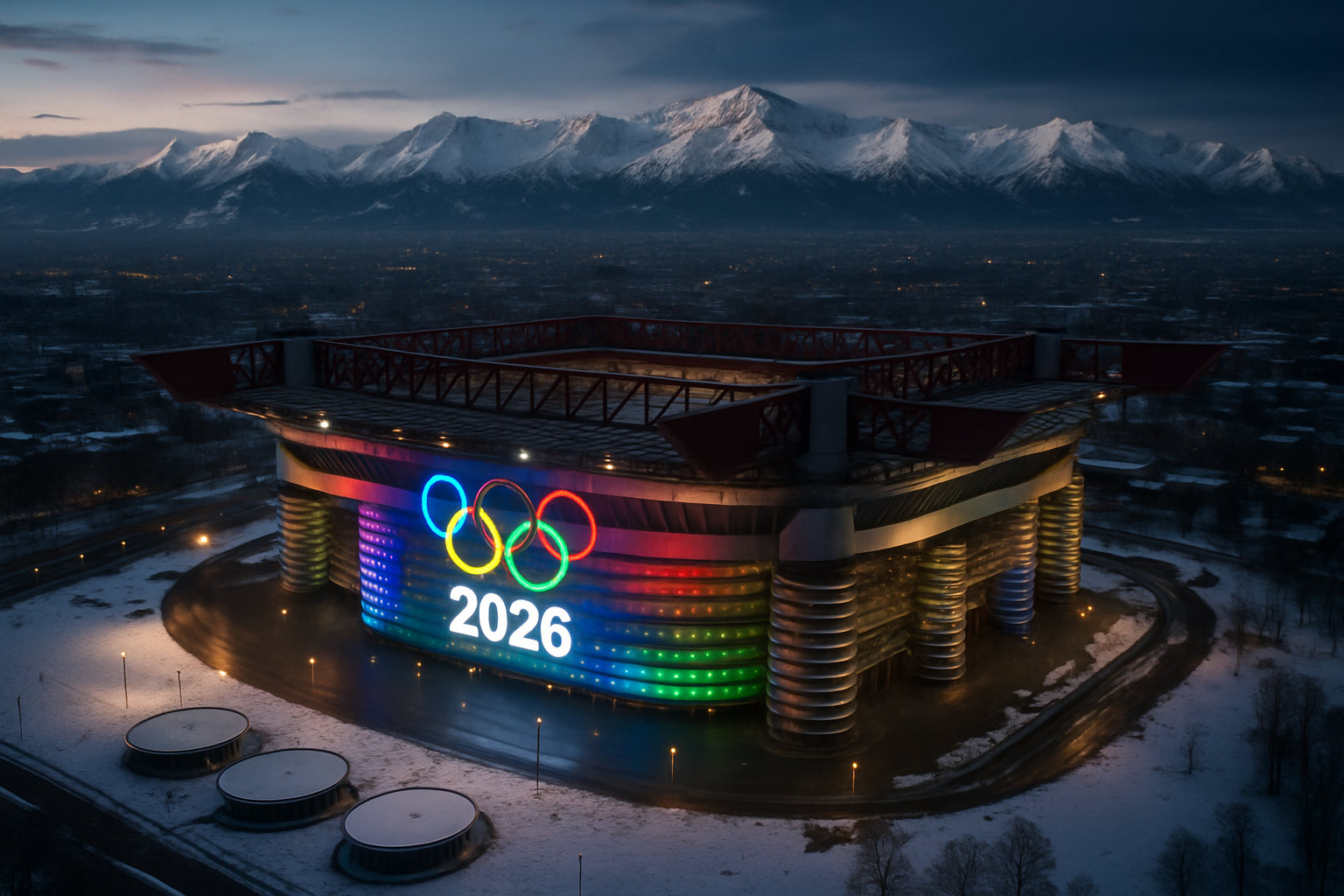
The 2026 Winter Olympics in Milan-Cortina have officially begun, marking the most geographically dispersed Winter Games in Olympic history as nearly 3,000 athletes from 92 countries compete across seven venues spanning over 400 kilometers of northern Italy.
The Games opened with a spectacular ceremony at Milan's San Siro stadium on February 6, following the arrival of the Olympic flame after a two-month journey covering approximately 12,000 kilometers through more than 300 Italian municipalities. The flame's arrival in Milan marked the culmination of preparations that have been both innovative and challenging.
Revolutionary Technology Integration
These Olympics represent a technological milestone with Alibaba Cloud deploying the first Olympic Large Language Model (LLM) technology. The Qwen AI system is powering Olympic AI Assistants for broadcasting and spectator experiences, creating unprecedented artificial intelligence integration into Olympic infrastructure.
Another significant technological advancement comes in figure skating, where Swiss watchmaker OMEGA has introduced new AI systems that allow judges and television viewers to analyze the tiniest nuances in routines with unprecedented precision.
Infrastructure Challenges and Solutions
Despite the innovative technology, the Games have faced significant infrastructure challenges. The main ice hockey venue required "frantic" last-minute construction work, though NHL veterans Don Moffatt and Mark Messer assured quality playing surfaces. The incomplete Apollonio-Socrepes cable car in Cortina forced local school closures to manage transportation logistics.
Power outages disrupted early curling competitions at the Cortina venue, temporarily leaving matches in darkness and affecting scoring systems. These technical difficulties highlighted the complexity of managing the most geographically dispersed Winter Olympics ever attempted.
"The Games promise to be unforgettable despite the bumpy preparations we've experienced."
— Kirsty Coventry, IOC President
Historic Participations and Comebacks
The Games feature several remarkable stories of participation and perseverance. Saudi Arabia makes its Winter Olympic debut with Fayik Abdi in alpine skiing and Rakan Aliriza in cross-country skiing, while Caribbean nations Jamaica and Trinidad & Tobago are competing in four-man bobsleigh for the first time in Olympic history.
Perhaps the most dramatic individual story belongs to American alpine skiing legend Lindsey Vonn, who at 41 is attempting to compete in the downhill despite completely rupturing her ACL in a crash at Crans-Montana, Switzerland, just days before the Games. Her determination to race with such a severe injury on the dangerous Tofana course represents an unprecedented test of Olympic determination.
Indian Olympic champion Abhinav Bindra participated in the torch relay, describing it as "a symbol of unity, perseverance, and shared human aspiration" in his social media posts from Milan.
Environmental Sustainability Concerns
The Games have generated significant environmental debate, particularly regarding the construction of the new Cortina Sliding Centre. Environmental protesters have criticized the felling of approximately 500 ancient larch trees in the Ronco forest to clear the path for the concrete bobsleigh, skeleton, and luge track.
Despite Italy's promises of sustainable Olympics, environmentalists warn that these Games could scar the mountains for decades. The extensive use of artificial snow across venues has raised concerns about water and energy consumption during an already harsh European winter.
Cultural and Social Innovations
The Games showcase several cultural innovations, including the implementation of bilingual place names in Alto Adige/South Tyrol, where two-thirds of the population speaks German. This accommodation for the German-speaking community represents a significant cultural gesture in Olympic hosting.
The Olympic villages feature sustainable design with greenhouse spaces and wood materials, housing up to 3,500 athletes in Milan. The mascots Milo and Tina, dubbed "Gen Z" Olympic mascots, reflect the Games' attempt to connect with younger audiences.
Security and Political Tensions
Security preparations have been extensive following pro-Russian cyberattacks on Olympic venues and Italian diplomatic facilities just hours before the opening ceremony. The attacks targeted hotel websites in Cortina d'Ampezzo and Italian embassies in Washington, Sydney, Toronto, and Paris.
Political tensions have also emerged around the presence of U.S. Vice President J.D. Vance and Secretary of State Marco Rubio, accompanied by ICE agents, sparking criticism from Italian politicians and IOC concerns about potential demonstrations.
Athletic Competition Highlights
Competition began on February 5 with curling events, despite the power outages. Early results included victories for Italian curlers Stefania Constantini and Amos Mosaner over South Korea (8-4), while Swedish siblings defeated the Czech Republic (7-4).
Norwegian athletes are experiencing mixed fortunes, with no Norwegian snowboarders qualifying for the Big Air finals despite high expectations. The dramatic elimination included Marcus Kleveland missing his final opportunity in the closing minutes of qualification.
Health concerns have also affected competition, with Finland's women's hockey team having their match against Canada postponed due to an outbreak of acute intestinal virus among Finnish players.
Looking Forward
The Games run through February 22, featuring 116 medal events across 16 sports, including the Olympic debut of ski mountaineering. Norway is expected to lead the medal count, while the Netherlands anticipates a "gold rush" in speed skating events.
Despite the challenges encountered in preparation and early competition, these Olympics represent the return of the Winter Games to the Alps after a 20-year absence. The combination of technological innovation, cultural celebration, and athletic excellence promises to create memorable moments even as organizers work to overcome infrastructure and logistical hurdles.
The success of Milan-Cortina 2026 will likely influence future Olympic hosting decisions, particularly regarding the balance between geographic dispersion, environmental sustainability, and the practical challenges of delivering world-class competition venues across multiple locations.