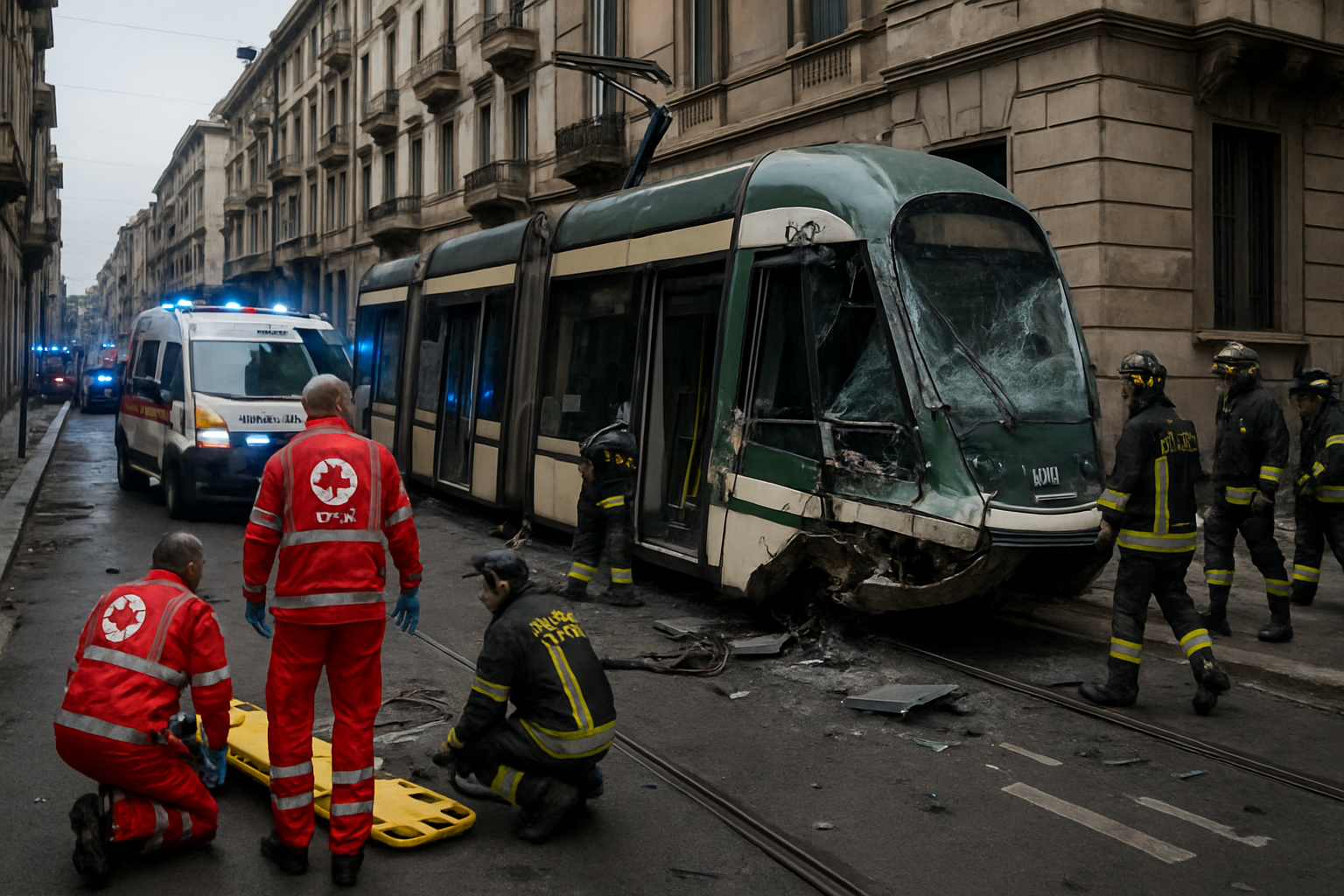
A devastating tram accident in Milan's Porta Venezia district on Friday afternoon killed at least two people and injured dozens more when a Line 9 tram derailed at high speed and crashed into a building, marking one of the most serious public transportation accidents in recent Italian history.
The incident occurred around 4:00 PM local time on Viale Vittorio Veneto near Porta Venezia, as the modern tram was traveling from Piazza Repubblica toward Porta Venezia. Dramatic footage captured by a nearby dashboard camera shows the tram taking a curve at excessive speed before jumping the tracks and slamming into the corner of a building.
Casualties and Emergency Response
Initial reports varied on casualty figures, but authorities confirmed at least two fatalities and between 38-49 injured passengers and pedestrians, with multiple sources reporting six people in serious condition. Emergency responders, including firefighters and paramedics, rushed to the scene as witnesses described hearing sounds "like a bomb" when the tram derailed.
Prosecutor's office spokesperson confirmed that authorities have opened an investigation for involuntary manslaughter and causing bodily harm, treating the incident with the utmost seriousness given the scale of casualties and potential systemic safety failures.
"The impact was devastating. The tram nearly flipped on its side as it took the curve before slamming to a stop."
— Eyewitness Account
Among the casualties, one passenger and one pedestrian were confirmed dead, while several victims were reportedly trapped under the derailed tram before being freed by emergency services.
Investigating the Cause
Preliminary investigations point to excessive speed as the tram approached a critical junction, though authorities are examining whether the driver experienced a medical emergency. According to Italian media reports, the 47-year-old tram operator told investigators he suffered from "malaise" or sudden illness during the journey.
The driver had reportedly skipped a scheduled stop before the derailment occurred at a track junction, suggesting possible loss of control or awareness. Video evidence shows the modern tram taking the curve at what appears to be dangerous speed before derailing and careening into the building's storefront.
Transport authorities noted that the derailed vehicle was a state-of-the-art tram, part of Milan's modern public transportation fleet, ruling out obvious mechanical failures as the primary cause.
Historical Context of Tram Safety
This tragedy adds to a concerning pattern of tram accidents in Italy and across Europe. According to Italian transportation records, tram derailments have occurred periodically since 1984, highlighting ongoing challenges with urban rail safety despite technological improvements.
The incident bears similarities to the devastating February 12 tram accident in Sarajevo, Bosnia and Herzegovina, which killed 23-year-old Erdoan Morankić and severely injured student Ella Jovanović, leading to sustained public protests and the resignation of the Sarajevo Canton Prime Minister.
European transportation networks have faced unprecedented challenges in recent months, with extreme weather, infrastructure strain, and aging systems contributing to safety concerns across the continent.
Impact on Olympic Preparations
The derailment occurred during the Milano-Cortina 2026 Winter Olympics, adding another challenge to Games organizers already dealing with various logistical issues. The accident site in central Milan is near key Olympic transportation routes, though Olympic venues were not directly affected.
The timing is particularly sensitive as Milan has been showcasing its public transportation system as a model for sustainable Olympic hosting, with the historic tram network playing a symbolic role in Olympic ceremonies and daily operations.
Transportation Safety Concerns
This accident highlights broader concerns about European urban transportation safety amid increasing passenger volumes and aging infrastructure. Milan's tram network, while modernized in many areas, operates in dense urban environments where any mechanical or human failure can have catastrophic consequences.
Transportation experts emphasize that modern tram systems, despite advanced safety features, remain vulnerable to human error, particularly when drivers experience medical emergencies. The integration of automated safety systems and enhanced driver monitoring represents an ongoing challenge for urban transit authorities.
"This represents a devastating impact on our transportation system and the families affected. We will conduct a thorough investigation to prevent future tragedies."
— Transport Authority Statement
Looking Forward
Italian transportation authorities have promised a comprehensive review of tram safety protocols, driver health monitoring, and emergency response procedures following this tragic incident. The investigation will likely examine whether enhanced medical screening, automated speed controls, or other preventive measures could have prevented this accident.
The tragedy serves as a stark reminder that even in advanced transportation systems, the human element remains critical to passenger safety. As cities worldwide expand their tram networks for environmental and efficiency reasons, the lessons from Milan will likely influence safety standards and operational procedures across the industry.
For the families of victims and the dozens of injured passengers, this Friday afternoon journey became a life-changing tragedy that will require extensive support and long-term recovery efforts. The incident stands as one of the most serious tram accidents in recent European history, demanding comprehensive responses from transportation authorities, city officials, and public safety agencies.