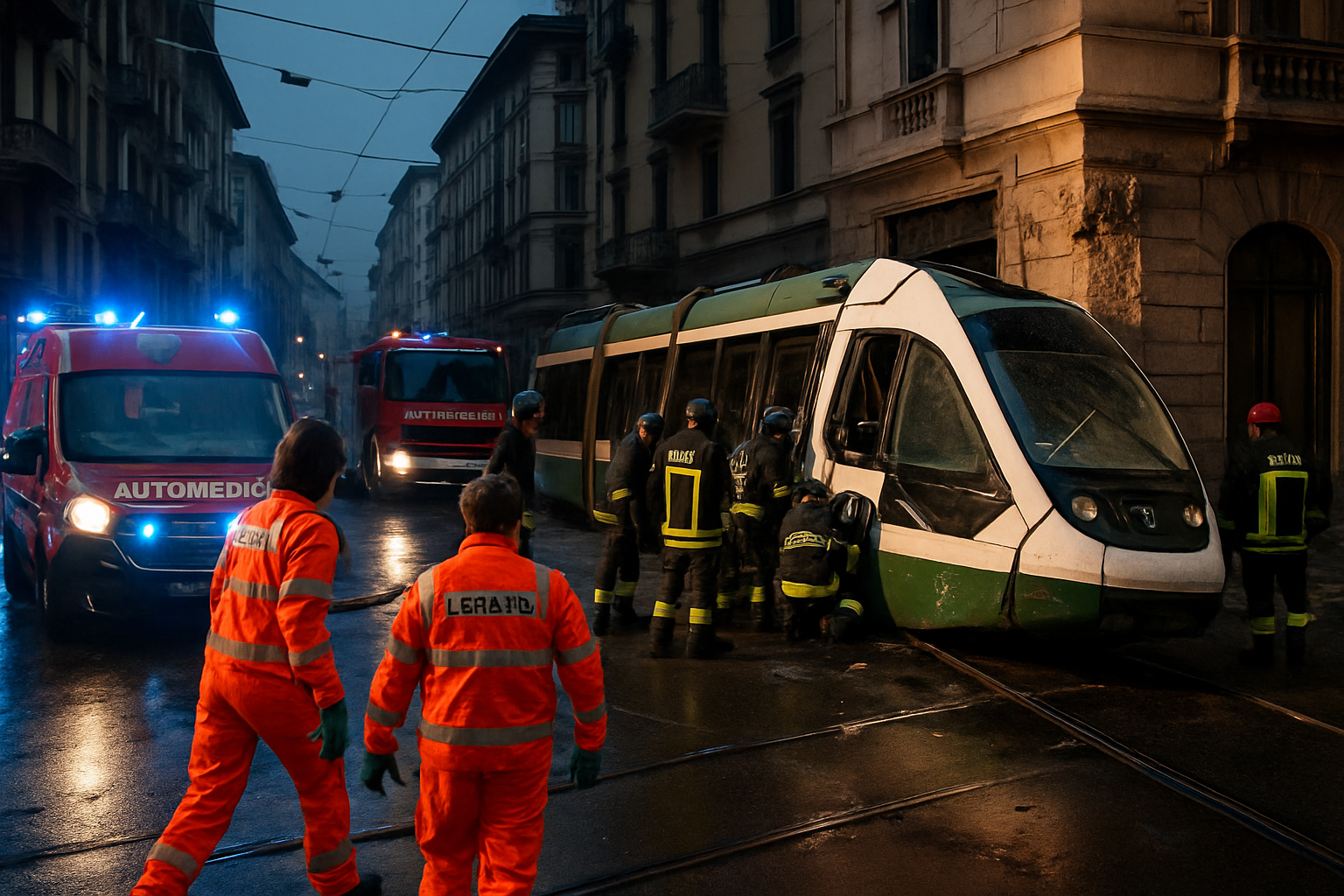
A devastating tram derailment in Milan on February 27, 2026, claimed two lives and left 54 people injured when a modern Line 9 tram jumped tracks at high speed and crashed into a building near Porta Venezia, marking one of the deadliest public transport accidents in the city's recent history.
The accident occurred around 4:00 PM on Viale Vittorio Veneto as the tram traveled from Piazza Repubblica toward Porta Venezia. Witnesses described hearing the impact "like a bomb" as the derailed tram crashed into the corner of a building after taking a curve at excessive speed.
Two Lives Lost in the Wreckage
The victims have been identified as a 59-year-old Italian man who died among the wreckage at the scene, and a 56-year-old homeless Senegalese man who succumbed to his injuries at Niguarda Hospital. The tragedy highlights the vulnerability of all passengers, regardless of their circumstances, when public transportation safety systems fail.
Among the 54 injured passengers, several were reported in serious condition and required emergency treatment at multiple Milan hospitals. The scale of casualties reflects the violent nature of the derailment, with passengers trapped under debris from the derailed tram before emergency responders could reach them.
Driver's Medical Emergency Under Investigation
The 47-year-old tram driver told investigators he suffered a "malaise" during the journey and reported being unconscious at the time of the accident. Prosecutors have opened an investigation for involuntary manslaughter and bodily harm, focusing on whether the driver's medical condition contributed to the crash.
"I was unconscious," the driver told investigators, claiming he had no memory of the moments leading to the derailment.
— Tram operator statement to police
Preliminary findings suggest the driver skipped a scheduled stop before the derailment occurred at a track junction, raising questions about the sequence of events that led to the tragedy. Dashboard camera footage captured the moment of impact, showing the tram nearly flipping over before crashing into the building.
Modern Tram, Failed Safety Systems
Despite the tram being relatively new and equipped with modern safety features, the automatic safety systems failed to prevent the accident. The investigation is examining why these systems did not activate when the tram exceeded safe speeds or when the driver may have become incapacitated.
This failure has raised serious concerns about the reliability of safety protocols in Milan's public transportation network, particularly given that the city has been showcasing its sustainable transport system as part of the Milano-Cortina 2026 Winter Olympics preparations.
Emergency Response and Community Impact
Emergency services, including firefighters and paramedics, responded swiftly to the scene. The rescue operation was complicated by passengers trapped beneath the derailed tram, requiring specialized equipment to extract victims safely.
The accident occurred on routes critical to Olympic transportation plans, though it did not directly affect Olympic venues. However, it has highlighted vulnerabilities in the transportation system that was being promoted as a sustainable model for the Games.
Historical Context of Tram Safety
This tragedy occurs against the backdrop of other recent European tram accidents, including the February 12 derailment in Sarajevo that killed 23-year-old Erdoan Morankić and severely injured student Ella Jovanović, leading to widespread protests and the resignation of the Sarajevo Canton Prime Minister.
The Milan accident adds to concerns about aging urban rail infrastructure across Europe and the need for enhanced safety protocols, particularly regarding driver health monitoring and automated emergency systems.
Investigation Promises Comprehensive Review
Italian authorities have promised a thorough investigation that will examine not only the immediate causes of the accident but also broader safety protocols within Milan's tram system. The investigation will likely influence European transportation safety standards and operational procedures for urban rail systems.
Key areas of focus include:
- Driver health monitoring and emergency response procedures
- Effectiveness of automated speed control and safety systems
- Track maintenance and junction safety protocols
- Emergency evacuation procedures for derailed trams
The tragedy has reignited discussions about the balance between human oversight and automated safety systems in modern public transportation, with experts calling for enhanced backup systems that can respond when drivers become incapacitated.
Broader Implications for Urban Transportation
This accident highlights the ongoing challenges facing European urban transportation networks as they seek to balance efficiency, sustainability, and safety. The failure of safety systems on a modern tram raises questions about the adequacy of current safety standards and the need for more robust emergency protocols.
As cities across Europe invest in expanding their tram networks as part of sustainable transportation initiatives, the Milan derailment serves as a stark reminder that technological advancement must be accompanied by equally sophisticated safety measures and comprehensive emergency preparedness.
The investigation's findings are expected to influence safety protocols not only in Milan but across European tram networks, as authorities work to prevent similar tragedies and restore public confidence in urban rail transportation systems.