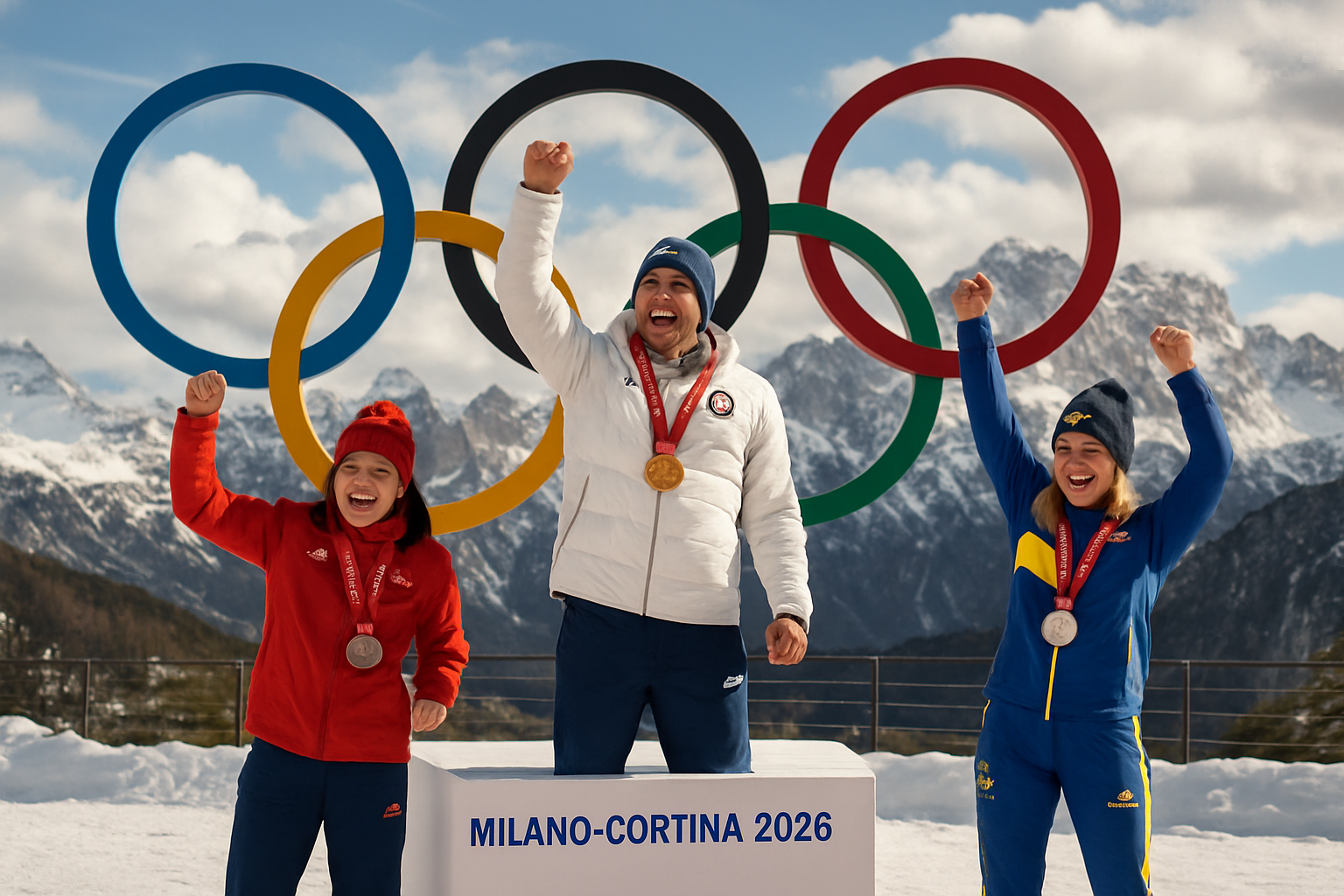
The fourth day of competition at the Milano-Cortina 2026 Winter Olympics delivered spectacular performances across multiple disciplines, with Norway's Johannes Høsflot Klaebo adding another gold medal to his legendary collection while Slovenia successfully defended their mixed team ski jumping title in dramatic fashion.
Norway's cross-country skiing dominance continued as Klaebo claimed his seventh Olympic gold medal in the men's sprint classic, moving ever closer to the all-time Winter Olympic individual medal record. The 29-year-old Norwegian phenom now stands just one title away from equaling the record of eight gold medals shared by his compatriots Marit Bjørgen, Bjørn Daehlie, and Ole Einar Bjørndalen.
Slovenia's Ski Jumping Triumph
At the Predazzo normal hill, Slovenia delivered a masterclass in ski jumping excellence to defend their mixed team Olympic title. The Slovenian quartet of Nika Vodan, Anže Lanišek, Nika Prevc, and Domen Prevc accumulated 1,069.2 points to secure their nation's first gold medal of these Games.
The victory was sealed by World Cup leader Domen Prevc, whose final jump of 102.0 meters earned 141.5 points and secured the title. Remarkably, siblings Domen and Nika Prevc followed in the footsteps of their elder siblings Peter and Maja, who helped Slovenia win the inaugural mixed team event at the 2022 Beijing Olympics.
Norway claimed silver with 1,038.3 points despite a strong showing from their mixed team, while Japan rounded out the podium with bronze at 1,033.1 points. Austria's squad, despite featuring individual standout Stephan Embacher, managed only fifth place, missing the podium by 6.2 points.
German Breakthrough in Luge
Germany's Julia Taubitz finally achieved her Olympic dream with an emotional victory in the women's singles luge at Cortina d'Ampezzo. The 29-year-old from the Erzgebirge region overcame years of Olympic heartbreak to claim gold with a commanding performance across four runs.
"I haven't cried this much in a long time," Taubitz said through tears after her victory. The gold medal completed her collection of major titles in luge, having previously won World Championships and World Cup overall titles but never Olympic gold.
Latvia's Elīna Ieva Bota made history by winning silver, becoming the first Latvian woman to capture an individual Winter Olympic medal while competing under the Latvian flag. Her achievement sparked celebrations across the Baltic nation and demonstrated the growing global competitiveness of winter sports.
Biathlon Drama and Personal Confessions
The men's 20-kilometer individual biathlon event produced both athletic excellence and unexpected human drama. Norway's Johan-Olav Botn claimed gold in the discipline, but it was bronze medalist Sturla Holm Laegreid who captured headlines for deeply personal reasons.
In an extraordinary post-race interview, the Norwegian biathlete broke down in tears during a live broadcast, revealing he had been unfaithful to his girlfriend. "I've had the worst week of my life, and sport has become secondary to me," Laegreid confessed, adding a deeply human element to the Olympic competition.
Bulgaria's Blagoy Todev represented his nation admirably in the biathlon, finishing 22nd in a field of international competitors, continuing Bulgaria's steady progress in winter sports following Tervel Zamfirov's bronze medal in snowboard earlier in the Games.
Cross-Country Sprint Excellence
Sweden's Linn Svahn captured gold in the women's cross-country sprint classic, with her flawless technique drawing praise from competitors and coaches alike. Switzerland's Nadine Fähndrich, who studies video of Svahn's technique, described it as "perfect" and representative of the technical evolution in the sport.
The sprint events showcased the depth of global cross-country skiing talent, with athletes from multiple continents competing at the highest level. Despite Bulgarian participation, their cross-country skiers finished outside the top 70, illustrating the work still needed to reach the sport's elite tier.
Figure Skating and Technical Challenges
Figure skating continued with the men's singles short program, featuring Estonia's Aleksandr Selevko and Latvia's representatives Deniss Vasiļjevs and Fedirs Kuļišs. Vasiļjevs successfully qualified for the free skate with a beautiful performance, while debutant Kuļišs faced disappointment after a fall early in his program significantly impacted his scores.
In a controversial development, Russian figure skater Pyotr Gumennik competed for the first time on the international stage since 2022, creating tension given Ukraine's Kyrylo Marsak was also competing in the same event. The presence of Russian athletes as neutrals continues to generate diplomatic and emotional complexities.
Curling Siblings Make History
Swedish siblings Isabella and Rasmus Wranå delivered a thrilling victory in mixed doubles curling, defeating the United States 6-5 in a final that went down to the last stone. Isabella Wranå's decisive final throw secured Sweden's third gold medal of these Games and sparked celebrations across Sweden, with football legend Zlatan Ibrahimović among those celebrating on social media.
The victory represents a classic Olympic breakthrough story, as the siblings had nearly been excluded from the Olympic team just one year ago but earned their place through consistent performance and determination.
Infrastructure Challenges and Olympic Spirit
Despite the athletic excellence on display, the Games continued to face operational challenges across the 400+ kilometer venue network. Medal ceremonies experienced technical difficulties when several figure skaters complained that the podium surfaces had damaged their carefully calibrated skate blades, prompting Olympic organizers to issue an apology and offer repairs.
Austrian speed skater Vanessa Herzog announced she would not compete in additional events due to ongoing back pain that had troubled her for weeks leading up to the Games. Her withdrawal highlighted the physical toll that preparation for these geographically dispersed Olympics has placed on athletes.
Medal Standings Evolution
After four days of competition, Norway maintained its commanding position atop the medal table with six gold medals and twelve total medals. Germany and Sweden were tied for second place with three gold medals each, while the host nation Italy continued to perform strongly with multiple medal contenders across various disciplines.
Bulgaria's medal tally remained at one bronze through Zamfirov's snowboard achievement, but the nation's broader participation across multiple sports demonstrated the continuing democratization of winter sports beyond traditional powerhouse nations.
Looking Ahead
With thirteen days of competition remaining, the Milano-Cortina 2026 Games continue to deliver the dramatic human stories and athletic excellence that define Olympic competition. The revolutionary dual-city hosting model spanning from Milan to Cortina d'Ampezzo is proving viable despite logistical complexities, while the integration of artificial intelligence technology and sustainable practices sets precedents for future Olympic hosting.
The Games have successfully maintained the Olympic spirit of international cooperation and athletic pursuit of excellence, even as they navigate contemporary challenges including geopolitical tensions, infrastructure demands, and the evolving landscape of winter sports participation globally.
As competition continues across the spectacular Italian Dolomites, these Olympics are establishing themselves as a turning point for both winter sports and the Olympic movement, demonstrating new possibilities for sustainable, technologically enhanced, and geographically distributed hosting while preserving the essential human drama that makes Olympic competition universally compelling.