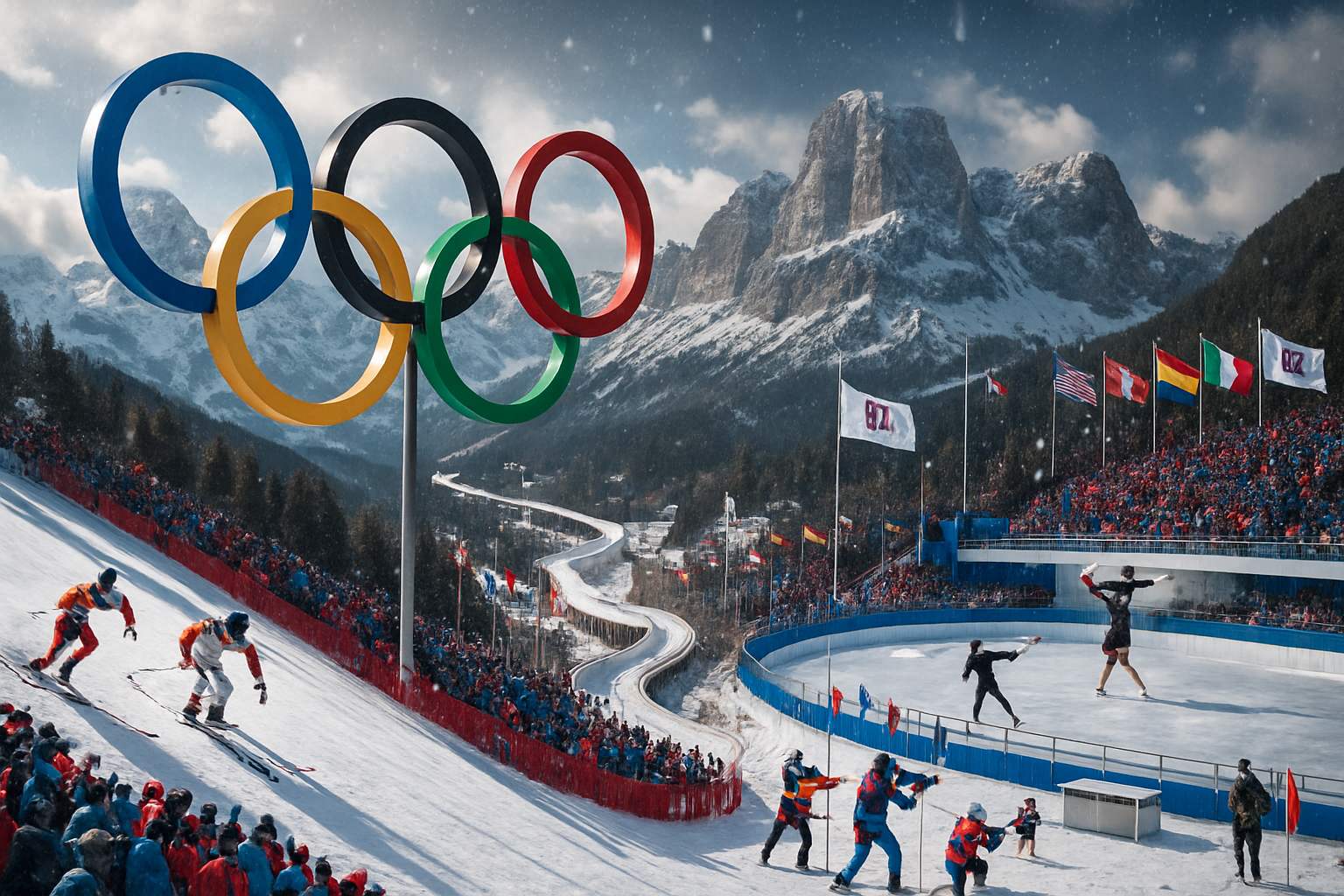
The Milano-Cortina 2026 Winter Olympics has delivered one of the most thrilling and unpredictable Games in recent memory, with American skiing legend Mikaela Shiffrin finally breaking her Olympic medal drought while Australia continues its remarkable transformation into a winter sports powerhouse across the spectacular Italian Alpine venues.
Shiffrin's Sweet Redemption Ends Eight-Year Wait
After years of Olympic heartbreak, Mikaela Shiffrin silenced her critics with a commanding slalom victory at the Tofane Alpine Skiing Centre in Cortina d'Ampezzo. The 30-year-old American overcame early setbacks at these Games to capture her third Olympic gold medal, her first since the 2018 PyeongChang Games.
Shiffrin's path to gold was anything but straightforward. After disappointing results in her opening events, the pressure mounted on the five-time overall World Cup champion who has dominated alpine skiing for over a decade with 108 World Cup victories but struggled to translate that success to Olympic glory.
"Life is strange. You think about all these moments and events, and they make you reflect on everything. Your whole life, and your whole career. I just wanted to ski well, and I felt like I managed that today," Shiffrin told reporters after her victory.
— Mikaela Shiffrin, Olympic Gold Medalist
Switzerland's Camille Rast claimed silver, 1.50 seconds behind Shiffrin's dominant performance, while Sweden's Anna Swenn-Larsson secured bronze. The victory was made even more emotional by a touching video message from Shiffrin's injured Norwegian fiancé, Aleksander Aamodt Kilde.
Australia's Historic Winter Sports Revolution
Perhaps no nation has captured the Olympic spotlight quite like Australia, which is experiencing its most successful Winter Olympics in history. The Australian team has fundamentally challenged traditional winter sports hierarchies with breakthrough performances across multiple disciplines.
Danielle Scott achieved a career-defining moment by winning silver in the women's aerials final, ending Australia's 12-year medal drought in the sport. The veteran athlete's fourth Olympic campaign finally yielded the medal that had eluded her, with the victory made more poignant by her family's deliberate absence from the venue - a strategic decision to minimize pressure.
"Thanks for not coming," Scott said emotionally, referring to her family's sacrifice that helped her achieve Olympic glory.
— Danielle Scott, Olympic Silver Medalist
Australia's success extends beyond individual achievements. The nation has established itself as the world's premier moguls skiing nation, with multiple athletes reaching finals and podium positions. This systematic success represents a fundamental shift in global winter sports participation, demonstrating that geographic location need not limit Olympic aspirations.
Dramatic Moments and Heartbreak
The Games have been marked by both triumph and controversy. A local dog's unexpected appearance during a cross-country skiing race provided a moment of levity, while more serious incidents highlighted the intense pressures facing young athletes.
Sixteen-year-old Australian snowboarder Ally Hickman suffered a heavy fall during the women's slopestyle final, requiring medical attention and precautionary scans. Despite earlier showing remarkable skill that impressed experts, the teenager's Olympic dreams were dashed by the crash in her final run.
In a bizarre incident that epitomizes the modern Olympic experience, competitor Jessica Perlmutter lost her mobile phone during a slopestyle jump, adding an unexpectedly relatable moment to the high-stakes competition.
French Biathlon Dominance Continues
France has established itself as the dominant force in biathlon at Milano-Cortina 2026, with both men's and women's relay teams capturing gold medals. The French women achieved a stunning comeback victory in their 4x6km relay, with the team celebrating what commentators described as a "superb relay gold" following a dramatic final leg performance.
The success has given France its 17th medal of the Games, demonstrating the depth of their winter sports program and setting new records for French Winter Olympic achievement. The biathlon team's performance has been particularly impressive, with 10 medals earned in the discipline alone.
Japan's Snowboarding Excellence
Japan continues to showcase its strength in snowboarding disciplines, with Mari Fukada winning gold in the women's slopestyle competition. The victory builds on Japan's record medal haul for snowboarders at the 2026 Winter Games, with New Zealand's Zoi Sadowski-Synnott, the 2022 champion, taking silver and Kokomo Murase adding bronze.
The Japanese success has been complemented by strong performances across multiple winter sports, with Taiga Hasegawa securing silver in men's slopestyle behind China's Su Yiming, further cementing Japan's position as one of the premier snowboarding nations at these Games.
German Alpine Skiing Struggles
While Germany has found success in other disciplines, their alpine skiing campaign has been marked by disappointment. Lena Dürr's hopes for slalom glory were dashed when she crashed out at the very first gate of the second run, leading to an emotional outburst at the finish line.
"You think you'll get another re-run, and it starts all over again. It's a catastrophe. You can't even realize it at the finish," Dürr said through tears.
— Lena Dürr, German Alpine Skier
The German struggles contrast sharply with their success in other winter sports disciplines at Milano-Cortina 2026, highlighting the unpredictable nature of Olympic competition.
Global Competition and Breakthrough Nations
The Milano-Cortina 2026 Games have been characterized by unprecedented global competitiveness, with nations from six continents challenging traditional winter sports powerhouses. Slovakia's stunning 6-2 victory over Germany in ice hockey quarterfinals exemplifies how the competitive landscape has evolved.
The Games have witnessed historic participations from Saudi Arabia, Caribbean bobsled teams, and record delegations from nations like Latvia, all demonstrating the continued democratization of winter sports beyond their traditional geographic boundaries.
Revolutionary Hosting Model Proves Successful
Milano-Cortina 2026 has successfully demonstrated a new paradigm for Olympic hosting, with competition spanning over 400 kilometers across seven venues from Milan to Cortina d'Ampezzo. This geographically dispersed format represents the most ambitious hosting model in Winter Olympic history.
Despite infrastructure challenges, including incomplete cable car systems and power outages at various venues, the dual-city hosting concept has proven viable while emphasizing sustainability and environmental responsibility. The Games feature cutting-edge technology integration, including the first Olympic deployment of AI systems for broadcasting and competition analysis.
Technology and Cultural Innovation
The Games have broken new ground in technological innovation, with Alibaba's Qwen AI system providing the first Olympic deployment of large language model technology for enhanced spectator services. OMEGA's AI-powered figure skating analysis has provided unprecedented insights for both judges and viewers.
Cultural innovations include bilingual place names reflecting the German-speaking Alto Adige/South Tyrol region, sustainable Olympic villages featuring greenhouse spaces, and the popular Gen Z mascots Milo and Tina, which have resonated with global audiences.
Norwegian Curling Challenges
Even traditional winter sports powerhouses have faced unexpected challenges. Norway's men's curling team suffered a disappointing 4-10 defeat to undefeated Switzerland in a crucial round-robin match, leaving their semifinal hopes hanging by a thread. The loss highlighted the intense competition levels across all Olympic disciplines.
Olympic Spirit Amid Challenges
The Milano-Cortina 2026 Winter Olympics have embodied the true Olympic spirit through both triumph and adversity. From Mikaela Shiffrin's redemptive victory to Australia's historic emergence as a winter sports power, the Games have delivered compelling human stories alongside world-class athletic achievement.
As competition continues through February 22, the revolutionary hosting model and unprecedented global competitiveness have established new benchmarks for future Winter Olympic hosting, demonstrating that the Olympic movement can successfully adapt to 21st-century realities while maintaining its core values of athletic excellence and international cooperation.
With medal races intensifying across all disciplines and breakthrough performances continuing to surprise audiences worldwide, Milano-Cortina 2026 stands as a watershed moment in Winter Olympic history, proving that the Games can successfully balance tradition with innovation while inspiring athletes and nations from every corner of the globe.