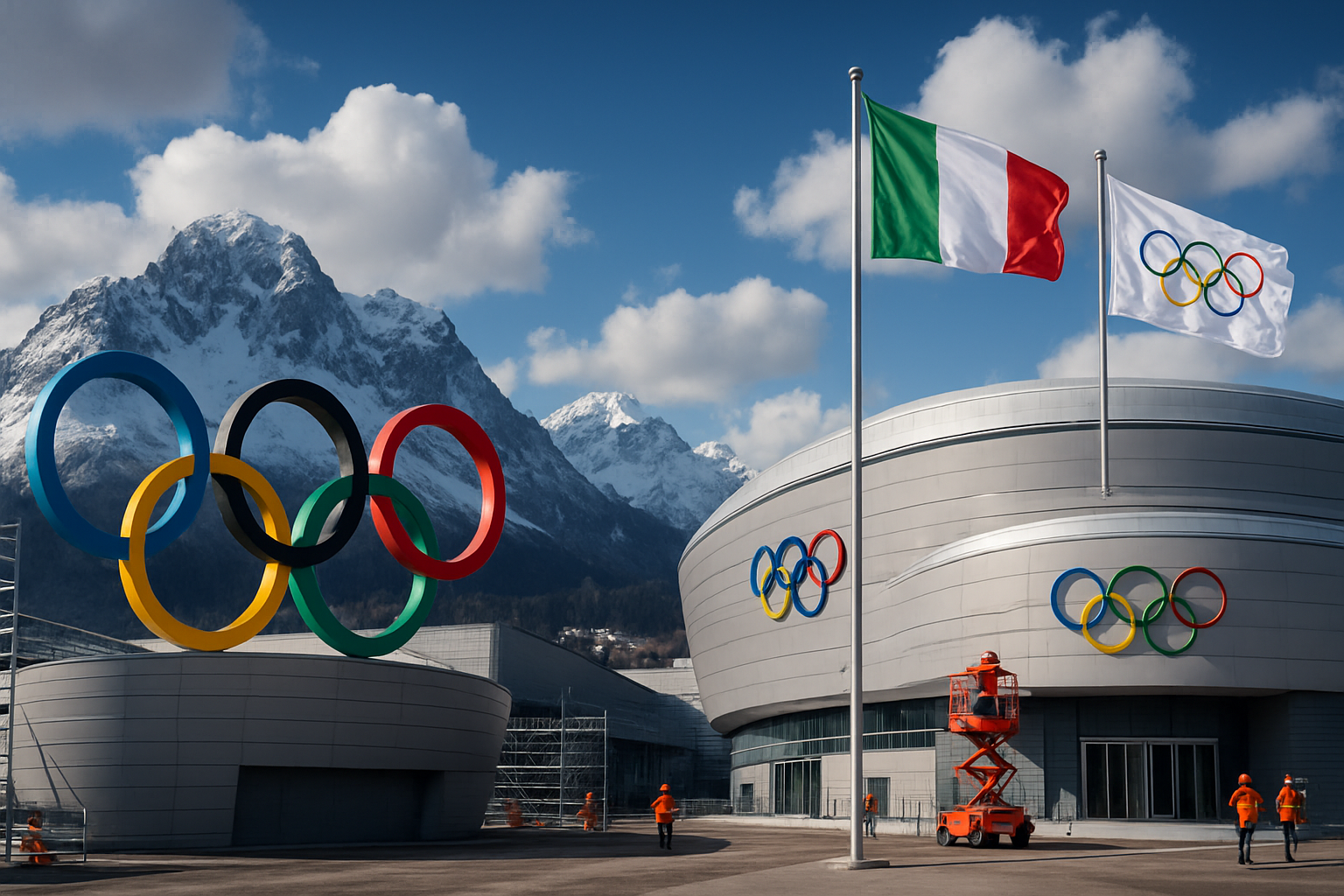
With the opening ceremony of the Milano-Cortina 2026 Winter Olympics set for Friday, February 6, final preparations are reaching a crescendo across Italy's northern venues, as organizers work to overcome last-minute infrastructure challenges while embracing groundbreaking technological innovations that will define these Games.
The Olympic torch has begun its final journey through Italy, with a symbolic passage across the country's famous Lake Como marking the countdown to what promises to be one of the most geographically dispersed Winter Olympics in history. The Games, running from February 6-22, will span seven venues across northern Italy, representing the first return to the Alps in two decades.
Venue Preparations and Infrastructure Challenges
Despite being just days away from competition, several key venues are still undergoing frantic final preparations. The main ice hockey venue continues to require intensive work, though organizers remain confident that all matches will proceed as planned. Canadian ice masters Don Moffatt and Mark Messer have been brought in to ensure NHL-quality playing surfaces for both hockey and speed skating events.
"We're committed to delivering the highest standard of ice surfaces that athletes expect at this level," said a spokesperson for the organizing committee. The venues are being designed to accommodate approximately 3,000 athletes from around the world.
Transportation infrastructure presents ongoing challenges, particularly in Cortina d'Ampezzo, where the incomplete Apollonio-Socrepes cable car has forced local authorities to close schools to ease transport management during the Games. This highlights the logistical complexity of hosting events across such a geographically dispersed area.
Revolutionary AI Integration
The Milano-Cortina Games are making Olympic history by becoming the first to integrate artificial intelligence into their core digital infrastructure. Alibaba Cloud has unveiled a comprehensive suite of AI-powered tools, with their Qwen large language model powering "Olympic AI Assistants" - a digital system designed to enhance both broadcasting and spectator experiences.
This partnership between Alibaba Cloud, Olympic Broadcasting Services, and the International Olympic Committee (IOC) represents a significant technological leap forward for Olympic coverage. The AI systems will assist with everything from automated highlights generation to real-time language translation, potentially revolutionizing how global audiences engage with Olympic competition.
Athlete Village and Accommodation
The Olympic villages have been completed with sustainable design principles at their core, featuring greenhouse spaces and extensive use of wood materials. The Milan village alone has capacity for 3,500 athletes, showcasing Italy's commitment to environmental responsibility while maintaining world-class standards.
British Olympic figure skater Phebe Bekker recently posted videos from the Games village, giving fans a behind-the-scenes look at athlete accommodations. The sleeping arrangements and facilities represent a different approach from recent Olympics in Paris and Tokyo, reflecting the unique Alpine setting and Italian design sensibilities.
Security and Weather Concerns
Organizers are closely monitoring weather patterns as Europe continues to experience one of its harshest winters in decades. The region has faced extreme conditions, with some areas recording temperatures below -30°C, which could impact both competition and spectator safety.
Security preparations are also intensive, with authorities coordinating across multiple venues and jurisdictions. The dispersed nature of the Games presents unique challenges for security personnel, requiring unprecedented coordination between local, regional, and national agencies.
Cultural Innovation and Legacy
The Games are showcasing Italy's cultural richness through several innovative approaches. In a historic first, bilingual place names are being used in the Alto Adige/South Tyrol region, acknowledging the area's significant German-speaking population. This cultural sensitivity reflects the broader Olympic values of inclusion and respect for local communities.
A love song born in Florence has become the unofficial soundtrack of Milano-Cortina 2026, adding an emotional and cultural dimension to the Games that extends beyond pure athletic competition. The mascots, Milo and Tina, have been dubbed the "first Gen Z Olympic mascots," reflecting the Games' forward-looking approach.
Global Context and Expectations
These Games take on added significance as they represent a return to traditional Olympic values after the challenges faced by recent Olympics. The Milano-Cortina organizers have emphasized sustainability, technological innovation, and cultural celebration as core pillars of their approach.
IOC President Kirsty Coventry has acknowledged that preparations have been "bumpy" at times but expressed confidence that the Games will be "unforgettable" for athletes and spectators alike. The return to the Alps after a 20-year absence adds particular emotional resonance for winter sports enthusiasts worldwide.
Star Athletes and Competition Preview
The Games will feature some of winter sports' brightest stars, with approximately 3,000 athletes competing across traditional and emerging disciplines. Norwegian cross-country skier Johannes Høsflot Klæbo is among the favorites expected to capture multiple medals, while the Netherlands' speed skating team is preparing for what many anticipate could be a "gold rush" on the ice.
The competition schedule begins with curling events on February 5, followed by women's downhill training on February 6, building toward the grand opening ceremony at Milan's San Siro stadium on Friday evening.
Looking Forward
As final preparations continue around the clock, the Milano-Cortina 2026 Winter Olympics represent more than just athletic competition. They embody Italy's vision for the future of Olympic hosting - combining respect for Alpine traditions with cutting-edge technology, environmental responsibility with world-class competition, and local culture with global celebration.
The success of these Games will likely influence future Olympic hosting strategies, particularly in how technology can enhance the Olympic experience while maintaining the human drama and cultural significance that make the Olympics special. With competition beginning in just days, the world's attention turns to Italy's northern mountains for what promises to be an extraordinary celebration of winter sport.