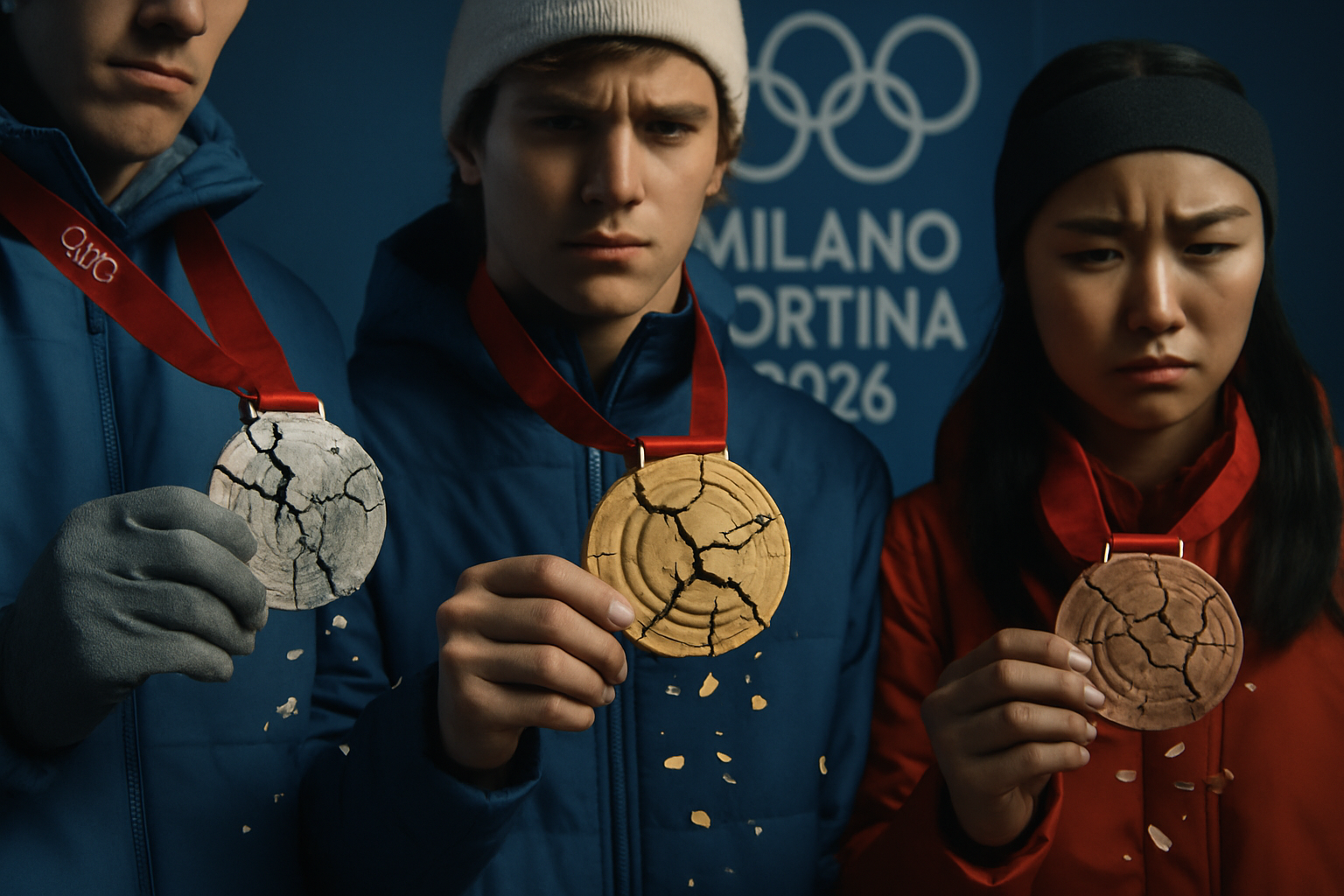
A shocking manufacturing defect has emerged at the Milano-Cortina 2026 Winter Olympics, with athletes across multiple disciplines reporting that their Olympic medals are literally breaking apart during celebrations, detaching from ribbons and cracking when dropped.
The medal quality scandal came to light on February 11, when American skier Breezy Johnson, who won gold in the women's downhill, was among the first athletes to publicly complain about the defective medals. According to reports, athletes have experienced medals separating from their ribbons during victory ceremonies and cracking when accidentally dropped during celebrations.
Widespread Manufacturing Defects
The problem appears to be systemic rather than isolated incidents. Athletes competing in various disciplines have reported similar issues with their Olympic medals, raising serious questions about the manufacturing process and quality control measures implemented for the Milano-Cortina 2026 Games.
The defects are particularly troubling given the symbolic importance of Olympic medals. For many athletes, these medals represent the culmination of years or even decades of training and sacrifice. The fact that they are physically falling apart threatens to overshadow the remarkable athletic achievements at what has been dubbed the most geographically dispersed Winter Olympics in history.
Italian organizers have acknowledged the widespread problem and promised to offer repairs to affected athletes. However, the manufacturing defect has already become a source of international embarrassment for the host nation, occurring during the most prestigious sporting event in the world.
Athletes Express Frustration
The medal defects have created particular distress for athletes who have waited years for this moment. The Milano-Cortina 2026 Games have already faced numerous challenges, including infrastructure problems, power outages at venues, and security concerns following pro-Russian cyberattacks.
Breezy Johnson's gold medal victory in the women's downhill was already overshadowed by the tragic crash of American legend Lindsey Vonn, who was attempting a remarkable comeback at age 41 just nine days after suffering a complete ACL rupture. The medal defect adds another layer of disappointment to what should have been a moment of pure celebration.
Quality Control Investigation
The medal manufacturing crisis has prompted Italian authorities to launch an investigation into the quality control processes used in producing the Olympic medals. The investigation will examine every aspect of the manufacturing process, from the materials used to the assembly methods and final quality checks.
This isn't the first time Olympic medals have faced scrutiny. Previous Games have dealt with issues ranging from design controversies to concerns about precious metal content. However, the physical breakdown of medals during the Games themselves represents an unprecedented quality control failure.
The Milano-Cortina organizing committee has emphasized their commitment to resolving the issue, stating they will investigate the problem "with the utmost care" and ensure that all affected athletes receive properly manufactured replacement medals.
Broader Context of Olympic Challenges
The medal defects occur against the backdrop of numerous other challenges facing the Milano-Cortina 2026 Olympics. The Games, which run from February 6-22, represent the most geographically dispersed Winter Olympics in history, spanning 400+ kilometers across seven venues from Milan to Cortina d'Ampezzo.
Infrastructure problems have plagued the Games, including the incomplete Apollonio-Socrepes cable car forcing school closures for transportation management, and power outages affecting venues including curling competitions. The main ice hockey venue required frantic last-minute construction work, though NHL-quality surfaces were ultimately delivered.
Security concerns have also been significant, with Italian authorities successfully countering pro-Russian cyberattacks on Olympic venues and Italian diplomatic facilities hours before the opening ceremony. The Games have also faced civil unrest, with approximately 10,000 protesters demonstrating against the Olympics in Milan, citing environmental concerns and gentrification issues.
Impact on Olympic Legacy
The medal manufacturing crisis threatens to become a lasting negative legacy of the Milano-Cortina 2026 Games. Olympic medals are among the most treasured possessions in all of sports, representing not just individual achievement but also national pride and the Olympic ideals of excellence, friendship, and respect.
For athletes like Julia Simon of France, who won biathlon gold, or Tervel Zamfirov of Bulgaria, who ended his country's 20-year Winter Olympic medal drought with snowboard bronze, the physical integrity of their medals carries profound symbolic importance.
The controversy has also raised questions about the procurement and quality assurance processes used by Olympic organizing committees. Future Games will likely implement more rigorous testing protocols to ensure that such manufacturing defects don't recur.
Technological Innovation Amid Traditional Failures
The medal manufacturing crisis stands in stark contrast to the technological innovations that have defined the Milano-Cortina 2026 Games. These Olympics feature the first-ever integration of AI technology, with Alibaba Cloud's Qwen AI providing LLM-powered broadcasting and spectator services, and OMEGA's AI-powered figure skating analysis setting new standards.
The Games have also showcased sustainable hosting practices, with Olympic villages featuring greenhouse spaces and wood materials, and bilingual place names in Alto Adige/South Tyrol reflecting the region's German-speaking population. The revolutionary dual-city hosting model has proven viable despite initial concerns about logistics across such dispersed venues.
Moving Forward
As the investigation into the medal manufacturing defects continues, Italian organizers are working to ensure that all affected athletes receive properly manufactured replacement medals. The priority is to preserve the dignity and significance of the Olympic medal ceremony, even as the physical medals themselves have failed to meet expectations.
The Milano-Cortina 2026 Games continue through February 22, with 3,000 athletes from 92 countries competing across 16 sports. While the medal manufacturing crisis has created an unwanted controversy, the Games continue to deliver exceptional athletic performances and demonstrate successful adaptation to 21st-century hosting challenges.
The incident serves as a reminder that even the most prestigious international events can be undermined by seemingly basic quality control failures. As Olympic organizers work to resolve the immediate crisis, the broader lesson about the importance of rigorous quality assurance in every aspect of Olympic preparation will likely influence future Games planning.