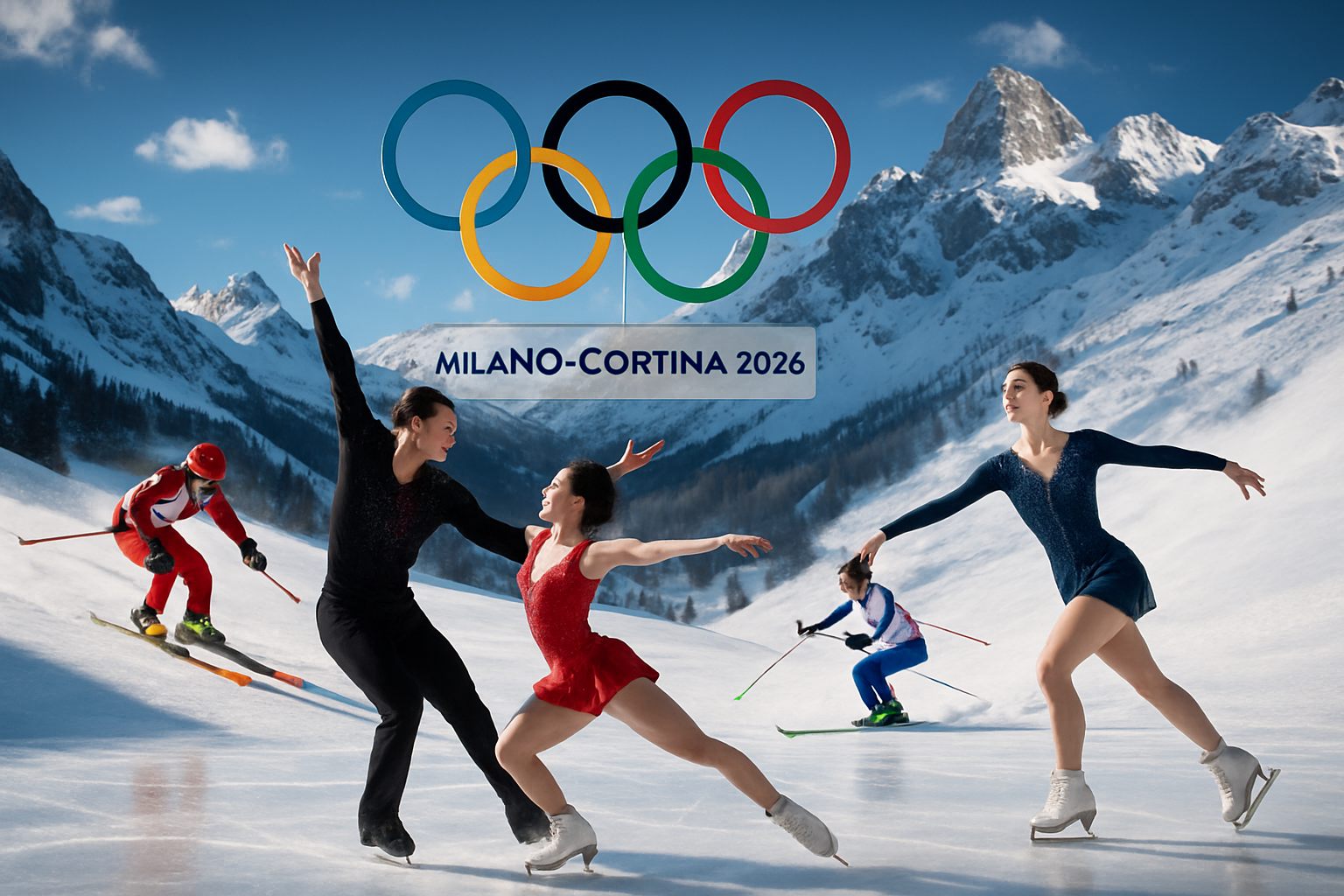
The Milano-Cortina 2026 Winter Olympics have delivered some of the most dramatic moments in Olympic history, from breakthrough victories to heart-stopping crashes that remind us of the razor-thin line between triumph and disaster in winter sports.
Alysa Liu's Remarkable Comeback Story
Perhaps no story captures the Olympic spirit better than Alysa Liu's stunning return to the ice. The American figure skater's journey to gold medal glory represents one of the most compelling narratives of the Milano-Cortina Games. After retiring at just 16 years old, Liu's comeback at 20 culminated in a spectacular free skate performance that earned her 226.79 points and Olympic gold.
"This feels surreal," Liu said through tears after her victory. "Two years ago, I never imagined I'd be standing here with an Olympic gold medal around my neck."
Liu's triumph was made even more remarkable by the adversity she faced in her path back to competition. Her return represents the first American women's figure skating Olympic gold in 24 years, ending a drought that had become a source of frustration for U.S. skating officials.
The Dark Side of Olympic Dreams
While Liu celebrated on the podium, the Games also provided stark reminders of the dangers inherent in winter sports. Canadian freeskier Cassie Sharpe's horrific crash during halfpipe competition left spectators and competitors alike holding their breath as she lay motionless at the bottom of the pipe at Livigno.
The incident, which required immediate medical attention and evacuation from the venue, served as a sobering reminder that Olympic athletes are often just seconds away from career-ending or life-threatening injuries. Sharpe, a former Olympic champion, was attempting a routine she had performed countless times when the crash occurred.
"Every time we drop into that pipe, we're putting our lives on the line," said one competitor who witnessed the crash. "Cassie is one of the most experienced athletes out there, which just shows how quickly things can go wrong."
— Anonymous Competitor
Young Stars Rising Under Pressure
The Milano-Cortina Games have also showcased the remarkable composure of young athletes competing on the world's biggest stage. Sixteen-year-old Indra Brown exemplified this balance between Olympic excellence and teenage normalcy. Despite finishing fourth in freeski halfpipe qualification and emerging as a top medal contender, Brown still had mathematics homework to complete between training sessions.
"It's weird being here and still having to do algebra," Brown laughed during a press conference. "But my mom says education comes first, Olympics or not."
Brown's story highlights the unique challenges faced by teenage Olympic athletes, who must navigate the intense pressure of global competition while maintaining the routines and responsibilities of adolescence.
Revolutionary Games Format
The Milano-Cortina 2026 Winter Olympics have proven that innovation and tradition can coexist successfully. The Games represent the most geographically dispersed Winter Olympics in history, spanning over 400 kilometers across northern Italy from Milan to Cortina d'Ampezzo.
This revolutionary dual-city hosting model has maintained the highest competitive standards while demonstrating environmental sustainability and cultural authenticity. The integration of cutting-edge AI technology, including Alibaba's Qwen system and OMEGA's figure skating analysis, has enhanced both the competitive experience and global broadcasting.
Cultural Integration and Innovation
The Games have successfully balanced international accessibility with local heritage through initiatives such as bilingual place names in the Alto Adige/South Tyrol region, sustainable Olympic villages featuring greenhouse spaces, and the popular Gen Z mascots Milo and Tina.
These cultural innovations have resonated globally while maintaining the authentic character of the Italian Alpine region hosting the competitions.
Global Winter Sports Expansion
One of the most significant storylines of Milano-Cortina 2026 has been the continued democratization of winter sports. Historic participations from Saudi Arabia, Caribbean bobsled teams from Jamaica and Trinidad & Tobago, and Latvia's record 68-athlete delegation demonstrate that winter sports excellence is no longer geographically confined.
Australia has emerged as perhaps the biggest surprise, establishing itself as a premier moguls skiing nation and achieving its most successful Winter Olympics ever with multiple gold medals across different disciplines.
Breaking Traditional Barriers
The success of athletes from non-traditional winter sports nations has fundamentally challenged the established hierarchies that have dominated Olympic competition for decades. Kazakhstan's breakthrough in figure skating, Brazil's historic first Winter Olympic gold in alpine skiing, and Bulgaria's end to a 20-year medal drought all represent the changing landscape of global winter sports.
Technology Meets Tradition
The Milano-Cortina Games have set new standards for technological integration in Olympic competition. The first-ever deployment of AI technology at a Winter Olympics has enhanced everything from figure skating judging to real-time spectator information services.
Despite these innovations, the Games have maintained the core Olympic values of athletic excellence, international cooperation, and cultural celebration that define the Olympic movement.
Looking Toward the Future
As the Milano-Cortina 2026 Winter Olympics continue through February 22, they have already established new paradigms for Olympic hosting that balance environmental responsibility with competitive excellence. The success of the geographically dispersed format may influence future Olympic hosting decisions, particularly as the international community grapples with climate change and sustainability concerns.
The Games have demonstrated that Olympic excellence can be maintained while adapting to 21st-century realities, setting precedents for future sustainable mega-events that prioritize both athletic achievement and environmental stewardship.
"These Games represent a watershed moment for the Olympic movement," said IOC President Kirsty Coventry. "We've shown that innovation and tradition can work together to create unforgettable experiences while building a more sustainable future for Olympic sport."
— Kirsty Coventry, IOC President
The Milano-Cortina 2026 Winter Olympics will be remembered not only for their dramatic athletic moments and breakthrough performances but also for proving that the Olympic Games can successfully adapt to modern challenges while preserving the essential spirit that makes the Olympics a celebration of human achievement and international unity.