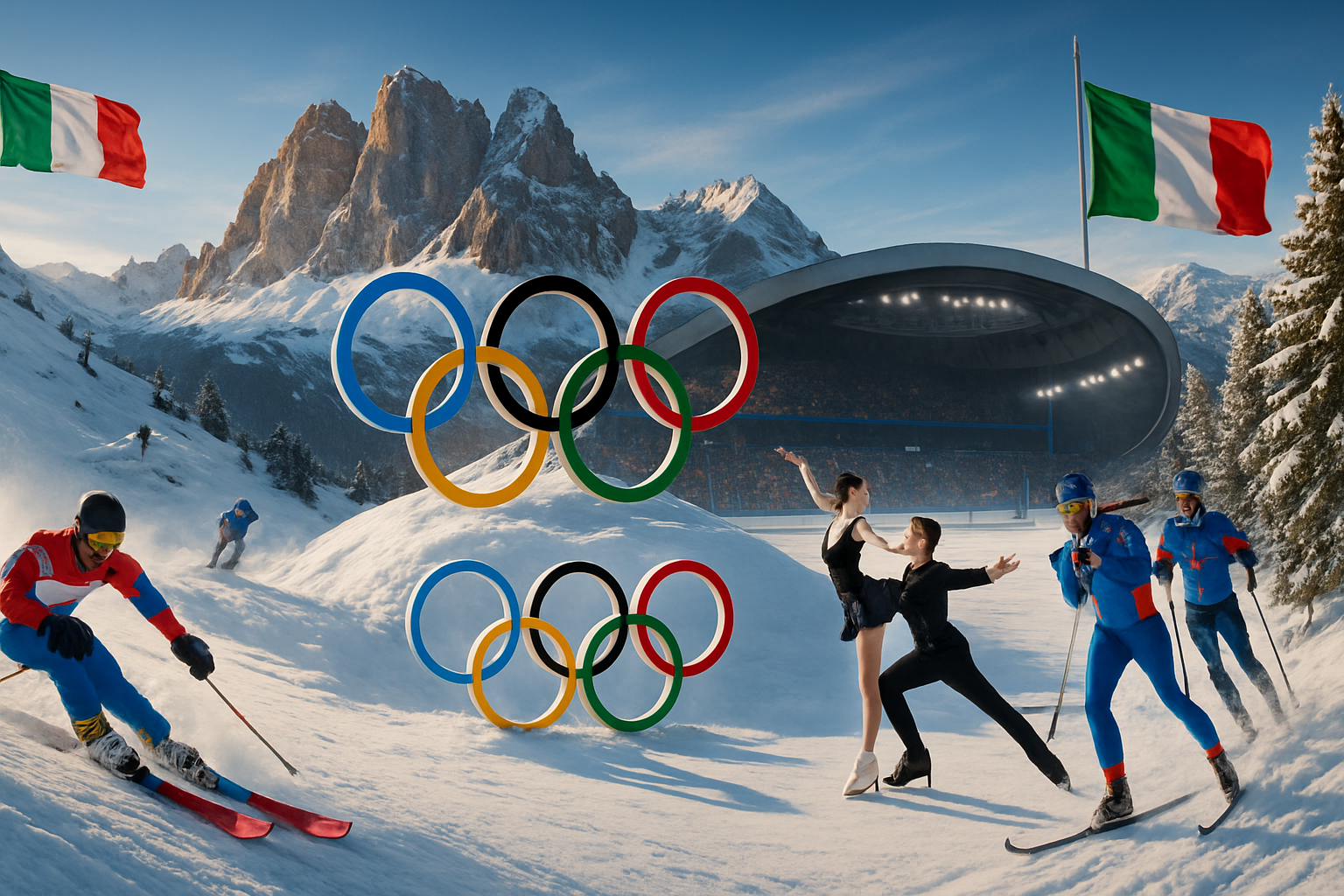
The Milano-Cortina 2026 Winter Olympics enter Day 11 with unprecedented global competition as athletes from around the world continue to challenge traditional winter sports hierarchies in Italy's revolutionary dual-city hosting format.
Australia leads the day's medal charge with 16-year-old Ally Hickman positioned as a breakthrough contender in the women's freestyle skiing slopestyle final at Livigno Snow Park. The teenage sensation has captured international attention as part of Australia's most successful Winter Olympics campaign in history, following gold medals from Cooper Woods (moguls), Jakara Anthony (dual moguls), and Josie Baff (snowboard cross).
Aerials Competition Opens Day 11
The competition day begins with men's and women's aerials qualifications, where Australian athletes will look to continue their nation's remarkable winter sports emergence. The aerials events represent another opportunity for Australia to expand beyond their traditional moguls dominance into new freestyle skiing disciplines.
According to Austrian broadcaster ORF, television viewership has remained exceptionally strong throughout the Games, with up to 927,000 viewers watching men's slalom competition and 810,000 tuning in for women's big air finals. The Austrian Superteam event that ended in controversy due to weather conditions drew over 1 million viewers despite the competition's premature conclusion.
Weather Challenges Continue
Heavy snowfall in Livigno has already impacted competition schedules, with New Zealand's Zoi Sadowski-Synnott's quest for slopestyle gold postponed due to deteriorating conditions. The weather challenges highlight the operational complexity of hosting the most geographically dispersed Winter Olympics in history, spanning over 400 kilometers across seven venues from Milan to Cortina d'Ampezzo.
The severe weather conditions represent both opportunity and challenge for organizers, as Europe's harshest winter in decades has provided ideal natural snow conditions while creating logistical complications across the vast venue network.
Global Participation Highlights
Day 11 continues to showcase the remarkable democratization of winter sports, with athletes from non-traditional winter nations making their mark. Lithuania's Meda Variakojytė is set to make history by opening a new chapter in her nation's figure skating legacy, while the country's biathlon quartet seeks to improve upon their impressive Beijing 2022 performance.
The Games have featured historic participations from Saudi Arabia (Fayik Abdi in alpine skiing, Rakan Aliriza in cross-country), Caribbean bobsled teams from Jamaica and Trinidad & Tobago, and Latvia's record 68-athlete delegation. These breakthrough participations exemplify the global expansion of winter sports beyond traditional powerhouses.
Technology and Innovation
The Milano-Cortina 2026 Games continue to showcase groundbreaking technological innovations, including the first Olympic integration of artificial intelligence through Alibaba Qwen's LLM system and OMEGA's AI-powered figure skating analysis. These technological advances are enhancing both the competitive experience and spectator engagement across the geographically dispersed venues.
"The integration of AI technology into Olympic broadcasting represents a watershed moment for sports media and spectator experience."
— Olympic Technology Official
Medal Race Evolution
Norway maintains its traditional lead in the medal standings but faces unprecedented challenges from emerging winter sports nations. The global competitiveness has reached historic levels, with breakthrough performances from six continents demonstrating that winter sports excellence transcends geographic boundaries.
Australia's success has been particularly remarkable, with the nation positioned ahead of traditional winter powers like Canada and China in certain medal categories despite competing with far fewer total athletes. This represents a fundamental shift in global winter sports demographics.
Infrastructure Resilience
Despite ongoing challenges including the incomplete Apollonio-Socrepes cable car system that has forced school closures in the Cortina region, competition has proceeded successfully across all venues. The revolutionary dual-city hosting model is proving viable while maintaining the highest competitive standards.
The Games feature cultural innovations including bilingual place names in Alto Adige/South Tyrol, sustainable Olympic villages with greenhouse spaces, and the popular Gen Z mascots Milo and Tina, which have resonated globally with younger audiences.
Day 11 Competition Schedule
Beyond the aerials qualifications and potential slopestyle final, Day 11 features multiple medal events across various disciplines. The competition continues to demonstrate the successful balance of athletic excellence, environmental sustainability, and cultural authenticity that has defined the Milano-Cortina 2026 Games.
The day's events are taking place at altitude venues across the Italian Alps, with brilliant sunshine conditions at locations like Südtirol Arena d'Anterselva providing spectacular backdrops for world-class competition.
Looking Ahead
As the Games progress toward their February 22 conclusion, Day 11 represents another crucial step in establishing a new Olympic paradigm. The Milano-Cortina 2026 Winter Olympics are demonstrating that sustainable, geographically distributed hosting can maintain competitive excellence while addressing 21st-century environmental and logistical realities.
The success of athletes like Australia's Ally Hickman embodies the Olympic spirit's ability to transcend traditional boundaries and inspire breakthrough performances from unexpected sources. With competition continuing across the spectacular Italian Dolomites, Day 11 promises to deliver more of the athletic drama and international cooperation that define the Olympic movement.
The revolutionary hosting model, technological innovations, and global participation expansion are setting precedents that will likely influence future Olympic Games, proving that winter sports dreams truly have no geographic limits in the modern era.