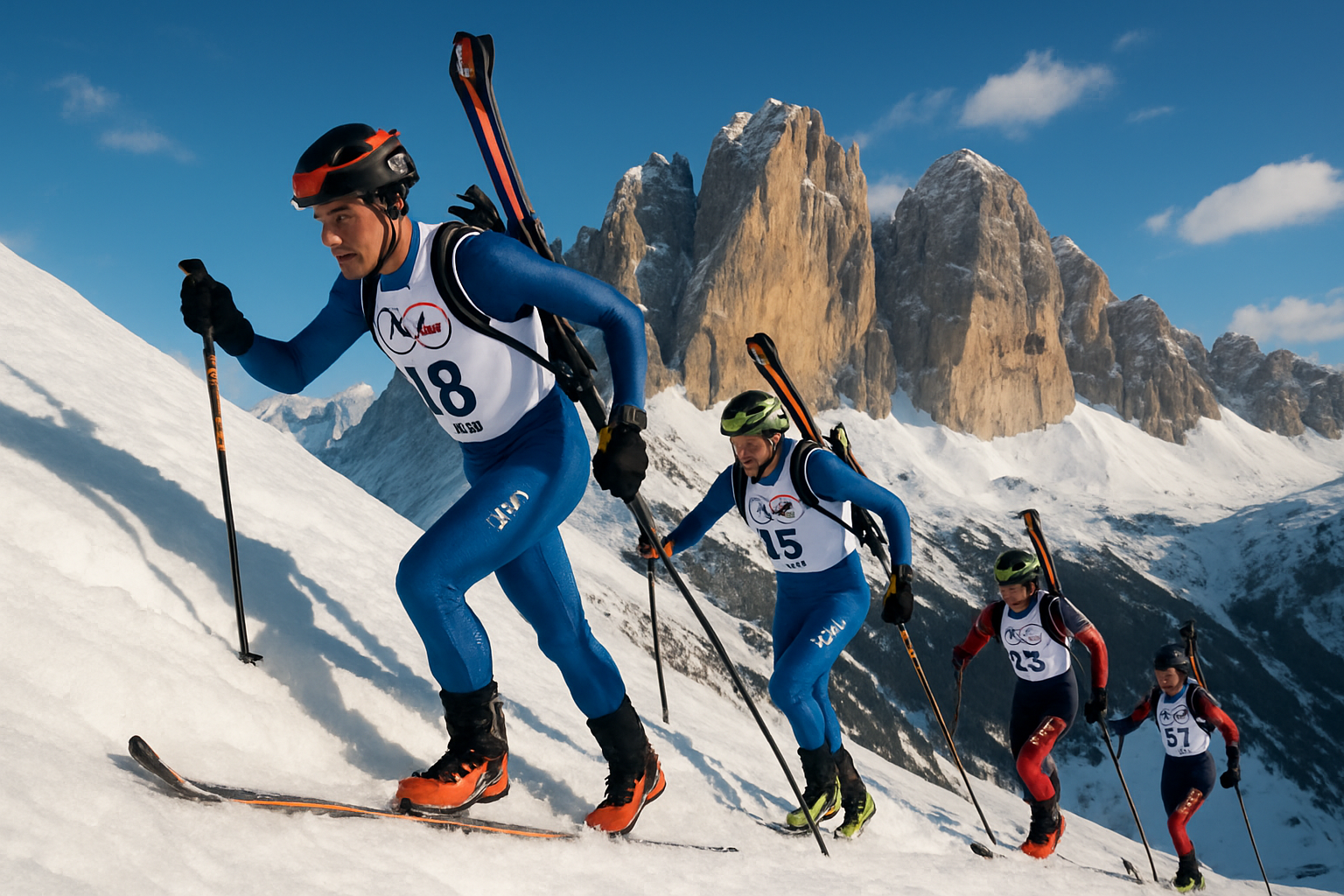
Day 13 of the Milano-Cortina 2026 Winter Olympics witnessed history in the making as ski mountaineering made its long-awaited Olympic debut, while dramatic moments unfolded across multiple sports from hockey uncertainty to teenage heartbreak on the slopes.
Ski Mountaineering Makes Olympic History
The most significant moment of Day 13 came as ski mountaineering - affectionately known as "skimo" - finally achieved its Olympic recognition after years of campaigning. Switzerland's Marianne Fatton delivered the sport's inaugural gold medal performance in the women's sprint, creating a watershed moment for mountain sports enthusiasts worldwide.
Fatton's commanding victory came with impressive technical mastery, finishing 2.38 seconds ahead of France's Emily Harrop, who had led during the ascent phase before Switzerland's superior descent technique proved decisive. Spain's Ana Alonso Rodriguez captured bronze in what represents a remarkable comeback story - just four months after suffering a complete ACL rupture when struck by a vehicle while cycling in Sierra Nevada.
"This is historic for our sport," Fatton declared after her golden run. "We've worked so hard to get ski mountaineering into the Olympics, and to win the first-ever medal is beyond my dreams."
Australian Breakthrough in New Olympic Discipline
While Australia failed to advance beyond preliminaries, the performance of Phil Bellingham provided one of the Games' most compelling narratives. The cross-country skiing specialist successfully transitioned his Nordic background to excel in the demanding hybrid sport that combines uphill skinning, technical transitions, and alpine descent.
Bellingham's "just have a crack" approach epitomized the Australian Olympic spirit, demonstrating how athletes from non-traditional winter sports nations can adapt and compete at the highest level. His performance, alongside teammate Lara Hamilton, may not have reached the finals but showcased the global democratization of winter sports that has defined these Games.

Hockey Drama and Injury Concerns
Hockey continued to provide edge-of-seat drama as Canada faces uncertainty over captain Sidney Crosby's availability for Friday's crucial semifinal against Finland. The 39-year-old superstar left Wednesday's quarterfinal victory over Czechia after sustaining an injury, with head coach Jon Cooper remaining cryptic about his status.
"Sidney is being evaluated by our medical team," Cooper stated. "We're not ruling him out, but his health is our priority. We'll make the decision that's best for Sidney and the team."
The potential absence of hockey's most iconic active player would represent a massive blow to Canada's gold medal aspirations and deny fans what could be Crosby's final Olympic performance.
Women's Hockey Gold Medal Final Set
Meanwhile, the women's hockey tournament has produced a dream final scenario as traditional rivals Canada and the United States prepare to battle for Olympic supremacy. Both nations advanced through their respective brackets with dominant performances, setting up what promises to be a classic encounter between the sport's two powerhouse programs.
Curling Semifinals Bring High Stakes Drama
The curling competitions reached fever pitch as semifinal spots were decided in both men's and women's tournaments. Canada's Brad Jacobs entered the semifinals despite suffering an 8-6 loss to Norway's Magnus Ramsfjell in their final round-robin encounter - a result that sets up an immediate rematch in the medal rounds.
The irony was not lost on curling fans that the same two teams who had just battled in pool play would meet again with Olympic medals on the line. Switzerland advanced to the other men's semifinal as the tournament's only undefeated team, while Great Britain secured their spot with consistent play throughout the round-robin phase.
"Losing to Norway in our final pool game might actually be a blessing," reflected Jacobs. "Now we know exactly what we're up against, and we get another chance to show what we can do when everything is on the line."
— Brad Jacobs, Canadian Curling Skip
Snowboarding Setbacks and Teenage Resilience
The Games' human drama continued with contrasting stories from the snowboard slopes. Australia's Allie Hickman, who had drawn praise from legend Torah Bright earlier in the competition, experienced the harsh realities of Olympic competition with a dramatic fall during her event that ended her medal hopes.
Despite the disappointment, Hickman's response exemplified the Olympic spirit, earning support from her school community and demonstrating the character that had initially caught Bright's attention. Her journey serves as a reminder that Olympic success isn't solely measured in medals, but in the courage to compete on the world's biggest stage.
Nordic Combined Excellence
Austria's Stefan Rettenegger and Johannes Lamparter positioned themselves as strong medal contenders in the Nordic combined team sprint, scheduled for 2:00 PM local time. The event represents one of Austria's strongest opportunities for gold in the jumping sports, with both athletes bringing World Cup form into the Olympic arena.
Figure Skating Anticipation Builds
Estonia's Olga Mikutina prepared to deliver her free skate performance in the women's figure skating competition, adding to the Games' diverse representation. Her participation continues the theme of global winter sports expansion that has characterized Milano-Cortina 2026.
Technology and Innovation Continue to Impress
The revolutionary dual-city hosting model spanning over 400 kilometers continued to function smoothly, with the integration of Alibaba's Qwen AI system providing enhanced broadcasting experiences and real-time language translation services for spectators across the dispersed venues.
The success of this geographically distributed Olympic format, combined with the sustainable practices implemented throughout the Games, has established a new paradigm for future Olympic hosting that balances environmental responsibility with athletic excellence.
Medal Standings and Global Competition
Norway maintains its commanding lead in the overall medal standings, but the global competitiveness of these Games has been unprecedented. Nations from six continents have achieved breakthrough performances, fundamentally reshaping the traditional winter sports hierarchy.
Switzerland's success in ski mountaineering adds to their impressive medal haul, while countries like Australia continue to challenge assumptions about winter sports geography. The democratization of winter sports has never been more evident than at Milano-Cortina 2026.
Looking Ahead
As the Games progress toward their February 22 conclusion, Day 13 has reinforced the themes that have defined these Olympics: historic firsts, global participation, technological innovation, and compelling human stories that transcend national boundaries.
The successful debut of ski mountaineering opens new possibilities for adventure sports in future Olympic programs, while the ongoing drama in traditional sports like hockey and curling continues to captivate global audiences.
With nine days of competition remaining, Milano-Cortina 2026 has already established itself as a watershed moment in Olympic history - proving that winter sports excellence knows no geographic boundaries and that innovation can coexist with tradition in the pursuit of Olympic glory.