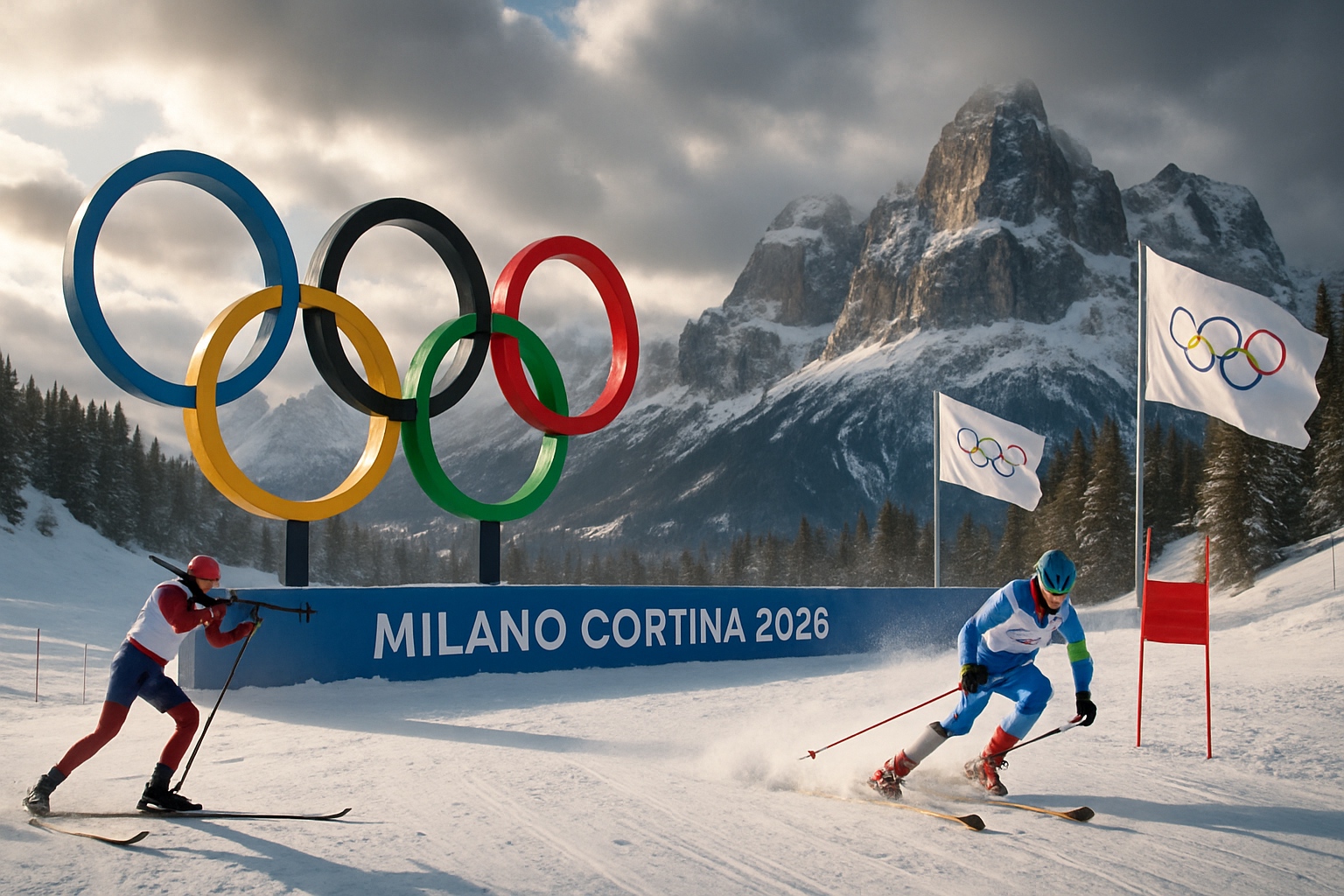
Day 13 of the Milano-Cortina 2026 Winter Olympics delivered a perfect storm of athletic drama, geopolitical controversy, and record-breaking achievements as competition intensified across the most geographically dispersed Games in Olympic history, spanning 400+ kilometers of northern Italy's spectacular Alpine venues.
Canadian Hockey Drama: Crosby's Injury Mars Victory
The day's most heart-stopping moment came at Milano's ice hockey arena where Canada battled back from a 3-2 deficit to defeat Czechia 4-3 in overtime, advancing to the Olympic semifinals. Mitch Marner emerged as the hero, scoring the decisive goal at 1:22 of 3-on-3 overtime after teammate Nick Suzuki tied the game late in regulation.
However, Canada's celebration was tempered by a devastating injury to captain Sidney Crosby, who was forced to leave the game and faces an uncertain Olympic future. The 36-year-old legend's potential absence adds complexity to Canada's gold medal aspirations, highlighting the fragility of Olympic dreams even for the sport's greatest stars.
"Hockey is a game of bounces, you'll be shocked to know. It's all a heart-pounding thrill ride," reflected one observer of the dramatic quarterfinal clash.
— Olympic Hockey Commentary
The victory showcased both the unpredictable nature of Olympic competition and the deep competitive pool in men's hockey, with Czechia proving they could challenge traditional powers despite having fewer resources and grassroots development programs.
Norwegian Cross-Country Skiing Dominance Continues
Norwegian superstar Johannes Høsflot Klæbo cemented his legendary status by winning his fifth gold medal of the Milano-Cortina Games, bringing his total Olympic gold count to an unprecedented level. The 27-year-old cross-country skiing phenomenon demonstrated why he's considered one of the greatest Winter Olympians of all time with another commanding performance in the 4x7.5km relay.
Klæbo's achievements at these Games have positioned him just behind swimming legend Michael Phelps on the list of athletes with the most Olympic gold medals, a remarkable feat for a Winter Olympics competitor. His dominance extends Norway's traditional supremacy in Nordic skiing while inspiring a new generation of cross-country athletes worldwide.
Short Track Speed Skating Medals Split
The short track speed skating events provided thrilling competition with Canada's Steven Dubois capturing gold in the men's 500-metre race, while the women's 3,000-metre relay saw fierce competition between traditional powerhouses. Canada's women's team, featuring Courtney Sarault, Kim Boutin, Florence Brunelle, and Danae Blais, claimed bronze in a tight-fought race against South Korea and Italy.
South Korea emerged victorious in the women's relay, demonstrating the country's continued excellence in short track speed skating and adding to their medal tally at Milano-Cortina 2026. The races highlighted the incredible depth and competitiveness of modern short track racing, with fractions of seconds determining podium positions.
Russian Paralympic Participation Sparks International Backlash
Away from the athletic competition, a major controversy erupted over the International Paralympic Committee's decision to allow Russian and Belarusian athletes to compete under their national flags at the upcoming Milano-Cortina Winter Paralympics. The decision represents a reversal of sanctions imposed following Russia's invasion of Ukraine.
Ukrainian President Volodymyr Zelensky condemned the decision as "dirty," while Estonia's government called it a "disgrace." The backlash extends beyond Ukraine, with Estonia, the United Kingdom, and the European Union all expressing opposition to the decision. Italy's Foreign Minister Antonio Tajani and Sports Minister Andrea Abodi also voiced their country's opposition to allowing Russian and Belarusian flags at the Paralympics.
"This decision undermines the values of sport and sends the wrong message about accountability during ongoing conflict."
— International Critics of the IPC Decision
The controversy threatens to overshadow the upcoming Paralympic Games and highlights the ongoing tension between sporting neutrality and geopolitical realities in international competition.
Breakthrough Performances and Climate Challenges
The day also featured several notable breakthrough performances, including continued success from non-traditional winter sports nations. Australia's remarkable campaign continued with strong performances across multiple disciplines, while various European nations secured crucial medals in their specialties.
Environmental concerns also dominated discussion, with reports highlighting how climate change has transformed the Winter Olympics landscape. Cortina d'Ampezzo is experiencing fewer frost days compared to the 1950s, requiring significant artificial snow production and raising questions about the long-term viability of traditional Winter Olympic venues.
American Skiing Legend's Personal Tragedy
In a heartbreaking side story, American skiing legend Lindsey Vonn revealed that her dog Leo died the day after her devastating crash during the women's downhill event. The 41-year-old's attempted comeback from a serious ACL injury had already ended in tragedy when she crashed early in her run, and the loss of her beloved companion added another layer of sorrow to her Olympic story.
Revolutionary Games Continue to Set New Standards
Despite controversies and challenges, the Milano-Cortina 2026 Winter Olympics continue to demonstrate the viability of their revolutionary dual-city hosting model. Spanning over 400 kilometers across northern Italy, the Games have successfully maintained the highest competitive standards while showcasing innovative approaches to sustainable Olympic hosting.
The integration of cutting-edge technology, including the first Olympic deployment of AI systems like Alibaba's Qwen LLM and OMEGA's AI-powered figure skating analysis, has enhanced both the competitive experience and global broadcasting reach. Cultural innovations, from bilingual place names in South Tyrol to the Gen Z mascots Milo and Tina, have resonated with international audiences.
Medal Race Intensifies
With competition continuing through February 22, the medal race remains intensely competitive. Norway maintains its traditional leadership position, but faces unprecedented challenges from a globalized field that includes breakthrough performances from nations across six continents. The democratization of winter sports has never been more evident, with historic participations from Saudi Arabia, Caribbean bobsled teams, and record delegations from countries like Latvia.
As Day 13 concluded, the Milano-Cortina 2026 Winter Olympics had once again demonstrated the unique ability of Olympic competition to combine the highest levels of athletic achievement with profound human drama, geopolitical complexity, and inspiring stories of triumph over adversity. The Games continue to establish new paradigms for Olympic hosting while honoring the timeless values of international cooperation and sporting excellence that define the Olympic movement.