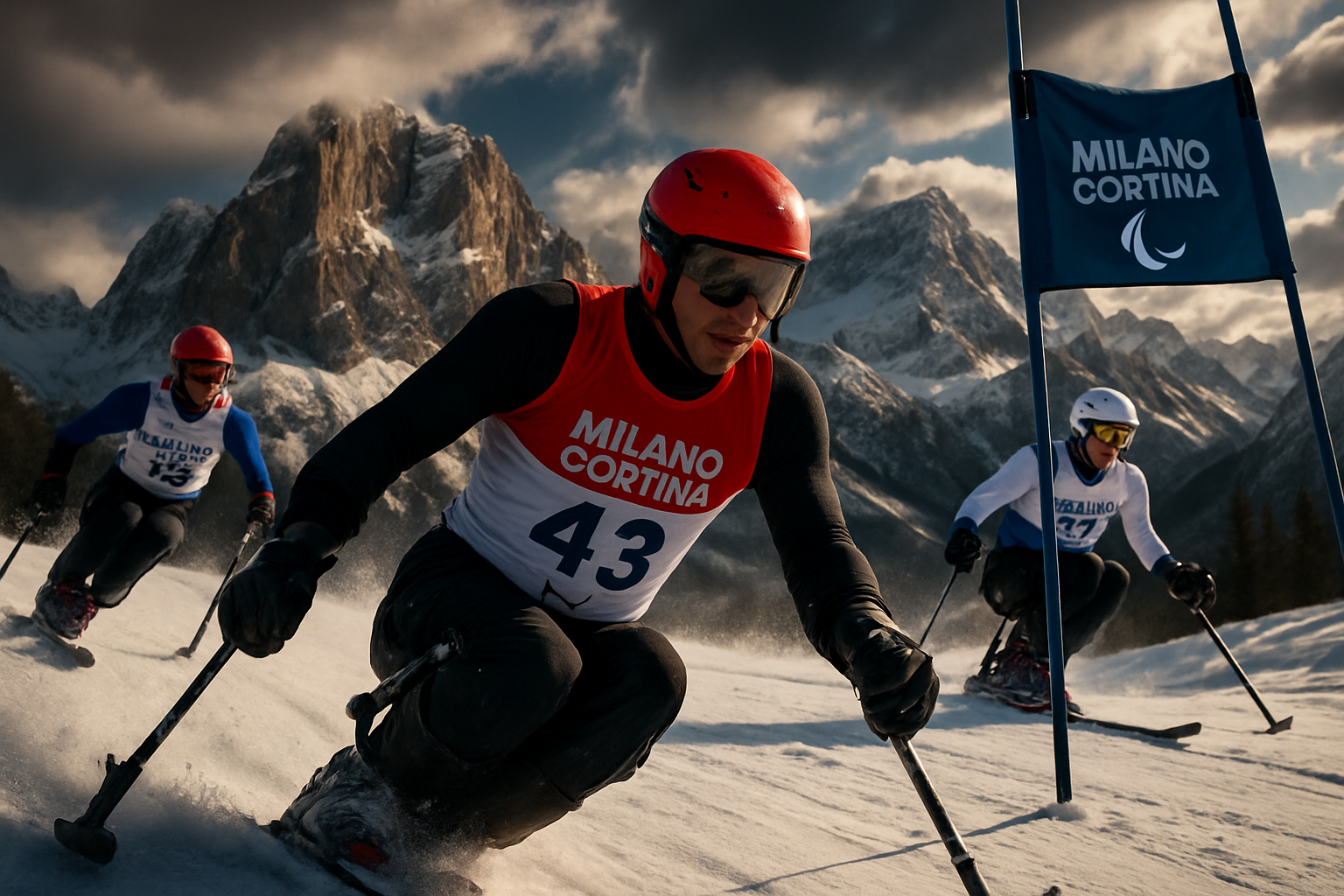
The Milano-Cortina 2026 Winter Paralympics are unfolding with extraordinary athletic achievements and historic medal breakthroughs, even as the Games face the most significant political boycott in Paralympic history over the controversial decision to allow Russian and Belarusian athletes to compete under their national flags.
Medal Surge and Historic Achievements
Canada's Kalle Eriksson and guide Sierra Smith captured bronze in the men's alpine skiing super-G vision impaired category, marking a significant achievement for Team Canada at the ongoing Paralympics. This medal comes on the heels of their earlier silver medal in the men's downhill vision impaired event, establishing them as one of the standout partnerships at these Games.
The host nation Italy celebrated a momentous breakthrough when Chiara Mazzel won the country's first Winter Paralympic alpine skiing gold medal in the women's visually impaired super-G. In an emotional revelation following her victory, Mazzel admitted she had initially doubted whether she would even make it to the start gate, making her triumph all the more remarkable.
Russia's return to Paralympic podium success after a 12-year absence became reality when alpine skier Varvara Voronchikhina secured the nation's first gold medal at the Milano-Cortina Games. Voronchikhina dominated the super-G competition, completing the course in 1 minute 15.60 seconds. She had previously won bronze in the downhill event, marking Russia's first Paralympic medals since the 2014 Sochi Games.
Switzerland's Double Gold Success
Switzerland's Robin Cuche emerged as one of the Games' standout performers, capturing his second gold medal in the super-G following his earlier victory in the downhill. The achievement is particularly notable as Cuche is the nephew of Didier Cuche, the legendary Kitzbühel downhill record holder, continuing the family's alpine skiing excellence into the Paralympic arena.
The Swiss success underscores the depth of Paralympic competition across traditional winter sports nations, with athletes demonstrating the same technical precision and competitive drive that characterizes the broader Olympic movement.
Estonia's Determined Curling Campaign
Estonia's wheelchair mixed curling duo, Kätlin Riidebach and Ain Villau, have faced significant challenges in their quest for Paralympic medals. After suffering their fourth consecutive loss, the pair now confronts an uphill battle to secure qualification for the medal matches. Despite the setbacks, their participation represents Estonia's continued commitment to Paralympic sport development and international competition at the highest level.
The Estonian team's journey reflects the broader narrative of smaller nations using the Paralympic stage to showcase their athletic programs and inspire future generations of adaptive athletes.
Unprecedented Political Boycott Crisis
The Milano-Cortina 2026 Paralympics have been overshadowed by the most significant political protest in Paralympic history. Multiple countries, including Estonia, Germany, Lithuania, and Ukraine, boycotted the opening ceremony at San Siro stadium in Milan to protest the International Paralympic Committee's decision to allow Russian and Belarusian athletes to compete under their national flags.
Ukrainian President Volodymyr Zelensky condemned the IPC's decision as "dirty" and "scandalous," while the Ukrainian Paralympic Committee demanded that the Ukrainian flag not be used in any ceremony where Russian athletes compete with their national banner. The controversy stems from the IPC's September 2025 reversal of sanctions that had been imposed following Russia's invasion of Ukraine in 2022.
Lithuanian broadcaster LRT refused to televise the opening ceremony, while Estonian officials called for the reinstatement of Ukrainian symbols at the Games. The boycott movement reflects deeper tensions about the role of international sporting bodies during active military conflicts and their responsibilities regarding moral leadership.
Revolutionary Hosting Model Success
Despite the political controversies, the Milano-Cortina 2026 Paralympics are demonstrating the viability of the revolutionary dual-city hosting model that proved successful during the Winter Olympics. Spanning more than 400 kilometers across northern Italy, the Games utilize the same venues and technological innovations that characterized the Olympic competition.
The Paralympics feature the same groundbreaking AI integration, including Alibaba's Qwen large language model and OMEGA's advanced analysis systems. Cultural elements such as bilingual Alto Adige/South Tyrol place names and sustainable Olympic villages with greenhouse facilities continue to enhance the Paralympic experience.
Europe's harsh winter has provided ideal natural snow conditions across the venues, reducing environmental concerns about artificial snow production while creating optimal competitive conditions for Paralympic athletes.
Paralympic Values Amid Geopolitical Tensions
The Games run through March 15, featuring competition across six Paralympic disciplines. Norway's Jostein Stordahl, at age 59, is competing in his remarkable 10th Paralympic Games, having first participated following a train accident at age 17 that crushed his legs. His presence embodies the Paralympic values of determination, inspiration, courage, and equality that define the movement.
France brought a highly experienced 13-athlete delegation to the Games, with nearly half being previous Paralympic medalists, including four defending champions competing across four of the six Paralympic disciplines. This depth of experience reflects the global development of Paralympic sport and the increasing competitiveness of adaptive athletics.
Sporting Excellence Transcends Politics
Despite the political tensions, Paralympic athletes continue to demonstrate extraordinary sporting excellence. The wheelchair curling competition has showcased tactical sophistication and competitive intensity, while alpine skiing events have provided dramatic racing across the challenging Italian Alpine venues.
Iran's sole Paralympic athlete was forced to withdraw due to security concerns described as creating risks "too high" for human life, highlighting the complex security environment surrounding these Games. However, the majority of competition has proceeded smoothly, with athletes transcending political divisions through their sporting achievements.
Legacy of Resilience and Excellence
The Milano-Cortina 2026 Paralympics are establishing important precedents for the Paralympic movement during times of geopolitical crisis. The Games demonstrate both the resilience of Paralympic sport and the ongoing challenges international sporting federations face when balancing competitive inclusion with moral and political considerations.
As competition continues through March 15, the Paralympics showcase the power of adaptive sport to inspire global audiences while testing the Paralympic movement's capacity to maintain its core values of determination, inspiration, courage, and equality amid unprecedented international pressure.
The revolutionary hosting model, technological innovations, and environmental sustainability measures pioneered at Milano-Cortina 2026 are likely to influence future Paralympic Games, even as the political controversies surrounding these Games may reshape discussions about athlete participation during international conflicts.