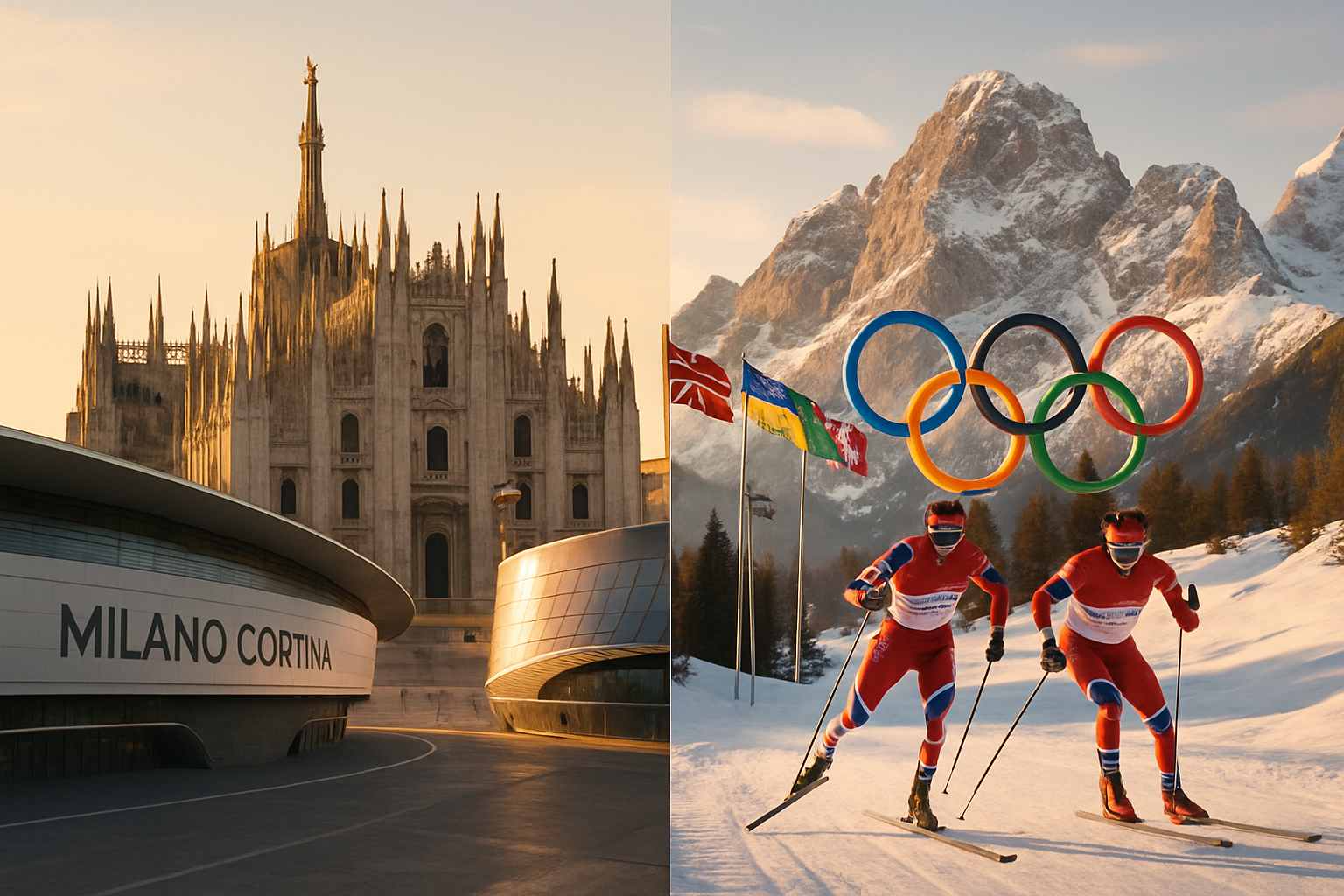
The Milano Cortina 2026 Winter Olympics delivered both triumph and controversy on February 13, as Norwegian cross-country skiing legend Johannes Høsflot Klæbo tied the all-time Winter Olympic gold medal record while a Ukrainian athlete's fight to honor war victims dominated headlines across the most geographically dispersed Games in Olympic history.
Klæbo's victory in the men's cross-country skiing event marked his eighth career Olympic gold medal, equaling the record held by Bjørn Dæhlie and Marit Bjørgen. The 29-year-old Norwegian completed the distance in 20 minutes 36.2 seconds, cementing his status as one of the greatest winter Olympians of all time.
"Now I feel complete," Klæbo said after his historic achievement, reflecting on a career that has redefined excellence in Nordic skiing. His performance continues Norway's traditional dominance in cross-country events at these revolutionary Italian Games.
Ukrainian Memorial Helmet Controversy Erupts
However, the day's sporting achievements were overshadowed by an international controversy surrounding Ukrainian skeleton racer Vladyslav Heraskevych and his "Helmet of Memory." The 27-year-old athlete faced disqualification from Olympic competition after the International Olympic Committee (IOC) banned his specially designed helmet commemorating over 20 Ukrainian athletes and coaches killed during Russia's ongoing invasion.
Heraskevych's helmet featured the faces and names of fallen Ukrainian sporting figures, intended as a tribute to those who died since February 2022. The IOC deemed this a violation of Rule 50, which prohibits political demonstrations at Olympic venues.
"Milano Cortina acting as 'propaganda for Russia', says banned Heraskevych. Even if the IOC wants to betray the memory of these athletes, I will not betray them. This is the price of our dignity."
— Vladyslav Heraskevych, Ukrainian Skeleton Racer
The Court of Arbitration for Sport (CAS) began hearing Heraskevych's case on February 13, with the athlete entering the 2.5-hour session draped in a Ukrainian flag. Despite the proceedings, the timing made it impossible for him to compete in his scheduled events, effectively ending his Olympic dreams regardless of the legal outcome.
International Support and Political Tensions
The controversy sparked immediate international reaction, with Estonian MEP Urmas Paet calling for Heraskevych's reinstatement, arguing that commemorating war victims should not be considered political propaganda. President Volodymyr Zelensky has been vocal in his support of the athlete, awarding him the Order of Freedom for "selfless service to the Ukrainian people."
The helmet controversy has highlighted ongoing tensions about Olympic neutrality rules during times of active conflict. Critics argue the IOC's stance effectively silences victims of war while allowing other forms of national expression to proceed unchallenged.
Competition Highlights Across Seven Venues
Despite the political controversy, competition continued across the Games' unprecedented seven-venue layout spanning over 400 kilometers from Milan to Cortina d'Ampezzo. Estonian athletes made their mark with Alvar Johannes Alev finishing 28th in the men's 10km freestyle cross-country skiing, while other nations celebrated breakthrough performances.
Taiwan's 18-year-old Li Jie-han made his Olympic debut in the same event, finishing 106th with a time of 28:39.3 and writing history as part of Taiwan's winter sports development. The young athlete, who first touched skis at age 11, represents the global expansion of winter sports beyond traditional powerhouses.
Belarus's Marina Zueva rounded out the top six in women's 5,000m speed skating with a time of 6:57.70, finishing more than ten seconds behind the medalists but demonstrating the competitive depth across Eastern European nations.
Norwegian Dominance and Records
While Klæbo's eighth gold captured headlines, Norway's overall performance continues to reinforce their status as winter sports' premier nation. The achievement puts the 29-year-old in exclusive company, matching records set by cross-country legends Bjørn Dæhlie and biathlon champion Ole Einar Bjørndalen.
Norwegian sports commentators described Klæbo's performance as demonstrating complete tactical mastery, with his ability to "stay cold as a fish" under pressure becoming a signature characteristic of his championship mentality. The victory represents not just individual excellence but the continuation of a Nordic skiing tradition that spans generations.
Revolutionary Olympic Format Proves Successful
The Milano Cortina 2026 Games have successfully demonstrated that geographically dispersed hosting can maintain Olympic excellence while addressing sustainability concerns. The dual-city format, spanning from Milan's modern venues to Cortina's traditional Alpine settings, has created unique logistical challenges but delivered world-class competition.
France celebrated medal success with Romane Miradoli's silver in Alpine skiing, while various nations achieved personal bests and national records across the comprehensive program of events. The Games feature 116 medal events across 16 sports, with ski mountaineering making its Olympic debut.
Technology and Cultural Innovation
These Games have pioneered several technological firsts, including the integration of Alibaba's Qwen AI system for broadcasting and spectator services, representing the first use of Large Language Model technology in Olympic competition. OMEGA's AI-powered analysis systems have enhanced judging accuracy in figure skating and other subjectively scored events.
Cultural innovations include bilingual place names throughout the Alto Adige/South Tyrol region, acknowledging the area's German-speaking population, and the introduction of Milo and Tina, dubbed the first "Gen Z" Olympic mascots, designed to connect with younger audiences worldwide.
Looking Ahead
As competition continues through February 22, the Milano Cortina 2026 Winter Olympics have established themselves as a transformative moment in Olympic history. The successful implementation of sustainable, geographically distributed hosting offers a model for future Games facing climate and logistical challenges.
However, the Ukrainian helmet controversy will likely influence future discussions about Rule 50 and the boundaries between political expression and memorial tribute. The case raises fundamental questions about Olympic neutrality in an era of global conflicts and whether commemorating war victims constitutes political demonstration or legitimate remembrance.
With Norway leading medal standings and nations across six continents achieving breakthrough performances, these Games demonstrate both the enduring power of Olympic competition and the complex political realities that increasingly intersect with international sport. The revolutionary format may well represent the future of Olympic hosting, combining athletic excellence with environmental responsibility while navigating the challenging intersection of sport and global affairs.