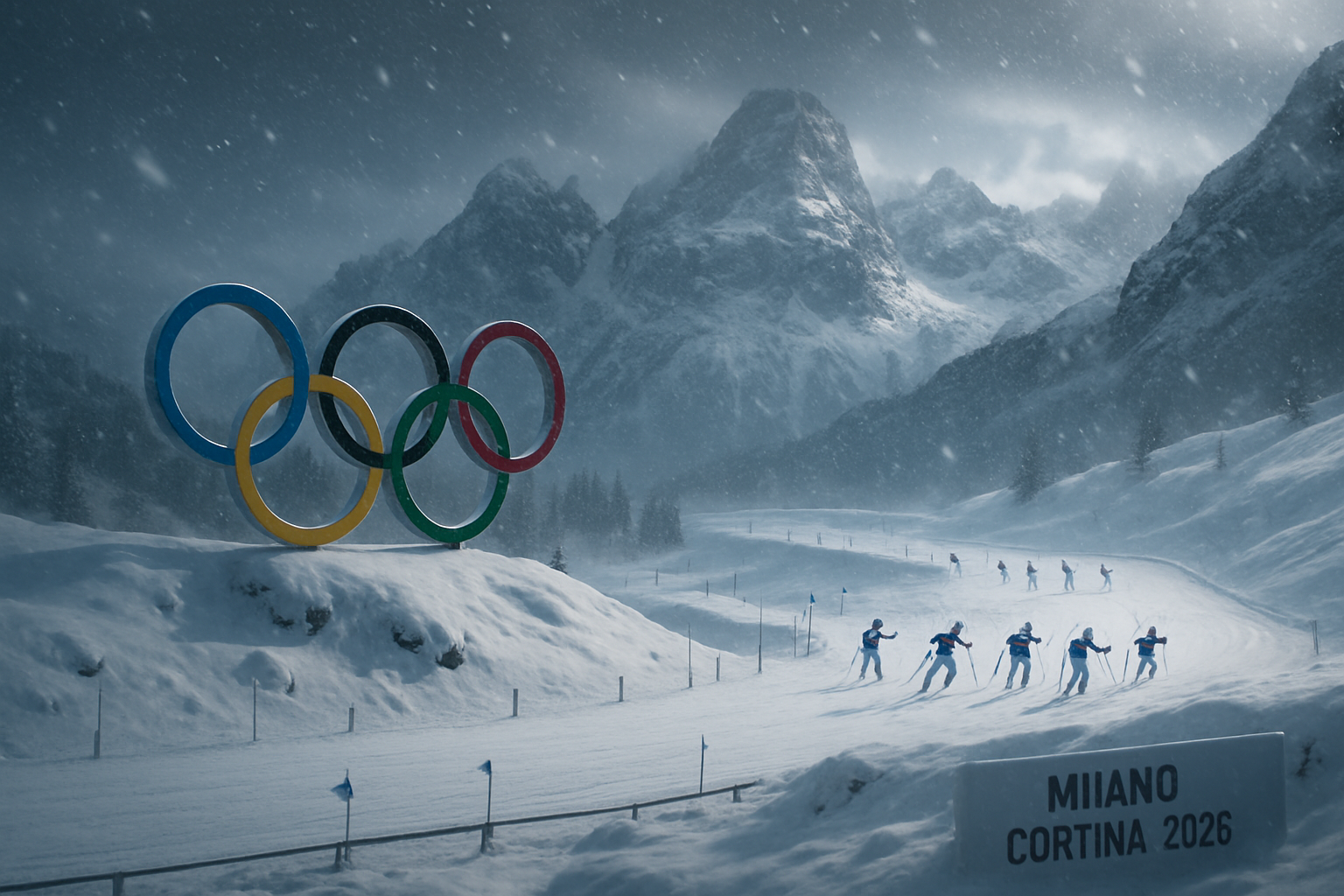
Heavy snowfall continued to disrupt competition at the Milano-Cortina 2026 Winter Olympics on Tuesday, forcing the cancellation of aerials qualifying and women's slopestyle final at Livigno, while athletes elsewhere delivered breakthrough performances that are reshaping the medal standings.
The weather challenges at Italy's most geographically dispersed Olympics—spanning over 400 kilometers across seven venues—highlighted both the operational complexities of the revolutionary dual-city hosting model and the resilience of athletes competing at the highest level.
French Biathlon Makes History
In a dominant display at the Südtirol Arena d'Antholz, France's men's biathlon team secured their first-ever Olympic relay gold medal, defeating Norway in second place and Sweden in bronze position. The historic victory marked France's 16th medal at Milano-Cortina 2026, setting a new French record for Winter Olympic medals.
"This is the culmination of years of preparation," said Eric Perrot, who powered France to victory with a commanding final leg.
— Eric Perrot, French Biathlete
The French triumph was particularly significant as it came against traditional biathlon powerhouses Norway and Sweden, demonstrating the increasing global competitiveness of winter sports. The relay format, covering 4x7.5 kilometers, showcased France's depth across their male biathlon squad.
Canadian Speed Skating Dominance
At the Milan speed skating oval, Canada's women's team pursuit trio of Isabelle Weidemann, Valérie Maltais, and Ivanie Blondin successfully defended their Olympic championship, prevailing over the Netherlands in a thrilling final. The victory provided Canada with their second gold medal of the Games, following Megan Oldham's freestyle skiing triumph.
The Canadian team's tactical excellence and synchronized racing demonstrated why they have dominated this discipline, completing the pursuit in commanding fashion despite fierce Dutch pressure throughout the race.
Weather Wreaks Havoc at Livigno
The continuing snowfall that has characterized Europe's harshest winter in decades created ideal natural snow conditions but proved challenging for event organizers. Aerials qualifying and the women's slopestyle final were among the events cancelled Tuesday, with New Zealand's Zoi Sadowski-Synnott among those affected by the postponements.
According to reports from Livigno Snow Park, the heavy snowfall and reduced visibility made competition unsafe, forcing officials to prioritize athlete welfare over schedule adherence. The decision highlighted the careful balance organizers must strike between maintaining competition integrity and ensuring competitor safety.
Norwegian Excellence Continues
Despite losing the biathlon relay, Norway maintained its position atop the medal standings through consistent performances across Nordic disciplines. Johannes Høsflot Klæbo's continued cross-country skiing excellence has been a highlight, with the Norwegian star approaching historic achievement levels that could cement his status as one of winter sports' greatest athletes.
The Nordic nation's systematic approach to winter sports development continues to yield dividends, even as other countries like France, Canada, and emerging nations challenge traditional hierarchies.
Technical Innovation Amid Natural Challenges
The Games have showcased remarkable technological innovation despite weather challenges. The integration of Alibaba's Qwen AI system—the first Olympic deployment of large language model technology—has enhanced broadcasting and spectator services across the dispersed venue network.
Additionally, OMEGA's AI-powered analysis systems have provided unprecedented insights into athletic performance, particularly benefiting technical sports like figure skating where precision matters enormously.
Global Winter Sports Evolution
Tuesday's competition results reinforced the ongoing democratization of winter sports, with breakthrough performances from nations traditionally outside the winter sports hierarchy. The success of countries like Bulgaria (which ended a 20-year medal drought earlier in the Games) and strong showings from Latvia's record 68-athlete delegation demonstrate winter sports' expanding global reach.
Australia's remarkable performance—currently ahead of traditional powers Canada and China in certain medal categories despite fielding fewer athletes—represents perhaps the most striking example of this global expansion.
Infrastructure Resilience Tested
The ability to maintain high-level competition across such a geographically dispersed Olympic footprint, despite weather challenges and earlier infrastructure concerns, has validated the Milano-Cortina hosting model. The incomplete Apollonio-Socrepes cable car, which forced school closures in Cortina, represents the kinds of challenges organizers have managed while keeping competition on track.
Cultural innovations including bilingual place names in Alto Adige/South Tyrol, the popular Gen Z mascots Milo and Tina, and sustainable Olympic village designs have been particularly well-received by international audiences.
Looking Ahead
As the Games continue through February 22, weather conditions remain a significant factor in scheduling, with organizers demonstrating flexibility in adapting to conditions while maintaining competitive integrity. The French biathlon breakthrough and Canadian speed skating defense represent the kind of memorable Olympic moments that define these Games.
With Norway maintaining its medal lead but facing unprecedented global competition, the final week of Milano-Cortina 2026 promises continued drama as athletes from six continents compete for Olympic glory across the spectacular Italian Alpine backdrop.
The success of the dual-city hosting model, despite operational complexities, may establish new paradigms for future Olympic Games, balancing environmental sustainability with competitive excellence in an era of climate adaptation.