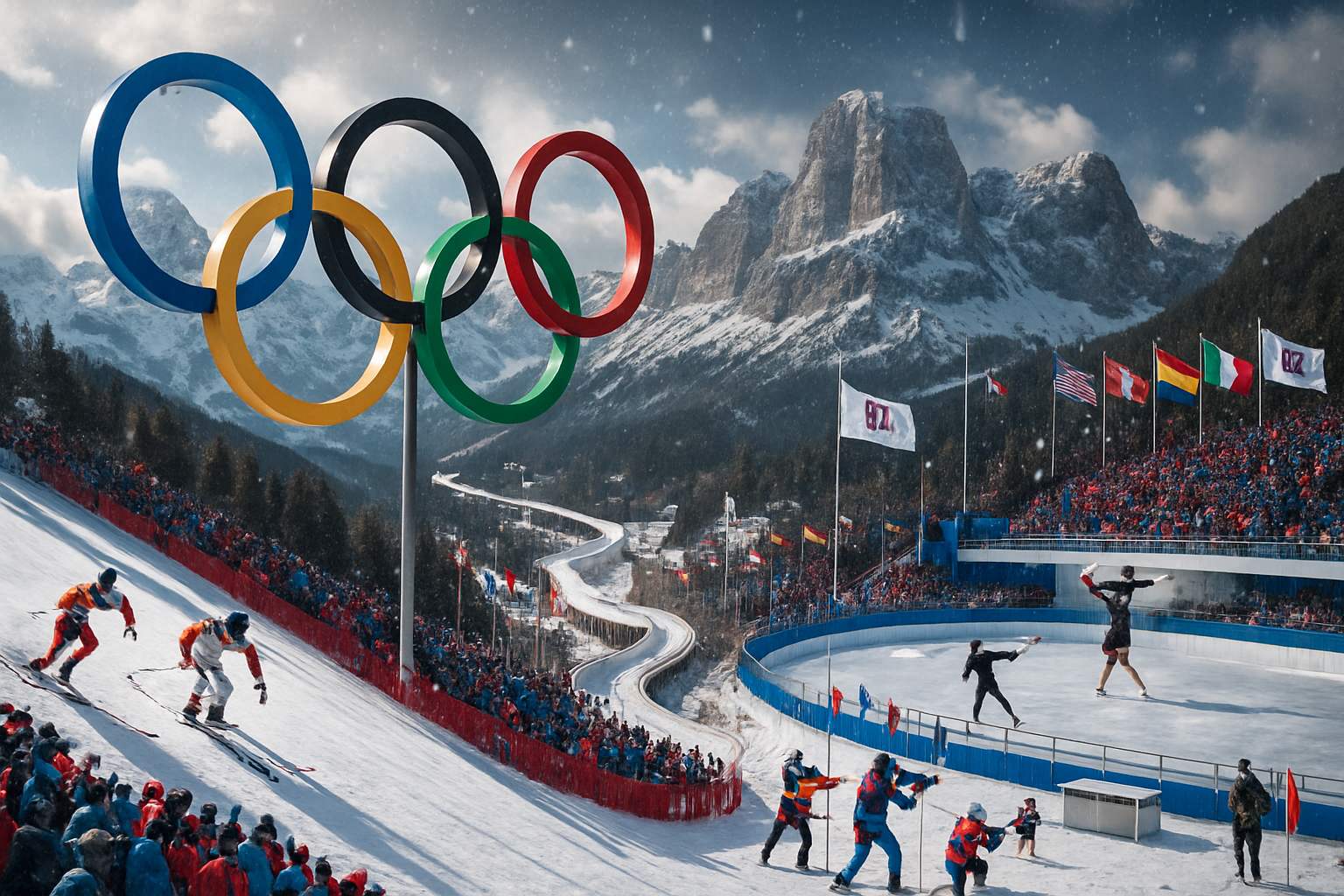
The Milano-Cortina 2026 Winter Olympics have emerged as one of the most dramatic and groundbreaking Winter Games in Olympic history, delivering extraordinary athletic achievements, significant political controversies, and historic breakthrough performances across seven venues spanning more than 400 kilometers of northern Italy's spectacular Alpine landscape.
From Australia's stunning snowboard cross gold medal triumph to Ukraine's powerful memorial protest, from Johannes Klaebo's record-tying eighth Olympic gold to devastating injury setbacks, these Games have showcased both the pinnacle of winter sports excellence and the complex intersection of athletics with global politics.
Revolutionary Hosting Model Proves Successful
The Milano-Cortina 2026 Games have established a revolutionary new paradigm for Olympic hosting, becoming the most geographically dispersed Winter Olympics in history. The innovative dual-city model spans from Milan's urban centers to Cortina d'Ampezzo's alpine peaks, encompassing seven distinct venue clusters across a 400-kilometer corridor through northern Italy's Dolomites region.
Despite initial infrastructure concerns including incomplete cable car systems forcing school closures and last-minute venue construction, the Games have proceeded successfully. The integration of cutting-edge technology, including Alibaba Cloud's Qwen AI system—the first artificial intelligence platform deployed at Olympic Games—has enhanced both broadcasting capabilities and spectator experiences.
Cultural innovations have further distinguished these Games, featuring bilingual place names in Alto Adige/South Tyrol to accommodate the region's German-speaking population, sustainable Olympic villages with greenhouse spaces, and "Gen Z" mascots Milo and Tina that have resonated with younger audiences worldwide.
Australian Breakthrough and Global Expansion
Australia has emerged as one of the standout nations of Milano-Cortina 2026, with Josie Baff capturing a stunning gold medal in women's snowboard cross, becoming Australia's second gold medalist at these Games. The 24-year-old's victory exemplified what observers called "self-belief utilized to its fullest extent," as she navigated a challenging field to claim Australia's first snowboard cross Olympic title.
"Self-belief is the most powerful tool at an athlete's disposal, and I utilized it to its fullest extent with this magical run,"
— Josie Baff, Australian Olympic Champion
The Australian success story continues with strong performances from Scotty James and Valentino Guseli in snowboard halfpipe events, positioning Australia as a genuine force in winter sports despite its traditional summer sport focus. This breakthrough reflects the ongoing globalization of winter sports, with athletes from non-traditional winter nations increasingly competitive at the highest levels.
Norwegian Dominance and Historic Records
Norway has maintained its position as the world's premier winter sports nation, with Johannes Høsflot Klæbo achieving historic milestone by winning his eighth career Olympic gold medal in cross-country skiing events. The 29-year-old Norwegian legend tied the all-time Winter Olympic individual gold medal record, completing what he described as making him "feel complete" after years of pursuing this achievement.
Norwegian athletes have dominated across multiple disciplines, from cross-country skiing to biathlon, with the team leading the medal standings throughout most of the Games. Their success has been built on decades of systematic development in Nordic sports, combined with exceptional performance under pressure at these Olympic Games.
Ukrainian Memorial Controversy Sparks International Debate
One of the most significant controversies of Milano-Cortina 2026 involved Ukrainian skeleton athlete Vladyslav Heraskevych, who was banned from competition after refusing to remove a memorial helmet commemorating over 20 Ukrainian athletes and coaches killed during Russia's ongoing war against Ukraine.
The International Olympic Committee (IOC) expelled Heraskevych under Rule 50, which prohibits political demonstrations at Olympic venues. However, the athlete refused a compromise offer of wearing a black armband, stating: "Even if the IOC wants to betray the memory of these athletes, I will not betray them. This is the price of our dignity."
Ukrainian President Volodymyr Zelensky responded by awarding Heraskevych the Order of Freedom for "selfless service to the Ukrainian people" and "civic courage and patriotism." The controversy highlighted ongoing tensions between Olympic neutrality policies and athletes' rights to commemorate victims of war.
The Court of Arbitration for Sport (CAS) ultimately upheld the IOC's decision following a 2.5-hour emergency hearing, but the case has sparked international debate about the boundaries of political expression in Olympic competition and the role of sport during times of global conflict.
Technological Innovation and AI Integration
Milano-Cortina 2026 has pioneered the integration of artificial intelligence technology into Olympic competition and broadcasting. Alibaba Cloud's Qwen AI system represents the first Large Language Model (LLM) deployed at Olympic Games, providing enhanced real-time translation, venue information, and spectator services.
OMEGA has simultaneously introduced AI-powered figure skating analysis systems that assist both judges and viewers in understanding the technical complexity of performances. These technological innovations represent a significant step forward in making Olympic competition more accessible and engaging for global audiences.
Dramatic Athletic Stories and Breakthrough Performances
Beyond the political controversies, Milano-Cortina 2026 has delivered numerous compelling athletic narratives. Czech Republic's Eva Adamczyková completed her Olympic medal collection with silver in snowboard competition, while numerous athletes from traditionally non-winter sports nations achieved breakthrough performances.
The Games have witnessed both triumph and tragedy, with several athletes overcoming significant challenges to compete at the highest level. The competition has been characterized by extremely close margins in many events, demonstrating the increasing depth of global winter sports competition.
Infrastructure Challenges and Environmental Conditions
Despite the ultimate success of the competition format, Milano-Cortina 2026 has faced significant infrastructure challenges. The incomplete Apollonio-Socrepes cable car system in Cortina forced local school closures to manage transportation logistics, while power outages affected several venues during early competition days.
Paradoxically, Europe's harshest winter in decades—with temperatures reaching -30°C—has created ideal natural snow conditions, reducing concerns about artificial snow production that had been a source of environmental criticism during the Games' preparation phase.
Global Participation and Winter Sports Democratization
These Games have demonstrated the continued global expansion of winter sports participation. Historic debuts include Saudi Arabia's first-ever Winter Olympic athletes, Caribbean bobsleigh teams from Jamaica and Trinidad & Tobago, and Latvia's record 68-athlete delegation—the largest in the nation's Olympic history.
South Korea has achieved notable success with multiple medals across various disciplines, while traditional winter sports powers continue to face increasing competition from emerging nations. This trend reflects decades of global investment in winter sports infrastructure and athlete development programs.
Cultural Impact and Legacy
The Milano-Cortina 2026 Games have successfully demonstrated that Olympic competition can maintain its highest standards while adapting to 21st-century realities of environmental sustainability and geographic distribution. The dual-city model, spanning from Milan's urban sophistication to Cortina's Alpine majesty, has created unique Olympic experiences that may influence future Games hosting approaches.
Cultural elements including bilingual signage, sustainable venue design, and the integration of local traditions have enhanced the Games' authenticity while maintaining international accessibility. The success of these innovations suggests potential templates for future Olympic hosting that balance tradition with contemporary demands for environmental responsibility.
Looking Ahead
As competition continues through February 22, Milano-Cortina 2026 has already established itself as a watershed moment in Olympic history. The Games have proven that ambitious hosting models can successfully deliver world-class competition while addressing modern concerns about sustainability and geographic accessibility.
The combination of technological innovation, cultural authenticity, athletic excellence, and complex political navigation has created a unique Olympic experience. With 3,000 athletes from 92 countries competing across 116 medal events in 16 sports, including the Olympic debut of ski mountaineering, these Games represent both a celebration of winter sports' global reach and a template for the Olympics' sustainable future.
The legacy of Milano-Cortina 2026 will likely extend far beyond the medal tallies, influencing how future Olympic Games balance tradition with innovation, address political tensions, and adapt to changing global realities while maintaining the fundamental Olympic values of excellence, friendship, and respect that continue to inspire athletes and audiences worldwide.