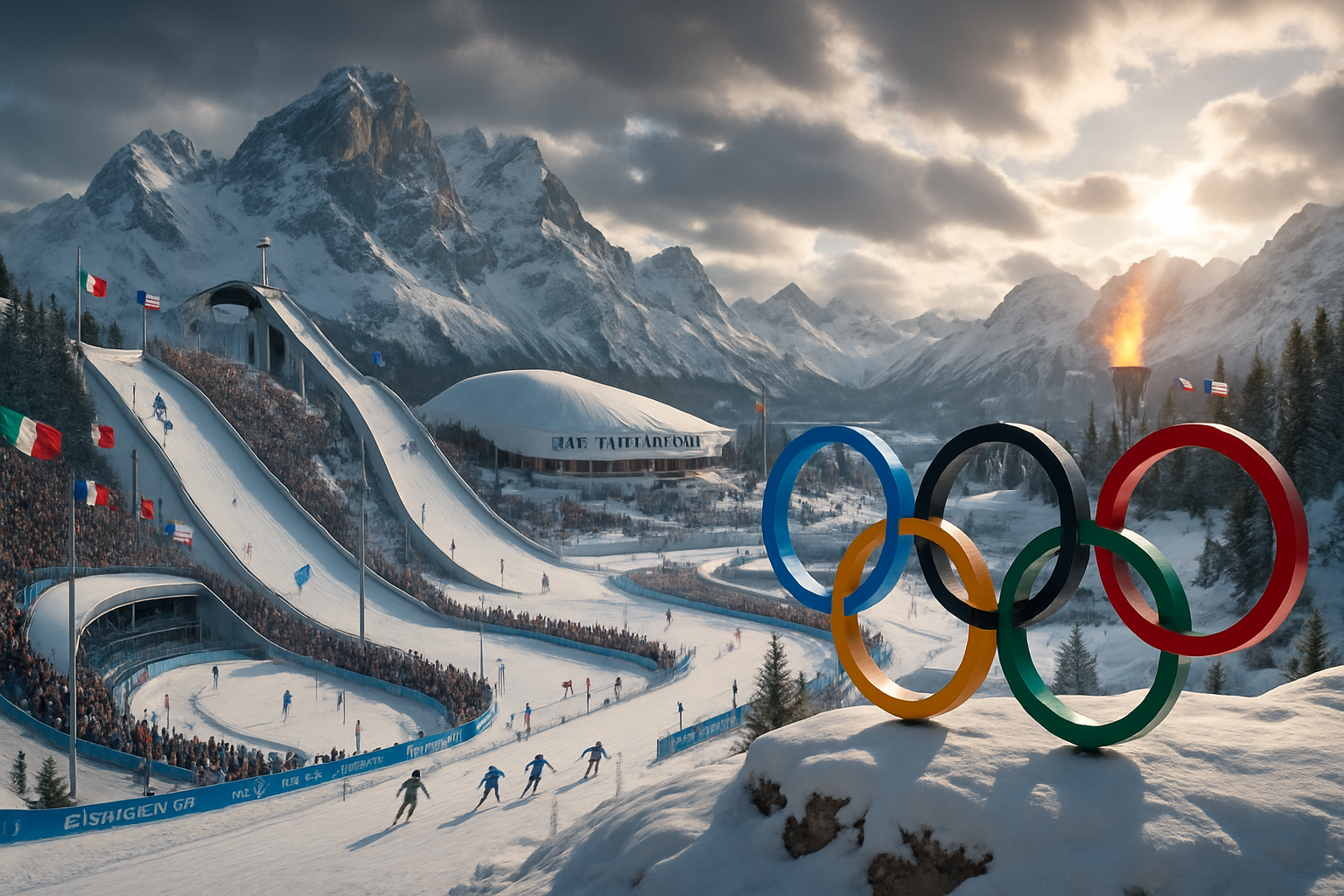
Day 14 of the Milano-Cortina 2026 Winter Olympics delivered a spectacular array of breakthrough performances and emotional victories as the most geographically dispersed Games in Olympic history enter their final stretch, with athletes from around the world creating unforgettable moments across Italy's stunning Alpine venues.
Estonian Figure Skating Excellence
Estonia's Niina Petrõkina showcased the global reach of winter sports excellence as she advanced to the women's figure skating free program, representing her nation with pride at the Milan Ice Arena. The Estonian skater's performance highlighted the democratization of winter sports, with athletes from non-traditional powerhouses making their mark on the Olympic stage.
Petrõkina's advancement to the free skate program demonstrates Estonia's growing presence in winter sports, part of a broader trend at Milano-Cortina 2026 that has seen unprecedented global participation across six continents.
French Dominance in Alpine Sports
France continued its remarkable campaign with multiple medal-winning performances that have established the nation as a Winter Olympic powerhouse. The French ski mountaineering debut proved particularly successful, with Emily Harrop claiming silver in the women's sprint and Thibault Anselmet securing bronze in the men's event at Bormio.
"This is historic for France and for ski mountaineering," Anselmet reflected after his bronze medal performance. "To see our sport finally in the Olympics and to be on the podium is a dream come true."
— Thibault Anselmet, French Ski Mountaineer
The French biathlon team added to their impressive medal haul with Julia Simon's commanding victory in the women's 4x6km relay, extending France's dominance in Nordic disciplines. With 19 podium finishes, France currently sits fourth in the medal standings, their best Winter Olympic performance in decades.
Switzerland's Ice Hockey Bronze Medal Drama
Switzerland's women's ice hockey team captured hearts with a dramatic overtime victory to claim the bronze medal, with Alina Müller scoring the decisive goal in extra time. The victory marked Switzerland's second Olympic bronze in women's hockey, coming 12 years after their previous medal in the discipline.
The match showcased the growing competitiveness of women's ice hockey, with Switzerland's systematic approach to the sport paying dividends on the Olympic stage.
Nordic Combined Historical Milestone
Norway's Jens Lurås Oftebro delivered a historic performance in Nordic combined, partnering with Andreas Skoglund to claim gold in what may be one of the final Olympic competitions in the discipline. With Nordic combined facing potential elimination from future Olympic programs, Oftebro's victory carries additional significance.
"I hope I'm not the last one to win Olympic gold in Nordic combined," Oftebro said emotionally. "This sport has such a rich tradition, and it would be heartbreaking to see it disappear from the Olympics."
— Jens Lurås Oftebro, Norwegian Nordic Combined Champion
Speed Skating Surprises and Disappointments
The speed skating competition delivered both stunning upsets and crushing disappointments. Norway's Peder Kongshaug, considered a medal favorite in the men's 1500m, found himself far from the podium in a shocking result that left experts questioning what went wrong for the Norwegian speedster.
Adding to the drama, American superstar Jordan Stolz, despite setting a blistering pace that demolished Kongshaug's hopes, could only manage silver in what was expected to be a gold medal performance.
Behind the Scenes: Olympic Village Life
The Milano-Cortina 2026 Games have not been without their unique challenges and stories. Organizers faced an unexpected shortage of condoms at the Olympic village, having initially provided only 100,000 compared to the 300,000 distributed at the Paris 2024 Games. The situation required swift restocking to meet athlete demands.
Such logistical challenges highlight the complexity of hosting the most geographically dispersed Olympic Games in history, with venues spread across 400 kilometers of northern Italy's Alpine landscape.
Latvia's Ice Hockey Team Returns Home
Latvia's Olympic ice hockey delegation returned home to Riga on February 19, concluding their Milano-Cortina 2026 campaign. The team's participation was part of Latvia's record-breaking 68-athlete delegation, the largest in the nation's Olympic history.
The Latvian team's journey exemplifies the global nature of these Games, with nations from every continent represented in what has become the most democratically competitive Winter Olympics ever staged.
Russian Athletes Compete as Neutrals
Individual Neutral Athletes made their presence felt with ski mountaineer Nikita Filippov claiming silver in the men's sprint, finishing just 1.52 seconds behind Spain's gold medalist Oriol Cardona Coll. Filippov's medal represents the first for neutral athletes at Milano-Cortina 2026, adding another layer to the Games' complex geopolitical narrative.
Technological Innovation and Cultural Integration
The Milano-Cortina 2026 Games have successfully integrated groundbreaking technology, with Alibaba's Qwen AI system providing the first-ever Olympic deployment of Large Language Model technology for broadcasting and spectator services. The OMEGA AI-powered figure skating analysis has revolutionized judging and viewer experience.
Cultural authenticity has been maintained through bilingual place names in Alto Adige/South Tyrol, sustainable Olympic villages featuring greenhouse spaces, and the popular Gen Z mascots Milo and Tina, all contributing to a uniquely Italian Olympic experience.
Environmental Success Story
Despite initial concerns about artificial snow production, Europe's harshest winter in decades has provided ideal natural snow conditions across all venues. The -30°C temperatures, while challenging logistically, have reduced environmental impact and created perfect competition surfaces.
Looking Ahead to the Final Days
As Milano-Cortina 2026 approaches its February 22 conclusion, the Games have established new paradigms for Olympic hosting. The revolutionary dual-city model spanning 400+ kilometers has proved viable while maintaining the highest competitive standards and embracing environmental sustainability.
With medal races intensifying across multiple disciplines and breakthrough nations continuing to challenge traditional powerhouses, the final days promise to deliver more memorable moments that will define these historic Games.
The Broader Olympic Legacy
Milano-Cortina 2026 has demonstrated that winter sports excellence knows no geographic boundaries. From Estonia's figure skating breakthrough to Switzerland's hockey bronze, from France's alpine dominance to Latvia's record participation, these Games have showcased the true democratization of winter sports.
The successful implementation of the most geographically dispersed Olympic format in history, combined with technological innovation and cultural authenticity, has created a template for future sustainable Olympic hosting that balances tradition with 21st-century realities.
As the Olympic flame continues to burn across Milan and Cortina d'Ampezzo, Day 14 has reinforced that these Games will be remembered not just for athletic excellence, but for their role in revolutionizing how the world stages its greatest sporting celebrations.