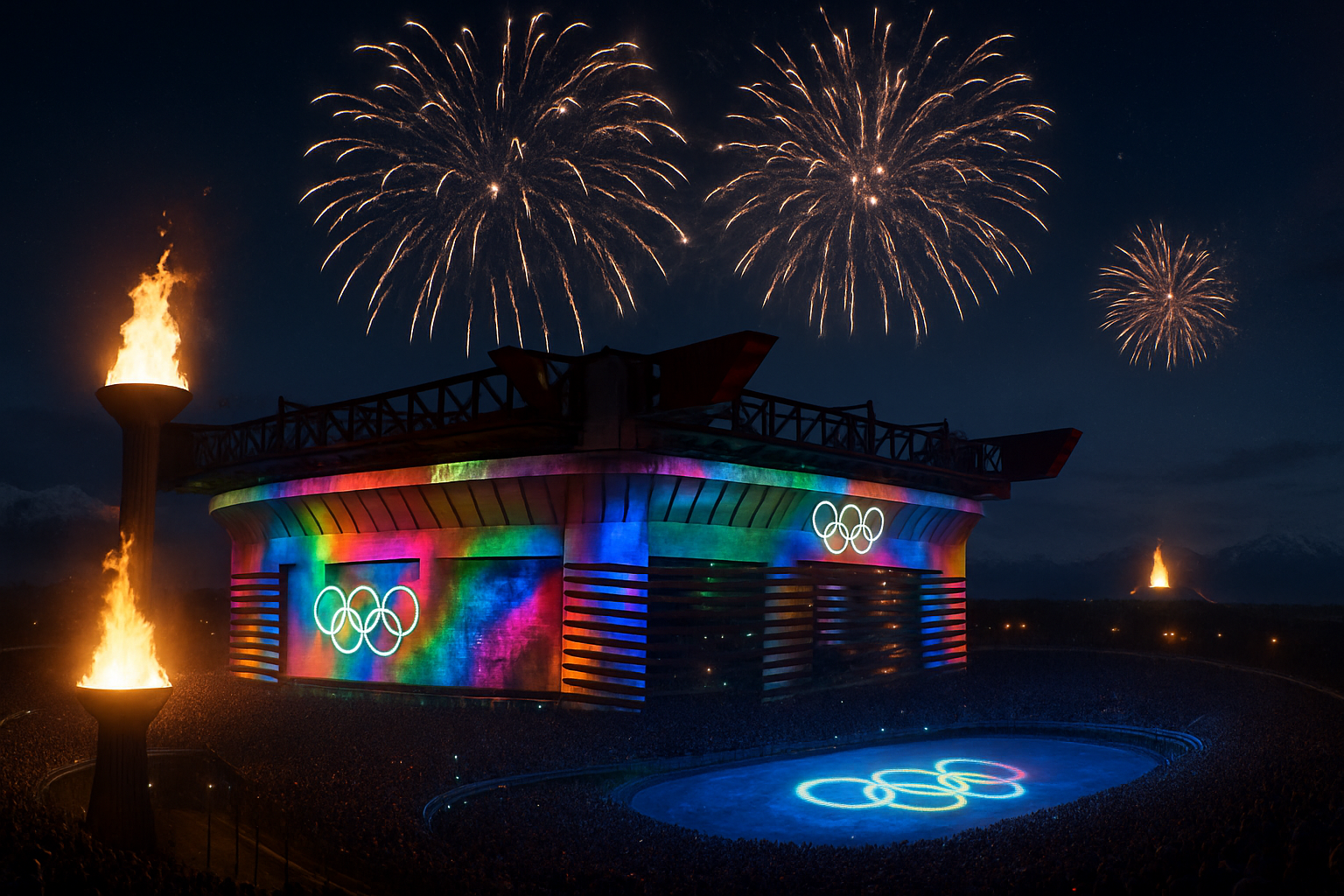
The Milano-Cortina 2026 Winter Olympics will officially begin on Friday, February 6, with a spectacular opening ceremony at Milan's iconic San Siro stadium, marking the start of what promises to be the most geographically dispersed Winter Games in Olympic history.
Nearly 3,000 athletes from 92 countries will be celebrated at the ceremony, which begins at 8:45 p.m. local time and will be broadcast live across multiple networks including ETV2 in Estonia and ERR. The event represents the culmination of years of preparation that have been marked by both innovation and significant challenges.
A Revolutionary Olympic Model
The 2026 Winter Olympics represent a groundbreaking departure from traditional Olympic hosting models. Rather than centralizing events in one location, Milano-Cortina spans seven venues across northern Italy, covering more than 400 kilometers from Milan to Cortina d'Ampezzo. This approach, driven by sustainability and climate protection concerns, eliminates the need for a massive Olympic village and instead utilizes iconic existing locations throughout the region.
However, this innovative model presents unique challenges for spectators, who may need to travel four to five hours between different events, fundamentally changing the Olympic experience for fans and athletes alike.
Star-Studded Opening Ceremony
The opening ceremony at San Siro promises to be a memorable spectacle, with Swedish sources confirming star-studded performances planned for the main ceremony. Among the notable attendees will be soccer legend Zlatan Ibrahimović, adding to the international glamour of the event.
The ceremony will showcase Italy's rich cultural heritage while celebrating the international spirit of Olympic competition. Special attention has been paid to cultural innovation, including the implementation of bilingual place names in Alto Adige/South Tyrol to accommodate the region's German-speaking population, who comprise two-thirds of the area's residents.
Infrastructure Challenges and Last-Minute Preparations
Despite the approaching opening ceremony, significant infrastructure challenges have persisted until the final days. The main ice hockey venue required "frantic" final construction work, though experienced ice makers Don Moffatt and Mark Messer have assured that NHL-quality playing surfaces will be ready for competition.
Transportation issues have also emerged, particularly in Cortina d'Ampezzo, where the incomplete Apollonio-Socrepes cable car has forced local school closures to manage transport logistics. These challenges highlight the complexity of hosting Olympic events across such a geographically dispersed area.
"We acknowledge the preparations have been bumpy, but we promise these will be unforgettable Games."
— Kirsty Coventry, IOC President
Historic Participation and Athletic Stories
The Games feature several historic firsts and remarkable comeback stories. Saudi Arabia will make its Winter Olympic debut with alpine skier Fayik Abdi and cross-country skier Rakan Aliriza. The Caribbean will be represented for the first time in Olympic bobsleigh history, with both Jamaica and Trinidad & Tobago fielding four-man bobsleigh teams.
Perhaps the most dramatic storyline belongs to American alpine skiing legend Lindsey Vonn, who at 41 years old is attempting to compete in the downhill event on February 8 despite completely rupturing her ACL just days before the Games during a crash in Crans-Montana, Switzerland on January 30.
Technology and Cultural Innovation
The Milano-Cortina Games mark several technological milestones, including the first Olympic deployment of Large Language Model (LLM) technology. Alibaba Cloud's Qwen AI system will power Olympic AI Assistants for broadcasting and enhanced spectator experiences, representing a significant advancement in Olympic technological integration.
The Games also introduce Milo and Tina, stoat mascots dubbed the "first openly Gen Z" Olympic mascots, reflecting the Games' emphasis on connecting with younger audiences while maintaining Olympic traditions.
Competition Schedule and Expectations
While the opening ceremony takes place on February 6, competition actually began on February 5 with mixed doubles curling, despite power outages that interrupted early matches at the Cortina venue. Women's downhill training is scheduled for February 6, with full competition running through February 22.
The Games feature 116 medal events across 16 sports, including the Olympic debut of ski mountaineering. Norway is expected to lead the medal count, while the Netherlands anticipates a "gold rush" in speed skating events.
Security and Diplomatic Challenges
Security preparations have been extensive, with thousands of officers, robots, drones, and a cyber command center deployed across the seven venues. The Games have already faced cybersecurity challenges, with pro-Russian hackers launching coordinated attacks on Olympic venues and Italian diplomatic facilities just hours before the opening ceremony.
Diplomatic tensions have also emerged over the presence of U.S. Vice President J.D. Vance and Secretary of State Marco Rubio, accompanied by ICE agents, which has sparked criticism from Italian politicians and raised IOC concerns about potential demonstrations.
Environmental Context and Sustainability
The Games are taking place during one of Europe's harshest winters in decades, with temperatures reaching -30°C in some areas. While this provides ideal natural conditions for winter sports, environmental concerns persist regarding the quasi-systematic use of artificial snow production, which requires extensive water and energy resources.
The Olympic villages showcase sustainable design principles, featuring greenhouse spaces and wood materials, with capacity for 3,500 athletes in Milan. This emphasis on sustainability aligns with the Games' broader environmental goals, though critics continue to question the environmental impact of such a geographically dispersed event.
Return to the Alps
Milano-Cortina 2026 marks the return of the Winter Olympics to the Alps after a 20-year absence, bringing the Games back to one of winter sports' most iconic regions. The dual-city hosting model represents a first in Olympic history, setting a potential template for future Games that prioritize existing infrastructure over new construction.
As athletes, officials, and spectators gather in Milan for Friday's opening ceremony, the Milano-Cortina 2026 Winter Olympics stand poised to redefine what it means to host a Winter Games in the 21st century. Despite the challenges and innovations that have marked the preparation phase, all eyes will be on San Siro stadium as the Olympic flame is lit and a new chapter in Winter Olympic history begins.