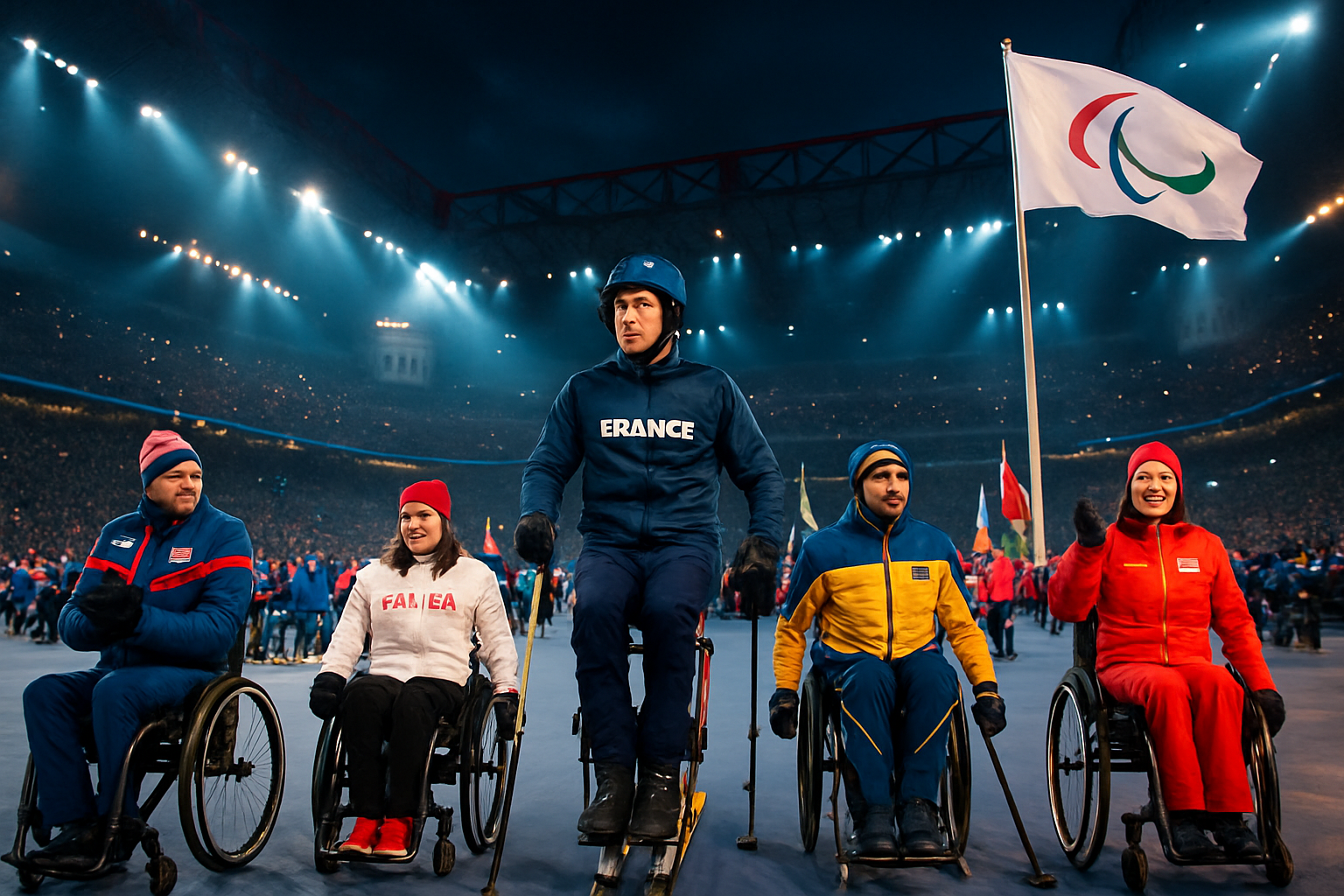
The Milano-Cortina 2026 Winter Paralympics have officially commenced, bringing together exceptional Paralympic athletes from around the world while navigating complex geopolitical tensions that have cast a shadow over the celebration of adaptive sport excellence.
The Games, running from March 6-15 across the revolutionary dual-city hosting model that spans over 400 kilometers of northern Italy, are showcasing both triumphant sporting achievements and the ongoing challenges facing international Paralympic sport during times of global conflict.
Early Competition Highlights
Despite political controversies surrounding the Games, Paralympic athletes are delivering exceptional performances across multiple venues. Estonia's wheelchair curling duo Kätlin Riidebach and Ain Villau have emerged as early standouts, securing victories against formidable opponents including a nail-biting 9-6 loss to Latvia that demonstrated the high level of competition across all events.
The Estonian pair's performance exemplifies the spirit of Paralympic sport, with their determination and skill transcending national boundaries. Their matches have provided compelling viewing for audiences witnessing the tactical complexity and athletic precision required in Paralympic curling.
Canada's Paralympic delegation has also made its mark in the opening days, with athletes leveraging their experience from previous Games to establish themselves as medal contenders across multiple disciplines. The depth of talent in the Canadian team reflects years of investment in Paralympic sport development programs.
Iran's Notable Absence
One of the most significant storylines surrounding these Paralympics has been Iran's absence from the competition. According to Italian sources, Iranian Paralympic athlete Mianaei was unable to reach Italy due to security concerns, preventing Iran's participation in what would have been a significant showing for the nation's Paralympic movement.
The absence highlights the complex security considerations that international sporting events must navigate in today's geopolitical climate. Iran's Paralympic Committee had prepared extensively for these Games, making their absence particularly disappointing for both the athletes and the global Paralympic community.
"The security situation prevented our athlete from competing, which represents a significant loss not just for Iran but for the Paralympic movement as a whole."
— International Paralympic Committee Statement
French Delegation Excellence
France has arrived at Milano-Cortina 2026 with one of their most experienced and ambitious Paralympic delegations in recent memory. Nearly half of their 13 selected athletes have already achieved podium finishes at previous Paralympic Games, with four current Paralympic champions among their ranks.
The French team's preparation has been characterized by meticulous attention to detail and strategic focus on events where they possess medal-winning potential. Their representation across four of the six Paralympic disciplines demonstrates the breadth and depth of France's Paralympic program.
French Paralympic officials have described this delegation as "concentrated but ambitious," reflecting a strategic approach that prioritizes quality over quantity in athlete selection. This approach appears to be paying dividends in the early competition phases.
Norwegian Historic Achievement
Perhaps the most inspiring individual story emerging from these Paralympics belongs to Norway's Jostein Stordahl, a 59-year-old athlete whose journey to these Games represents one of the most remarkable comeback stories in Paralympic history.
Stordahl's Paralympic career began following a life-altering accident nearly 40 years ago when, as a 17-year-old, he slipped on a train platform and suffered catastrophic leg injuries. Rather than allowing this tragedy to define his limitations, Stordahl channeled his determination into Paralympic sport excellence.
Now competing in his tenth Paralympics, Stordahl has broken historic records while pursuing gold medal success. His presence at Milano-Cortina 2026 serves as a powerful reminder of the Paralympic movement's core values of determination, inspiration, and the pursuit of sporting excellence regardless of physical challenges.
"After nearly four decades in Paralympic sport, every competition feels like both a celebration of how far we've come and a reminder of the possibilities ahead."
— Jostein Stordahl, Norwegian Paralympic Athlete
Revolutionary Hosting Model
The Milano-Cortina 2026 Paralympics are utilizing the same groundbreaking dual-city hosting model that proved successful during the Winter Olympics. Spanning over 400 kilometers across seven venues from Milan to Cortina d'Ampezzo, this approach represents a new paradigm for sustainable Paralympic hosting.
The technological innovations implemented during the Olympics, including Alibaba Qwen AI integration and advanced broadcasting capabilities, are enhancing the Paralympic experience for both athletes and global audiences. These systems are providing real-time accessibility features and detailed performance analysis that benefits Paralympic sport development.
The sustainable venues, featuring greenhouse spaces and environmentally conscious design, demonstrate how major sporting events can balance competitive excellence with environmental responsibility. The bilingual place names in Alto Adige/South Tyrol reflect the cultural diversity that enriches these Games.
Geopolitical Tensions and Paralympic Values
The Milano-Cortina Paralympics are unfolding against the backdrop of ongoing international tensions that have affected participation and created diplomatic challenges. The decision by the International Paralympic Committee to allow Russian and Belarusian athletes to compete under their national flags has sparked controversy and protests from several nations.
Ukraine has been particularly vocal in its criticism of this decision, with several supporting nations joining boycott movements of the opening ceremony. This tension reflects the broader challenge facing international sport federations in balancing political neutrality with moral responsibilities during active conflicts.
Estonian officials have been among those voicing concerns about the IPC's stance, reflecting the broader solidarity shown by nations with historical experiences of occupation and conflict. These diplomatic tensions underscore the complex environment within which Paralympic athletes must compete.
Competition Continues Amid Challenges
Despite these controversies, the Paralympic competition itself continues to deliver exceptional sporting moments. The Games are showcasing the highest levels of adaptive athletic performance across winter disciplines, with breakthrough performances from athletes representing nations beyond traditional Paralympic powerhouses.
The curling competitions have been particularly compelling, with tight matches demonstrating the tactical sophistication and physical precision required at the Paralympic level. Results like Estonia's competitive showing against Latvia highlight how Paralympic sport continues to grow globally.
Weather conditions across the Italian venues have been favorable for competition, with the same natural snow advantages that benefited the Olympics now supporting Paralympic events. The venue infrastructure that successfully hosted Olympic competition is proving equally effective for Paralympic athletes.
Looking Ahead
As the Milano-Cortina 2026 Paralympics progress through March 15, they represent both a celebration of Paralympic sport excellence and a test of international cooperation in challenging times. The Games are demonstrating that Paralympic athletes can transcend political divisions through their dedication to sporting achievement.
The technological innovations, sustainable hosting practices, and cultural celebrations that define these Paralympics are establishing new standards for future Games. The dual-city model is proving that Paralympic events can maintain competitive integrity while embracing environmental responsibility.
For Paralympic sport itself, Milano-Cortina 2026 represents an important moment in demonstrating resilience, adaptability, and the enduring power of athletic achievement to inspire global audiences. Despite geopolitical challenges, the fundamental Paralympic values of determination, inspiration, courage, and equality continue to shine through.
The competition will continue to unfold across Italy's stunning Alpine venues, with Paralympic athletes from around the world pursuing medal success while embodying the spirit that makes Paralympic sport a powerful force for positive change in international relations and human potential.