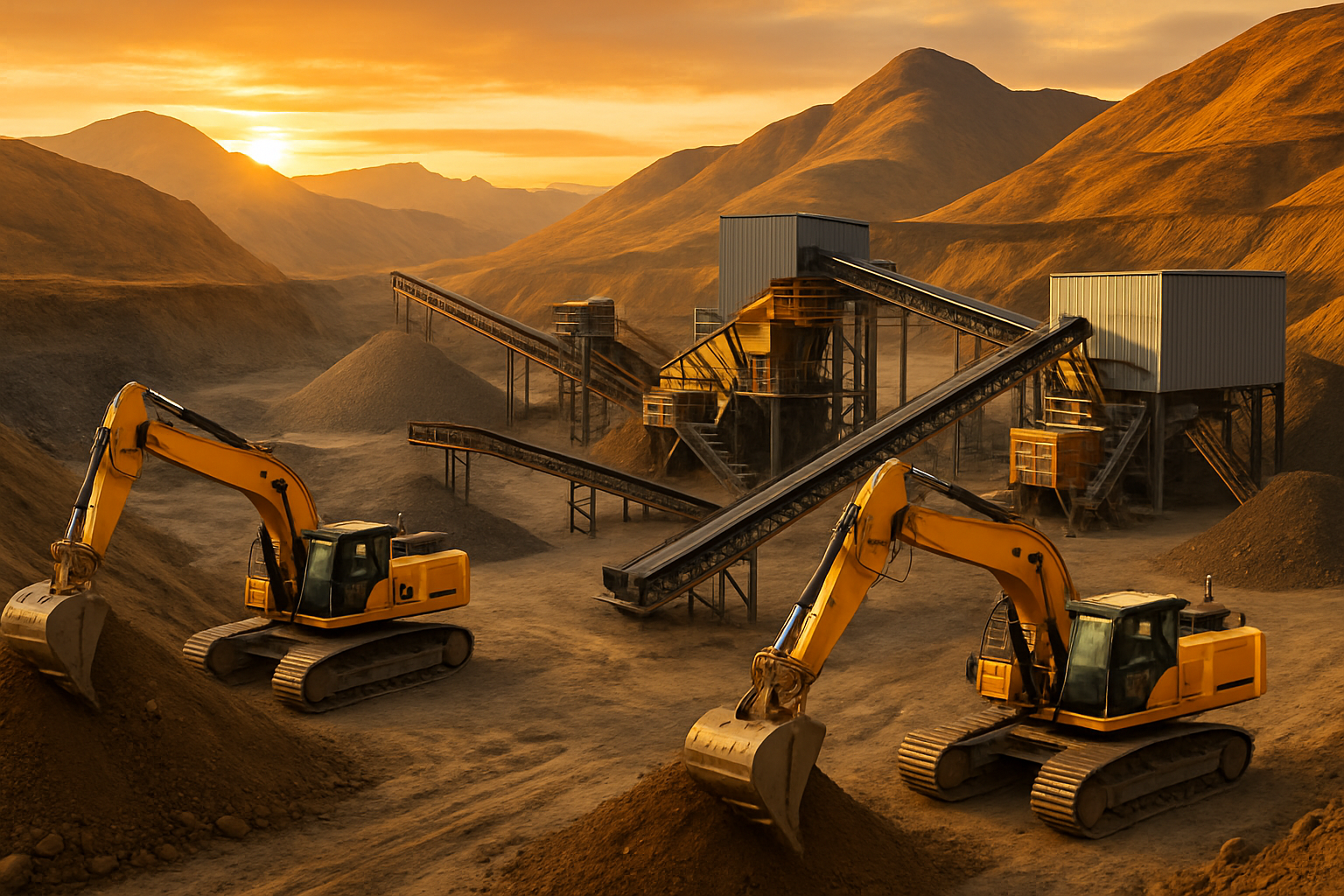
Rising gold prices and increasing geopolitical tensions over rare earth minerals are transforming the global mining industry, as countries accelerate domestic extraction projects to reduce dependence on Chinese supply chains and capitalize on record commodity valuations.
Japan's only operational gold mine has become a focal point of renewed interest as gold prices continue their upward trajectory, while China's tightening restrictions on rare earth exports have prompted a global reassessment of mineral resource strategies. Industry leaders are positioning for what analysts describe as a new era of resource nationalism and supply chain diversification.
Japan's Mining Revival Amid Geopolitical Tensions
Sumitomo Metal Mining, Japan's largest precious metals company, is experiencing unprecedented attention as gold prices surge and strategic mineral scarcity intensifies. Company President Shinsuke Matsumoto recently outlined Japan's evolving resource strategy in response to China's dominance over critical materials markets.
Japan's deep-sea rare earth mining breakthrough achieved in February 2026, extracting materials from 6,000 meters depth off Minamitorishima island, has strengthened the country's position in global discussions about supply chain security. The successful trial represents a potential paradigm shift for nations seeking to reduce their dependence on Chinese rare earth exports.
"The current geopolitical environment has created opportunities for countries to reassess their resource strategies and develop domestic alternatives to traditional supply chains,"
— Industry Analyst, Strategic Minerals Institute
This technological advancement comes as China controls approximately 60% of global rare earth production and 90% of refining capacity, creating vulnerabilities that have prompted the US-EU-Japan Critical Minerals Partnership involving 55 countries to seek alternative suppliers.
Norway's Golden Opportunity
In Norway, the dramatic rise in gold prices has created unexpected business opportunities across multiple sectors. The country's only licensed pawnbroker has reported unprecedented activity as private individuals liquidate gold holdings to capitalize on elevated prices. This surge reflects broader European trends where gold has become increasingly attractive as a hedge against economic uncertainty.
Norwegian financial institutions are adapting their services to accommodate increased precious metals trading, while mining exploration companies are revisiting previously uneconomical deposits that have become viable due to higher commodity prices.
The Norwegian government's approach to resource extraction balances environmental considerations with economic opportunities, particularly as the country positions itself as a reliable supplier of critical materials to European partners seeking alternatives to Chinese sources.
Global Mining Investment Renaissance
The mining industry is experiencing its most significant investment surge in over a decade, driven by multiple converging factors. African nations have secured major financing for mining infrastructure, including Algeria's Gara Djebilet railway project to access the world's third-largest iron ore reserves and Angola's Lobito Corridor revival connecting Atlantic ports to Democratic Republic of Congo's mineral wealth.
Recent developments include:
- Ivory Coast's approval of $1.2 billion in gold mining projects
- South Africa's R325 million commitment to rare earth extraction at Zandkopsdrift
- Burkina Faso's record 94-ton gold production generating over $6 billion in revenue
- Guinea's participation in international critical minerals partnerships
These investments reflect a fundamental shift in how nations view mineral resources - not merely as export commodities but as strategic assets crucial for technological independence and economic security.
Technology Integration and Environmental Standards
Modern mining operations increasingly incorporate advanced technologies including digital monitoring systems, automated equipment, and renewable energy integration. Environmental, social, and governance (ESG) compliance has become a prerequisite for international investment, with projects requiring sophisticated waste management and community engagement protocols.
The industry has witnessed regulatory enforcement actions, including Congo's suspension of mining operations that violated environmental standards. This trend demonstrates how governments are balancing economic development with environmental protection while asserting greater control over resource extraction within their territories.
Supply Chain Diversification Challenges
Despite the investment surge, significant challenges remain in diversifying global mineral supply chains. Memory chip prices have increased sixfold due to shortages affecting mining equipment control systems. Infrastructure limitations in many resource-rich regions require massive coordination efforts and long-term development commitments.
The African Continental Free Trade Agreement (AfCFTA) is enabling cross-border mining ventures and shared infrastructure development, but implementation requires sustained political commitment and technical capacity building across multiple countries.
Market Dynamics and Price Volatility
Commodity markets are experiencing unprecedented volatility as traditional supply and demand patterns shift. Gold's surge reflects both inflationary pressures and safe-haven demand amid geopolitical uncertainties. Industrial metals face supply constraints as infrastructure projects worldwide compete for limited materials.
Natural gas prices have increased 24% in Europe and 78% in the United States, creating additional cost pressures for energy-intensive mining operations. These dynamics are forcing companies to reassess operational strategies and energy sourcing while maintaining profitability.
Geopolitical Implications
The mining industry has become increasingly intertwined with national security considerations. Countries are viewing mineral resources through the lens of strategic competition, with partnerships forming along geopolitical lines rather than purely economic considerations.
The US-EU-Japan alliance represents a security-based approach to supply chain coordination, challenging China's market dominance through coordinated investment and technology sharing. African nations are leveraging this competition to secure better terms for their mineral exports while maintaining resource sovereignty.
Future Outlook and Investment Opportunities
The current mining renaissance appears likely to continue as multiple trends converge: accelerating energy transition demand for battery materials, ongoing supply chain diversification efforts, and climate change creating new accessible deposits as ice coverage retreats in Arctic regions.
Success in this new environment requires sophisticated risk management, environmental compliance, and international cooperation. Companies and countries that can navigate these complexities while maintaining operational excellence are positioned to benefit from what industry experts describe as a multi-decade transformation of global mineral markets.
The convergence of technological innovation, geopolitical competition, and environmental imperatives is creating unprecedented opportunities for stakeholders across the mining value chain, from exploration companies to equipment manufacturers to consuming industries seeking secure material supplies.