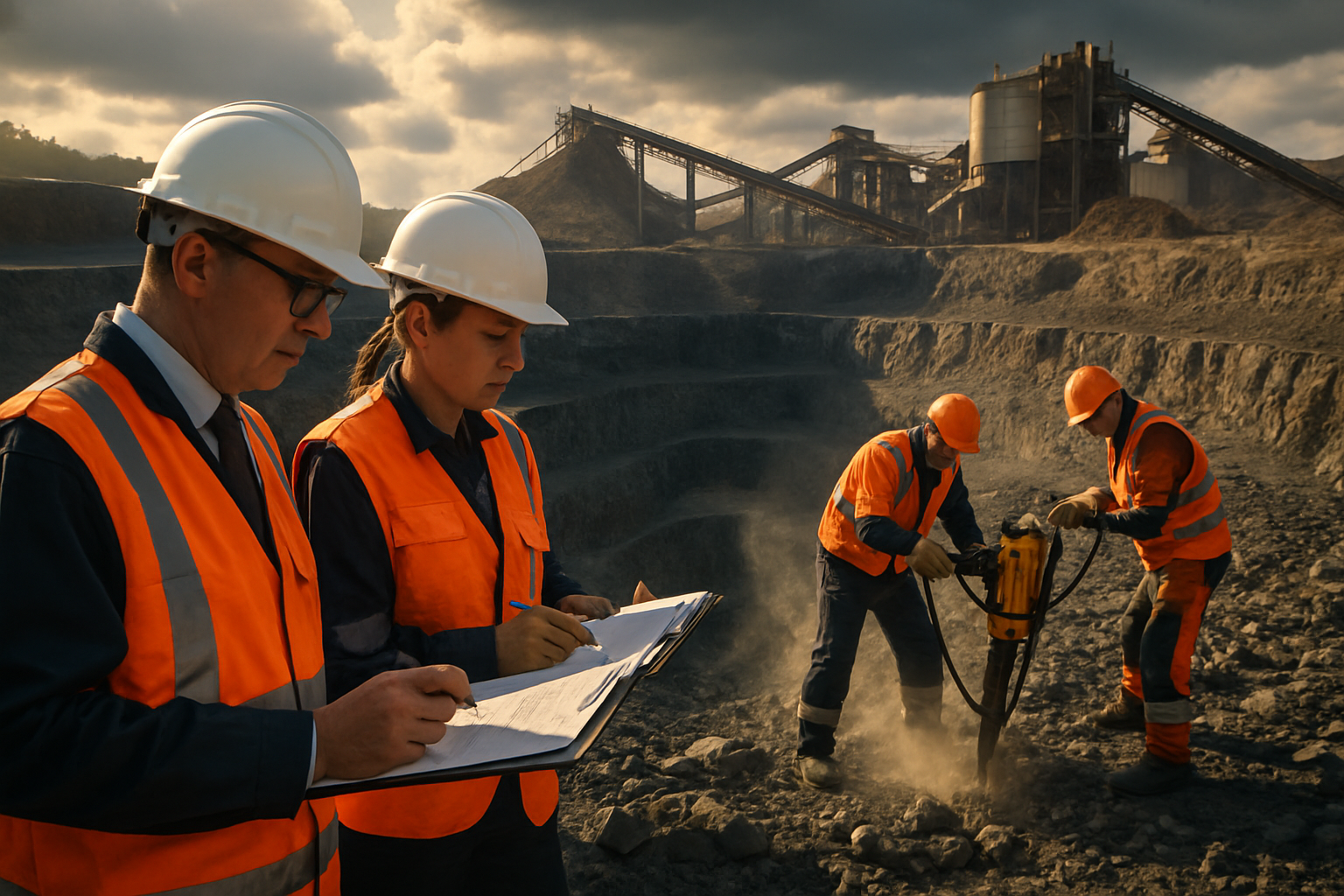
The global mining industry confronts unprecedented challenges as March 2026 witnesses a convergence of fraud allegations, regulatory enforcement actions, and mixed production forecasts across key mining regions from Central Africa to Northern Europe.
In the Democratic Republic of Congo, provincial authorities have launched aggressive campaigns against what they term systematic fraud in gold mining operations. Lieutenant-General Johnny Luboya N'kashama, Governor of Ituri Province, declared during a March 2nd meeting in Bunia that "every gram of gold declared means a road built, a school supported, a hospital strengthened," as he urged mining operators to abandon illicit channels and contribute to public revenues.
DRC Authorities Target Illegal Mining Networks
The Congolese crackdown intensified with accusations against Chinese-owned operations in the eastern provinces. Provincial deputies from Bas-Uélé returned from an investigative mission to denounce what they characterized as "predatory and illegal exploitation" by Oasis SARL, a Chinese-capital enterprise operating in the territories of Ango and Poko.
According to the parliamentarians' findings presented on March 2nd, the company allegedly violated the Congolese Mining Code through unauthorized extraction activities. However, Oasis SARL has rejected these allegations when contacted by local media outlets.
"We are witnessing a systematic pillage of our mineral resources by entities operating in blatant disregard of our national laws,"
— Provincial Deputy, Bas-Uélé Investigation Committee
The accusations emerge against a backdrop of significant international attention on DRC's mining sector, particularly following recent tragic incidents. The Rubaya coltan mine in North Kivu has experienced two catastrophic landslides within five weeks, killing over 500 people combined, highlighting critical safety gaps in artisanal mining operations that supply 15-30% of the world's coltan.
Zimbabwe Platinum Production Rebounds
Contrasting the turmoil in Central Africa, Zimbabwe's platinum sector shows signs of recovery. Industry analysts project a 3% production increase to approximately 518,000 ounces in 2026, benefiting from operational stabilization and incremental efficiency gains across major mining operations.
The rebound comes after years of challenges in Zimbabwe's mining sector, which has been working to attract international investment while implementing regulatory reforms. The platinum production increase represents a crucial development for the country's economy, as mining remains one of Zimbabwe's primary foreign currency earners.
Finland's Mining Industry Under Pressure
In Northern Europe, Finland's mining sector faces uncertainty as industry leaders grapple with taxation model changes and operational challenges. Pekka Suomela, Executive Director of the Mining Industry Association of Finland, expressed cautious optimism about potential reforms to the mining taxation system, despite what he described as a "difficult situation."
The comments came in response to change negotiations at the Kevitsa mine, which Suomela characterized as "truly serious news" for the Finnish mining industry. The situation reflects broader challenges facing European mining operations as they navigate environmental regulations, taxation policies, and global commodity market volatilities.
International Regulatory Landscape Evolving
These developments occur within a rapidly evolving international regulatory landscape for mining operations. The US-EU-Japan Critical Minerals Partnership, involving 55 countries and seven African alternative suppliers, continues to challenge China's dominance in critical mineral production and processing.
Historical context from my analysis reveals that African mining has experienced unprecedented investment momentum, with the African Finance Corporation reporting $29.5 trillion in mineral reserves across the continent, representing 20% of global totals. However, $8.6 trillion remains untapped despite growing international demand for critical materials.
Recent major investments have included Ivory Coast's $1.2 billion gold projects and South Africa's R325 million commitment to the Zandkopsdrift rare earth project. Infrastructure developments such as Algeria's Gara Djebilet railway and Angola's Lobito Corridor revival demonstrate continental integration efforts supporting mining sector growth.
ESG Compliance and Safety Standards
The mining industry increasingly faces pressure to implement Environmental, Social, and Governance (ESG) compliance standards. Congo's recent suspension of Congo Dongfang Mining for environmental violations exemplifies how African governments are asserting resource sovereignty while maintaining investment attractiveness through transparent frameworks.
Modern mining projects now incorporate advanced waste management systems, smart monitoring technologies, renewable energy integration, and community engagement protocols as standard requirements rather than optional additions. Companies failing to meet these standards face regulatory action, while responsible operators gain competitive advantages in securing international partnerships.
Technology Integration and Future Outlook
The industry's evolution reflects broader technological and governance transformations. Digital monitoring systems, renewable energy adoption, and advanced safety protocols are becoming prerequisites for international investment approval. Previously uneconomical deposits are becoming viable through technological advances and improved governance frameworks.
AfCFTA implementation enables cross-border mining ventures, regional value chains, and shared infrastructure development. Success requires sophisticated risk management capabilities, transparent regulatory compliance, and operational excellence amid complex global dynamics including climate change impacts and shifting geopolitical alliances.
Strategic Implications for Global Supply Chains
The mining industry's transformation represents a multi-decade shift combining technological innovation, environmental compliance, and international cooperation to address supply chain vulnerabilities and energy transition material demands. Climate change is making previously inaccessible deposits viable while creating new accessibility challenges.
Success in this environment requires sophisticated approaches balancing immediate economic needs with long-term sustainability goals. The industry must navigate increased regulatory scrutiny, community relations challenges, and environmental protection requirements while meeting growing global demand for critical minerals essential to renewable energy infrastructure and technological advancement.
As March 2026 progresses, the mining industry's ability to address fraud allegations, implement safety improvements, and maintain production growth will significantly influence global supply chain security and sustainable development objectives across multiple continents.