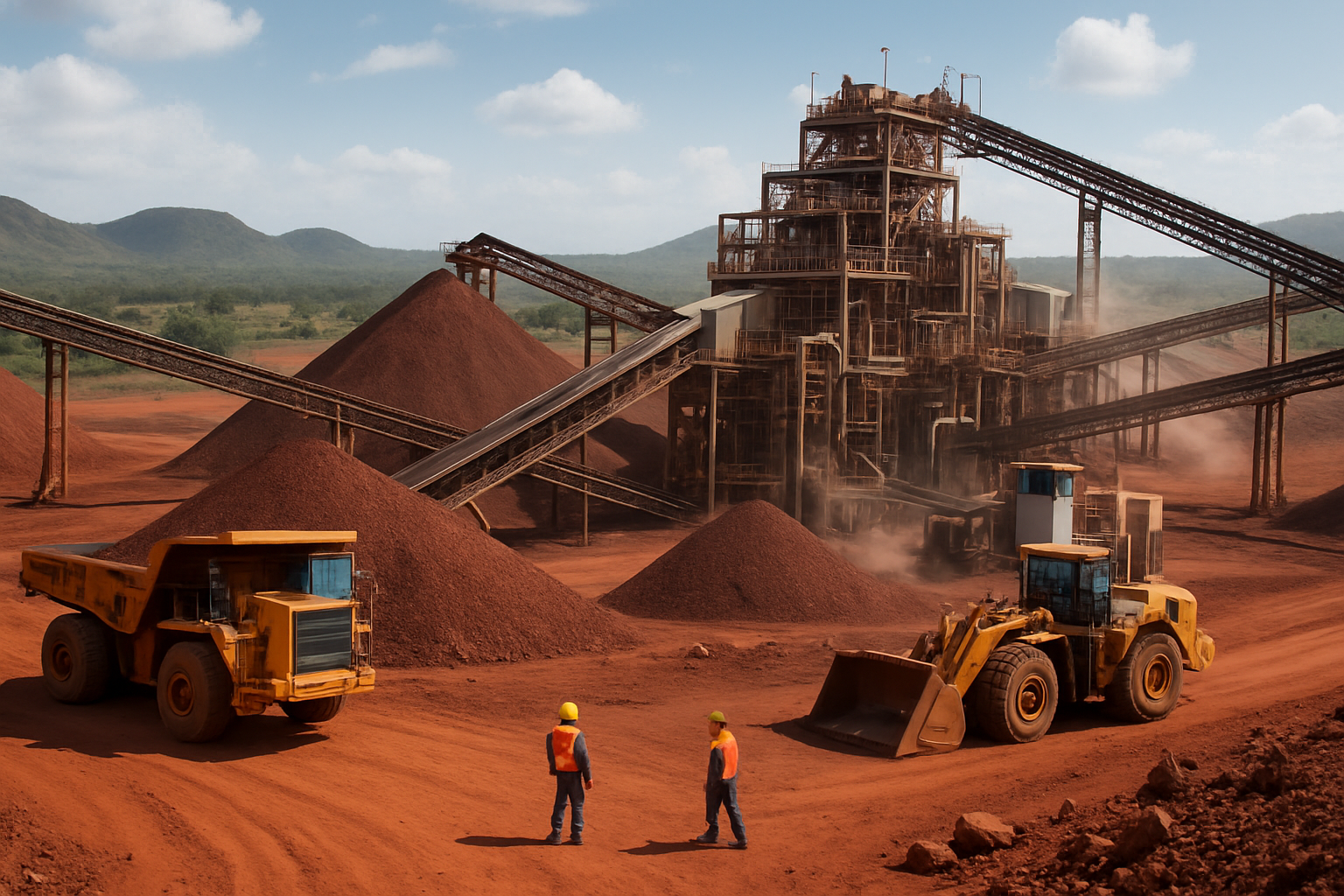
West Africa's mining sector is undergoing significant institutional strengthening as Mauritania's national mining company launches major workforce recruitment while Sierra Leone enhances its international arbitration capabilities, positioning both nations at the forefront of Africa's mining governance evolution amid unprecedented global investment and geopolitical competition.
The Société Nationale Industrielle et Minière (SNIM), Mauritania's state-owned mining giant, announced a comprehensive recruitment drive for graduates of the Higher Institute for Mining Professions in Zouérat, focusing on critical technical specializations including pneumatic and hydraulic systems maintenance, automated systems maintenance, and automotive maintenance. The initiative, running from March 2 through March 12, 2026, represents a strategic investment in local technical expertise as the company positions itself within Africa's expanding mining renaissance.
Legal Infrastructure Development in Sierra Leone
Simultaneously, Sierra Leone's Office of the Attorney General and Minister of Justice, in collaboration with the Arbitration Steering Committee and international law firm Hogan Lovells London, conducted high-level capacity-building training on international arbitration specifically targeting mining and power sectors. The training, held under the theme "Justice for Growth: Strengthening Dispute Resolution Framework for Sustainable Investment," brought together State Counsel, government officials, and private sector representatives to enhance expertise in managing complex arbitration cases.
Deputy Minister of Justice Elizabeth Saptieu Saccoh emphasized that Sierra Leone has entered a new phase of international arbitration supported by modern legislation aligned with global standards. "Consistent application of arbitration laws is essential for maintaining investor confidence while protecting national interests," Saccoh stated during the Foreign Service Academy Hall session.
Continental Mining Transformation Context
These developments occur within a broader African mining transformation involving unprecedented investment flows, technological advancement, and strategic repositioning. The African Finance Corporation reports that the continent holds $29.5 trillion in mineral reserves—representing 20% of the global total—with $8.6 trillion remaining untapped despite growing international demand for critical materials.
Recent major continental investments demonstrate this momentum, including Ivory Coast's approval of 732.7 billion CFA francs ($1.2 billion) in gold projects, South Africa's R325 million commitment to the Zandkopsdrift rare earth project, and Burkina Faso's record 94-ton gold production generating over $6 billion in revenue during 2025. Infrastructure developments supporting this expansion include Algeria's Gara Djebilet railway accessing the world's third-largest iron ore reserves and Angola's Lobito Corridor revival connecting the Atlantic to DRC's mineral-rich regions.
Geopolitical Mining Competition
The West African developments align with broader geopolitical shifts as seven African countries—Angola, Democratic Republic of Congo, Guinea, Kenya, Morocco, Sierra Leone, and Zambia—participate in the US-EU-Japan Critical Minerals Partnership, challenging China's dominance in critical materials production (60%) and refining capacity (90%). This strategic realignment represents a fundamental shift from market-driven to security-based supply chain coordination.
Sierra Leone's arbitration capacity building proves particularly relevant as international mining partnerships become more complex and require sophisticated legal frameworks for dispute resolution. The country's strategic position in this global minerals partnership makes robust arbitration infrastructure essential for managing international investment relationships while maintaining resource sovereignty.
Workforce Development and Technical Expertise
Mauritania's SNIM recruitment initiative reflects a broader continental emphasis on developing local technical capacity rather than relying on foreign expertise. The company's focus on specialized maintenance capabilities—pneumatic and hydraulic systems, automated systems, and automotive maintenance—addresses critical skill gaps in modern mining operations that increasingly depend on sophisticated technology and automated systems.
The March 26, 2026 written examinations and subsequent selection processes demonstrate systematic approaches to building technical expertise aligned with industry standards. This workforce development strategy connects directly to broader African initiatives, including Ghana's National Apprenticeship Programme targeting 2,000 apprentices and various continental efforts to build mining-related technical capacity.
Environmental and Governance Evolution
Both initiatives reflect the evolution of African mining governance toward higher environmental, social, and governance (ESG) standards. Recent regulatory enforcement actions, including Congo's suspension of Congo Dongfang Mining for environmental violations, demonstrate that African governments are asserting resource sovereignty while maintaining investment attractiveness through transparent frameworks.
Modern mining projects increasingly incorporate environmental compliance, renewable energy systems, community engagement, and advanced waste management as prerequisites for international investment. Companies failing to meet these standards face regulatory action, while responsible operators gain competitive advantages through enhanced reputations and stakeholder support.
Technology Integration and Innovation
The technical specializations targeted in Mauritania's recruitment—automated systems maintenance and hydraulic systems expertise—reflect the mining industry's technological evolution. Advanced waste management, smart monitoring systems, renewable energy integration, and digital optimization are addressing traditional infrastructure limitations while enhancing safety protocols and operational efficiency.
These technological advances enable previously uneconomical deposits to become viable through enhanced extraction techniques, real-time analytics, and sophisticated operational standards. The integration facilitates knowledge transfer, local capacity building, and the adoption of international best practices adapted to local conditions.
Regional Integration and AfCFTA Implementation
Both West African developments support African Continental Free Trade Area (AfCFTA) objectives by enhancing regional mining capabilities and legal frameworks. Cross-border mining ventures, shared infrastructure development, and regional value chains become more feasible when individual countries possess sophisticated technical expertise and robust arbitration mechanisms.
Sierra Leone's arbitration capacity and Mauritania's technical workforce development create complementary capabilities that can serve broader regional integration objectives. Mining corridors, shared processing facilities, and coordinated development strategies benefit from both legal sophistication and technical expertise distributed across participating countries.
Strategic Implications for African Mining
The simultaneous focus on workforce development and legal infrastructure demonstrates Africa's comprehensive approach to mining sector modernization. Rather than competing solely on resource availability or cost advantages, these initiatives position African nations as sophisticated partners capable of managing complex international relationships while maintaining development control.
This evolution from traditional extractive models toward comprehensive development strategies requires enhanced governance frameworks, technological innovation, and environmental protection integrated with economic development objectives. Success depends on sustained political commitment, transparent governance, community engagement, and international cooperation that respects sovereignty while enabling access to global markets and expertise.
Future Trajectory and Continental Leadership
February 2026 represents a potential turning point in African mining development, with the continent demonstrating capacity for sophisticated investment management while maintaining development priorities. The combination of technical expertise development, legal framework strengthening, and strategic international partnerships positions Africa as an essential global partner for supply chain security, climate adaptation, and sustainable development rather than merely a resource supplier.
The success of initiatives like Mauritania's technical recruitment and Sierra Leone's arbitration capacity building will influence mining development approaches throughout Africa and beyond. These models demonstrate that effective mining governance requires simultaneous attention to workforce development, legal infrastructure, environmental protection, and international cooperation—creating templates for sustainable resource development that benefits local populations while engaging productively with global markets.