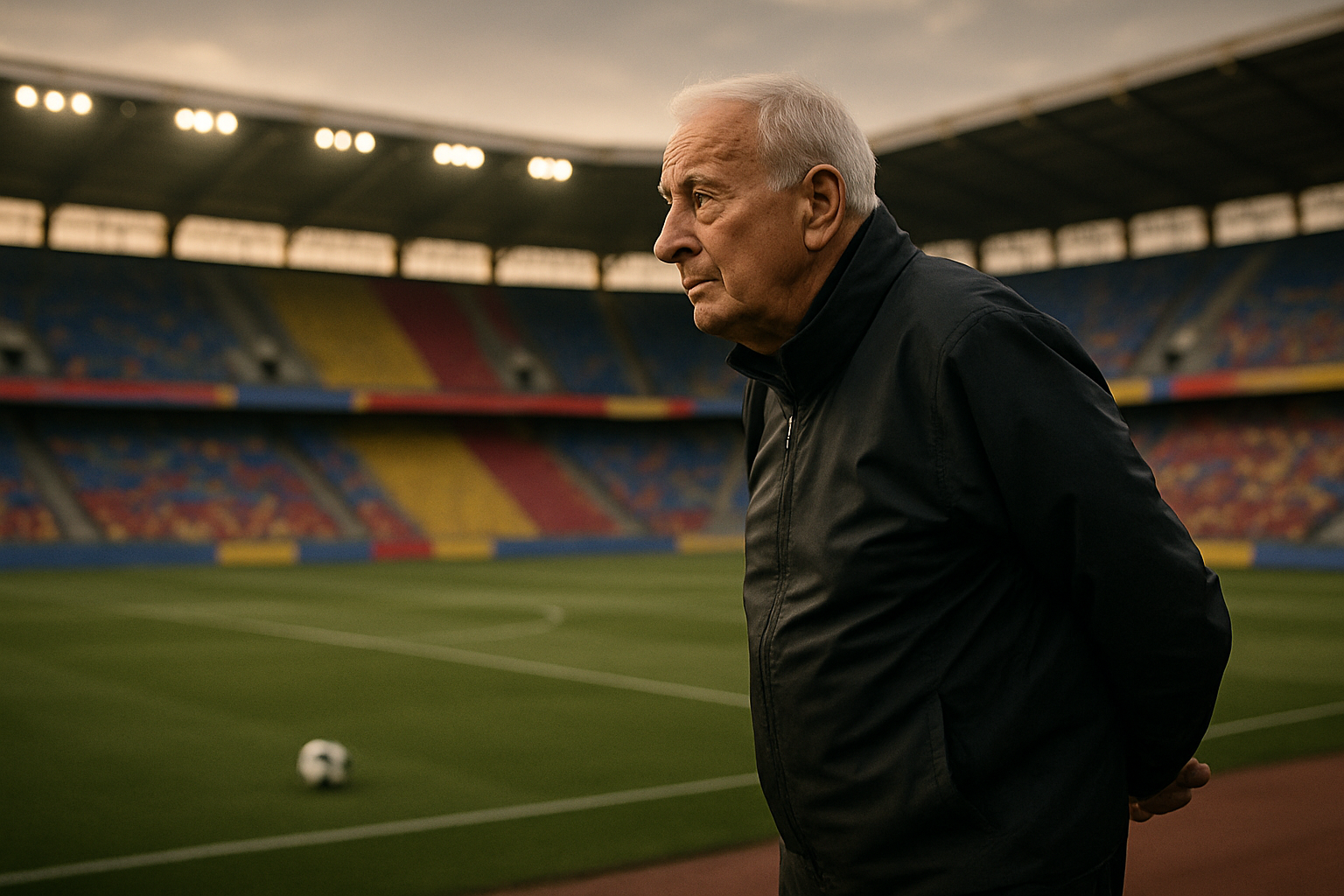
Mircea Lucescu, the legendary Romanian football coach who revolutionized tactical analysis and mentored generations of players across Europe, died on Tuesday evening, April 7, 2026, at the age of 80 in Bucharest, marking the end of an era for international football.
The former Romania national team manager passed away at Spitalul Universitar de Urgență București (SUUB) after his condition deteriorated rapidly following a heart attack suffered while hospitalized. Lucescu had been in critical condition since late March after collapsing during a Romania national team training session on March 29, just days before stepping down as head coach on March 31.
A Tactical Revolutionary
Italian sports newspaper Gazzetta dello Sport hailed Lucescu as "the Nikola Tesla of football," describing him as a visionary who invented modern match analysis decades before it became standard practice. During Romania's communist era under Nicolae Ceaușescu, Lucescu pioneered tactical preparation by borrowing the eight best students from local schools to meticulously analyze opponents' playing patterns with the limited resources available at the time.
This innovative approach to football analysis would later become the foundation of modern coaching methodology. Lucescu's systematic approach to player development and tactical preparation influenced countless coaches across Europe, establishing him as one of the most forward-thinking minds in football history.
"He was patern, intelligent, revolutionary - the Nikola Tesla of football. He won 36 trophees at the helm of 8 teams, launched hundreds of high-level players and invented match analysis."
— Gazzetta dello Sport
Extraordinary Playing and Coaching Career
Lucescu began his football journey at age 9 and made his professional debut in 1959 at the "23 August" stadium in Bucharest. As a player, he was remarkably athletic, recording 11.6 seconds in the 100-meter sprint and earning his first national team cap in only his second year as a professional footballer. He would go on to captain Romania at Wembley Stadium, representing the pinnacle of his playing career.
His transition to coaching proved even more successful than his playing days. Over five decades, Lucescu managed eight different clubs across Europe, accumulating 36 major trophies and establishing himself as one of the most successful coaches in football history. His coaching resume included prestigious clubs such as Inter Milan, Galatasaray, Beşiktaş, and a legendary stint with Shakhtar Donetsk, where he won eight Ukrainian Premier League titles and the UEFA Cup in 2009.
Impact on Romanian Football
Romanian Prime Minister Ilie Bolojan paid tribute to Lucescu as "the legendary coach whose name is linked to the best years of Romanian football." The coach represented football "with a capital F" for at least three generations of Romanian fans, becoming synonymous with the country's golden era of international football.
Patriarch Daniel of the Romanian Orthodox Church expressed condolences, praising Lucescu for his "pedagogical tact and exceptional culture." The religious leader's tribute highlighted Lucescu's influence beyond football, recognizing his role as an educator and cultural ambassador for Romania.
Gheorghe Hagi's Emotional Farewell
Perhaps the most poignant tribute came from Gheorghe Hagi, Romania's greatest footballer, who described Lucescu as "more than a coach" and "like a parent who taught me much." Hagi credited Lucescu with giving him confidence at the beginning of his career and opening the path to greatness.
"He gave me confidence at the beginning of my journey and opened the way to great performance for me. You made me captain of the national team."
— Gheorghe Hagi, Romanian Football Legend
Both Gheorghe and Ianis Hagi published emotional messages on social media, with the younger Hagi also acknowledging Lucescu's pivotal role in his development as a footballer and national team captain.
International Recognition and Tributes
Tributes poured in from across the football world, demonstrating the global impact of Lucescu's career. Clubs he coached, including Beşiktaş, Galatasaray, Dinamo Kiev, and PAOK, expressed profound gratitude for his influence on generations of players and European football development.
International media described him as "an unconventional genius" and "a legend," while former players and coaching colleagues praised his innovative methods and dedication to player development. The Cyprus Football Association and PAOK issued official statements mourning the loss of a figure who left an "indelible mark" on football.
Final Chapter and Health Crisis
Lucescu's final weeks were marked by his unwavering dedication to football. Despite being 80 years old, he was actively coaching Romania's national team in their World Cup 2026 qualification campaign until late March. His last public appearance was during European World Cup playoffs, where he stood on the sideline demonstrating the passion that defined his entire career.
The health crisis began when Lucescu collapsed during a national team training session on March 29. He was immediately hospitalized but announced his resignation as Romania's head coach on March 31, acknowledging that his health would no longer permit him to continue. His condition deteriorated over the following days, with medical sources confirming he suffered two heart attacks on April 3, the day he was originally scheduled to be discharged.
Burial and Memorial Plans
Romanian media reports indicate that Lucescu will be buried at Cimitirul Bellu in Bucharest, where he purchased a burial plot more than ten years ago. The choice of Romania's most prestigious cemetery reflects his status as a national figure whose contributions extended far beyond sports.
Legacy of Innovation and Excellence
Mircea Lucescu's death marks the end of an era in football coaching. His pioneering work in tactical analysis, systematic player development, and innovative training methods established foundations that continue to influence modern football. From his early days analyzing opponents with schoolchildren in communist Romania to his later success with Europe's elite clubs, Lucescu consistently demonstrated that intelligence, preparation, and innovation could overcome any obstacle.
His influence extended beyond trophies and tactical innovations. Lucescu mentored countless players who went on to achieve greatness, from Gheorghe Hagi to modern stars who benefited from his developmental philosophy. His approach to coaching emphasized not just tactical knowledge but also personal growth, education, and cultural development.
As Romanian football and the international community mourn this tremendous loss, Lucescu's legacy lives on through the players he developed, the coaches he inspired, and the tactical innovations he pioneered. His death at 80 closes a remarkable chapter in football history, but his influence on the beautiful game will endure for generations to come.