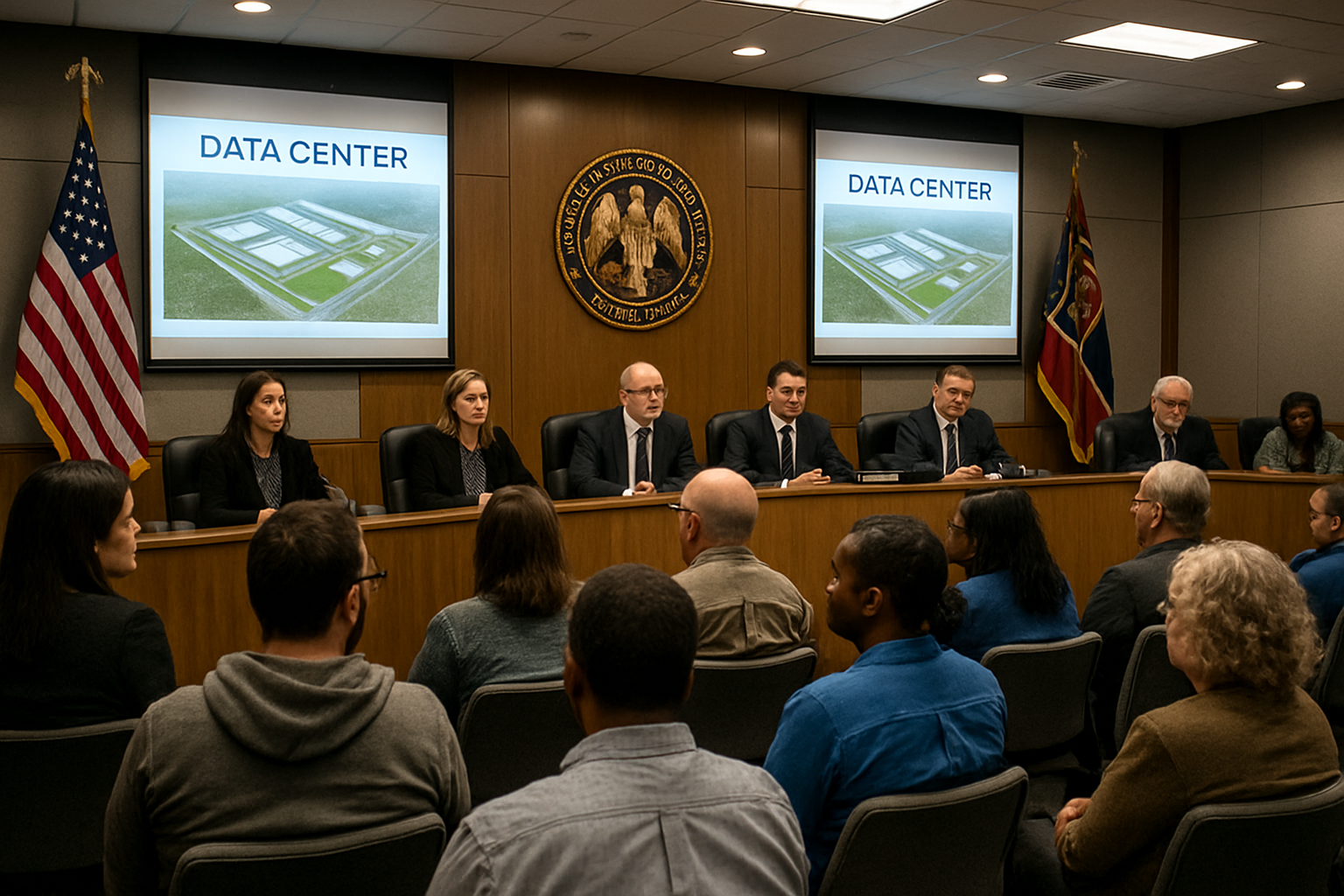
Mississippi regulators convened a pivotal public hearing Tuesday over plans by Elon Musk's xAI to construct a gas-fired power plant for its Colossus II data center, as the artificial intelligence company faces mounting legal pressure from the NAACP over alleged federal environmental law violations.
The hearing comes amid escalating tensions between xAI and environmental justice advocates, who claim the company began illegally installing and operating 27 gas turbines at a site in Southaven, Mississippi, without obtaining necessary preconstruction or operating air permits required by the Clean Air Act.
NAACP Challenges xAI's Permit Violations
The National Association for the Advancement of Colored People, acting on behalf of the largely African American community living near the existing Colossus I facility in Memphis, Tennessee, has threatened legal action against xAI. The civil rights organization alleges that the company circumvented federal environmental regulations by installing turbines in Mississippi to power a data center located across state lines in Memphis.
"Pollution from these turbines is worsening and will continue to worsen the already poor air quality in this community."
— NAACP Legal Statement
According to the Southern Environmental Law Center, the planned gas-fired power plant would become "the largest new source of pollution in Memphis in years," raising significant concerns about public health impacts on surrounding communities.
The Colossus II Project Context
The xAI data center project represents a critical component of Musk's broader artificial intelligence ambitions, particularly following the recent $1.25 trillion merger between SpaceX and xAI announced in February 2026. This unprecedented consolidation creates the world's most valuable private company, combining SpaceX's rocket technology and Starlink satellites with xAI's AI platform, X social network, and Grok AI chatbot.
The merged entity plans to develop space-based data centers powered by solar energy to address the AI industry's mounting energy crisis and infrastructure costs. Current memory chip prices have surged sixfold, affecting major manufacturers Samsung, SK Hynix, and Micron, while the World Bank projects AI water demand could reach 4.2-6.6 billion cubic meters by 2027 for data center cooling—equivalent to four to six times Denmark's annual water withdrawal.
Environmental Justice Concerns
The Mississippi hearing highlights broader environmental justice issues surrounding AI infrastructure development. The largely African American community near the Memphis facility faces disproportionate environmental burdens, reflecting patterns seen globally as data center development accelerates.
Similar concerns have emerged internationally. In Malaysia, over 50 residents recently protested outside a data center construction site in Johor state, demanding an end to dust pollution and compensation for health impacts. These demonstrations represent the first major community opposition to data center development in Malaysia, despite the country's leadership in AI integration.
Legal Framework and Compliance
The Clean Air Act violations alleged by the NAACP center on xAI's failure to obtain proper preconstruction and operating permits before installing the 27 gas turbines. Federal environmental law requires extensive review and public consultation for major pollution sources, particularly those affecting environmental justice communities.
The case occurs amid intensifying global scrutiny of AI companies' environmental practices. European regulators have launched investigations into various technology platforms, including France's cybercrime raids on X offices over content violations and Spain's implementation of criminal executive liability for platform violations.
Industry-Wide Infrastructure Crisis
The xAI project exemplifies the broader challenges facing the AI industry as it transitions from experimental technology to essential infrastructure. The global memory crisis, with semiconductor shortages expected to continue until 2027, has driven companies to seek alternative solutions including space-based computing systems.
Alphabet announced a historic $185 billion AI infrastructure investment for 2026, representing the largest single-year technology investment in corporate history. Amazon has committed over $1 trillion to development plans, highlighting the massive capital requirements for AI infrastructure expansion.
These investments occur against the backdrop of what industry analysts term the "SaaSpocalypse"—a market disruption eliminating hundreds of billions in market capitalization as AI replaces traditional software solutions. Chinese advances, including the DeepSeek breakthrough challenging US technological dominance, have intensified competitive pressures across the sector.
Community Health and Safety Implications
Public health advocates emphasize the cumulative impact of industrial pollution on communities already facing environmental challenges. The Memphis area's air quality concerns extend beyond the immediate xAI facility, encompassing broader patterns of industrial development in low-income and minority communities.
The Southern Environmental Law Center's characterization of the planned facility as Memphis's "largest new source of pollution in years" underscores the magnitude of potential environmental impacts. Community representatives have called for comprehensive health impact assessments and meaningful public participation in permitting decisions.
Regulatory Response and Oversight
Mississippi regulators face the complex challenge of balancing economic development opportunities with environmental protection and community health concerns. The state's approach to xAI's permit applications will likely influence similar projects across the region as AI infrastructure demand accelerates.
The hearing represents a critical test of federal environmental law enforcement amid rapidly evolving technology sector demands. The Clean Air Act's preconstruction permit requirements were designed to ensure thorough environmental review, but AI companies argue that traditional regulatory timelines conflict with competitive pressures and technological development speeds.
Broader Implications for AI Development
The Mississippi case reflects fundamental tensions between AI industry expansion and environmental protection that will likely define technology policy debates throughout 2026. As companies invest trillions in AI infrastructure, regulatory frameworks struggle to address the unprecedented scale and speed of development.
International cooperation on AI governance has intensified, with the UN establishing an Independent International Scientific Panel featuring 40 experts as the first fully independent global AI assessment body. However, coordination between environmental protection and technology development remains challenging across jurisdictions.
The outcome of Mississippi's environmental review and potential NAACP litigation could establish important precedents for AI infrastructure development nationwide. Success in either regulatory enforcement or community advocacy could influence similar projects across the United States, where data center development continues accelerating to meet growing AI computational demands.
Looking Forward
As the hearing proceedings continue, stakeholders await regulatory decisions that will shape the balance between technological innovation and environmental justice. The case highlights the need for comprehensive frameworks addressing AI infrastructure development that meaningfully incorporate community voices and environmental protection alongside economic development priorities.
The xAI controversy occurs during what analysts describe as the transition from the "AI revolution" to the "space economy golden age," where traditional terrestrial infrastructure limitations drive interest in alternative solutions including space-based computing. However, immediate community health and environmental concerns require resolution regardless of longer-term technological directions.
The Mississippi environmental hearing represents more than a single permitting dispute—it embodies the broader challenge of ensuring that AI technology development serves human flourishing while protecting the communities and environments that support technological infrastructure. The decisions made in this case will likely influence AI development practices for years to come.