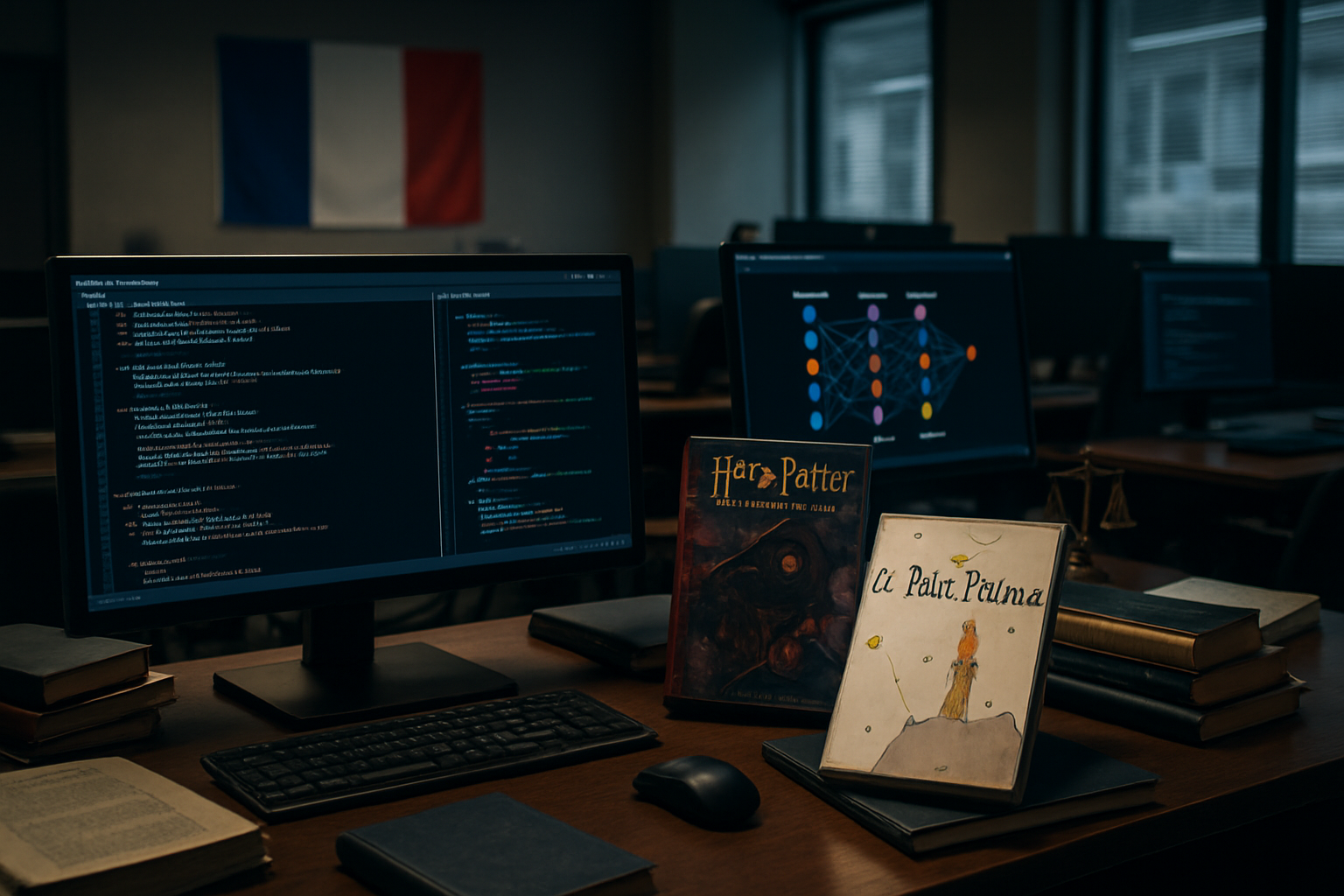
French artificial intelligence startup Mistral AI is facing serious allegations of widespread copyright infringement after investigative reporting revealed the company used protected cultural works to train its AI models without proper authorization.
According to a comprehensive investigation by Mediapart published February 23, 2026, the French AI company has utilized copyrighted works including the internationally acclaimed novels "Harry Potter" and "Le Petit Prince," as well as music from artists like Elton John and Amel Bent, to develop its artificial intelligence systems. The revelations highlight a growing crisis in AI development practices and intellectual property law.
The Scope of Alleged Violations
The investigation reveals that Mistral AI systematically accessed and processed copyrighted material from various sources, despite explicit prohibitions from content creators and publishers. The company reportedly harvested data from online media sources, including Mediapart itself, to enhance its language models' capabilities.
This practice, known as "data scraping," has become increasingly controversial as AI companies seek vast amounts of textual content to improve their models' performance. However, the unauthorized use of copyrighted material raises fundamental questions about consent, fair use, and the rights of content creators in the digital age.
"The enterprise can also pillage, despite prohibitions, data available online. For example, those of media outlets, including Mediapart."
— Mediapart Investigation Report
Industry-Wide Copyright Concerns
Mistral AI's case represents part of a broader pattern affecting the global AI industry. Recent months have seen numerous high-profile copyright disputes as AI development accelerates without clear regulatory frameworks governing the use of intellectual property.
ByteDance's Seedance 2.0 platform recently triggered warnings from the Motion Picture Association over unauthorized use of Hollywood content, while Netflix has initiated legal action against TikTok for AI-generated videos using copyrighted material from series like "Stranger Things." These cases demonstrate the urgent need for clearer guidelines on AI training data sources.
The European Union has intensified regulatory oversight, with Spain implementing the world's first criminal executive liability framework for platform violations, and France conducting cybercrime raids on AI companies. This coordinated response reflects growing concern about AI development outpacing legal protections for intellectual property.
Global Context and Regulatory Response
The Mistral AI allegations emerge during what experts are calling a critical inflection point for artificial intelligence governance. The United Nations has established an Independent International Scientific Panel on Artificial Intelligence with 40 global experts, marking the first fully independent global AI impact assessment body.
Industry leaders have called for stronger oversight. Sam Altman of OpenAI has demanded "nuclear-style regulation" for AI development, while former Anthropic safety researchers have warned the "world is in peril" due to AI advancement outpacing safety measures.
The copyright controversy occurs amid a global AI infrastructure crisis, with memory semiconductor prices surging sixfold, affecting major manufacturers like Samsung, SK Hynix, and Micron. This shortage is expected to continue until 2027, potentially slowing AI development and providing time for regulatory frameworks to catch up with technological capabilities.
Legal and Economic Implications
Copyright violations in AI training could expose companies to significant financial liabilities. The use of protected works without permission potentially subjects AI developers to damages claims from rights holders, especially when commercial products are built using unauthorized training data.
The French investigation's findings could trigger legal action from the publishers of Harry Potter, the estate of Antoine de Saint-Exupéry (author of Le Petit Prince), and major music labels representing artists whose works were allegedly used without consent.
These developments are contributing to what analysts call the "SaaSpocalypse" – a market disruption that has eliminated hundreds of billions in tech market capitalization as investors reassess AI companies' legal and regulatory risks.
Impact on AI Innovation
The copyright allegations raise fundamental questions about sustainable AI development practices. While access to diverse, high-quality training data is crucial for developing sophisticated AI systems, the unauthorized use of copyrighted material threatens the creative industries that produce such content.
Successful AI integration models, such as Canadian universities' AI teaching assistants that maintain critical thinking standards and Malaysia's AI-integrated Islamic schools, demonstrate that responsible development approaches can preserve innovation while respecting intellectual property rights.
The controversy highlights the need for new frameworks that balance AI advancement with creator rights, potentially through licensing agreements, fair use provisions specifically designed for AI training, or alternative compensation models for rights holders.
Industry Response and Future Outlook
The AI industry faces increasing pressure to develop transparent, ethical approaches to data collection and model training. Companies are beginning to invest in content marketplaces for legitimate AI training data, following initiatives by Amazon and Microsoft to source properly licensed material.
Educational institutions and policymakers are emphasizing the importance of human-centered AI approaches that enhance rather than exploit human creativity. The February 2026 period represents what experts describe as the most critical juncture in AI development, requiring unprecedented coordination between governments, technology companies, and content creators.
As the Mistral AI investigation continues, it may establish important precedents for how intellectual property law applies to artificial intelligence development. The outcome could fundamentally reshape how AI companies approach training data collection and determine whether the current trajectory of rapid AI advancement can be sustained within existing legal frameworks.
The case underscores the urgent need for comprehensive AI governance that protects both innovation and creativity, ensuring that artificial intelligence serves human flourishing while respecting the rights of those whose work makes such technology possible.