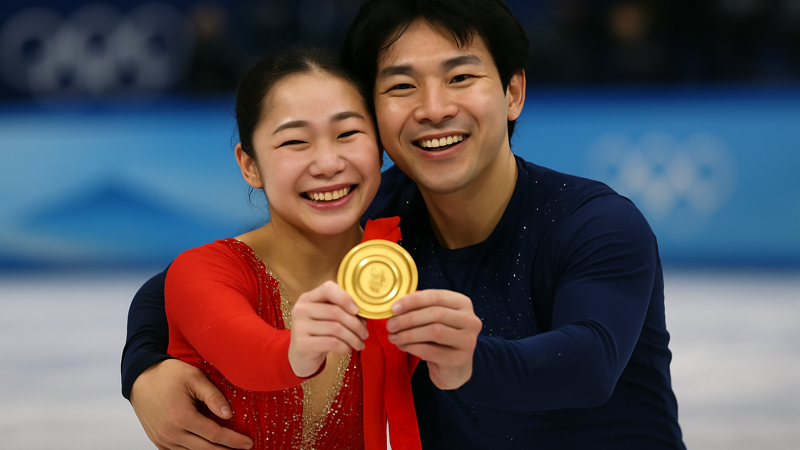
Riku Miura and Ryuichi Kihara made history at the Milano-Cortina 2026 Winter Olympics, delivering Japan's first-ever Olympic gold medal in pairs figure skating with a breathtaking world record performance that captivated audiences worldwide.
The two-time world champions overcame a challenging start to the competition, climbing from fifth place after the short program to claim Olympic glory with a total score of 231.24 points. Their free skate performance shattered world records and demonstrated the technical mastery and artistic excellence that has defined their partnership.
A Historic Climb from Fifth to Gold
Entering Monday's free skate program in fifth place, Miura and Kihara faced the pressure of needing a flawless performance to medal. What they delivered exceeded all expectations - a world record free skate that not only secured gold but established new benchmarks for pairs skating excellence.
The Japanese duo's comeback victory represents more than just individual achievement; it marks a watershed moment for Japanese figure skating and demonstrates the sport's global evolution beyond traditional powerhouses.
"This is a historic moment for Japanese figure skating. Miura and Kihara have shown that excellence in pairs skating knows no geographic boundaries."
— Japanese Skating Federation Official
World Record Performance Under Pressure
The free skate that secured Japan's historic gold was nothing short of spectacular. Miura and Kihara executed their program with precision and artistry that left judges and spectators in awe. Every element - from their synchronized triple jumps to their innovative lift sequences - was performed with the technical mastery expected of world champions.
Their world record score reflected not just technical prowess but the emotional depth and artistic interpretation that elevated their performance above the competition. The program demonstrated why they have been dominant forces in international competition over recent seasons.
Competition Results and Medal Standings
The podium reflected the global nature of modern pairs figure skating. Georgia's Anastasia Metelkina and Luka Berulava captured silver with 221.75 points, demonstrating remarkable consistency throughout the competition. The current European champions delivered performances that would have won gold in many previous Olympic competitions.
Germany's Minerva Fabien Haze and Nikita Volodin completed the podium with bronze, scoring 219.09 points in what was an exceptionally competitive field. Their medal represents the depth of talent in contemporary pairs skating and the sport's continued expansion beyond traditional skating nations.
Technical Excellence and Artistic Innovation
What distinguished Miura and Kihara's gold medal performance was the combination of technical difficulty and artistic sophistication. Their free skate program showcased elements that pushed the boundaries of what's possible in pairs skating, from complex quadruple throws to intricate synchronized sequences that demonstrated their remarkable partnership chemistry.
The world record score reflected the judges' recognition of their technical mastery across all elements of pairs competition. Their side-by-side triple jumps were executed with precision that left no doubt about their readiness for Olympic competition at the highest level.
Japan's Figure Skating Legacy
This Olympic gold adds to Japan's growing reputation as a figure skating powerhouse. While Japanese skaters have achieved success in singles competition, the pairs discipline had remained elusive until Miura and Kihara's breakthrough performance.
Their victory builds on Japan's strong figure skating tradition while opening new possibilities for future generations of Japanese pairs skaters. The success demonstrates the effectiveness of Japan's skating development programs and coaching methodologies.
Impact on Global Figure Skating
The victory at Milano-Cortina 2026 represents more than national achievement - it symbolizes the sport's continued globalization and the emergence of new competitive centers beyond traditional skating nations. Miura and Kihara's success validates the investment in figure skating development across Asia and demonstrates that Olympic-level excellence can emerge from any skating program with proper support and dedication.
Their world record performance also sets new standards for what's possible in pairs skating, likely inspiring technical innovations and artistic developments that will influence the sport for years to come.
Revolutionary Olympic Setting
This historic achievement occurred during the most geographically dispersed Winter Olympics in history, with Milano-Cortina 2026 spanning over 400 kilometers across northern Italy. The revolutionary dual-city hosting model provided a spectacular backdrop for Japan's breakthrough Olympic moment.
The competition took place amid the innovative Olympic format that successfully combined traditional winter sports excellence with 21st-century sustainability practices and technological innovation, including AI-powered judging analysis that provided unprecedented insights into the technical elements that made Miura and Kihara's performance exceptional.
Looking Forward
At ages that position them for continued competitive success, Miura and Kihara's Olympic gold establishes them as the new standard-bearers in pairs figure skating. Their achievement provides inspiration for skating programs worldwide and demonstrates that sustained excellence and technical innovation can overcome any competitive obstacle.
This historic victory will be remembered not only as Japan's first Olympic pairs gold but as a defining moment that showcased the artistic beauty and athletic excellence that make figure skating one of the Winter Olympics' most captivating sports. Their world record performance at Milano-Cortina 2026 proves that in figure skating, as in all Olympic sports, dreams backed by dedication and skill can transcend any boundary.