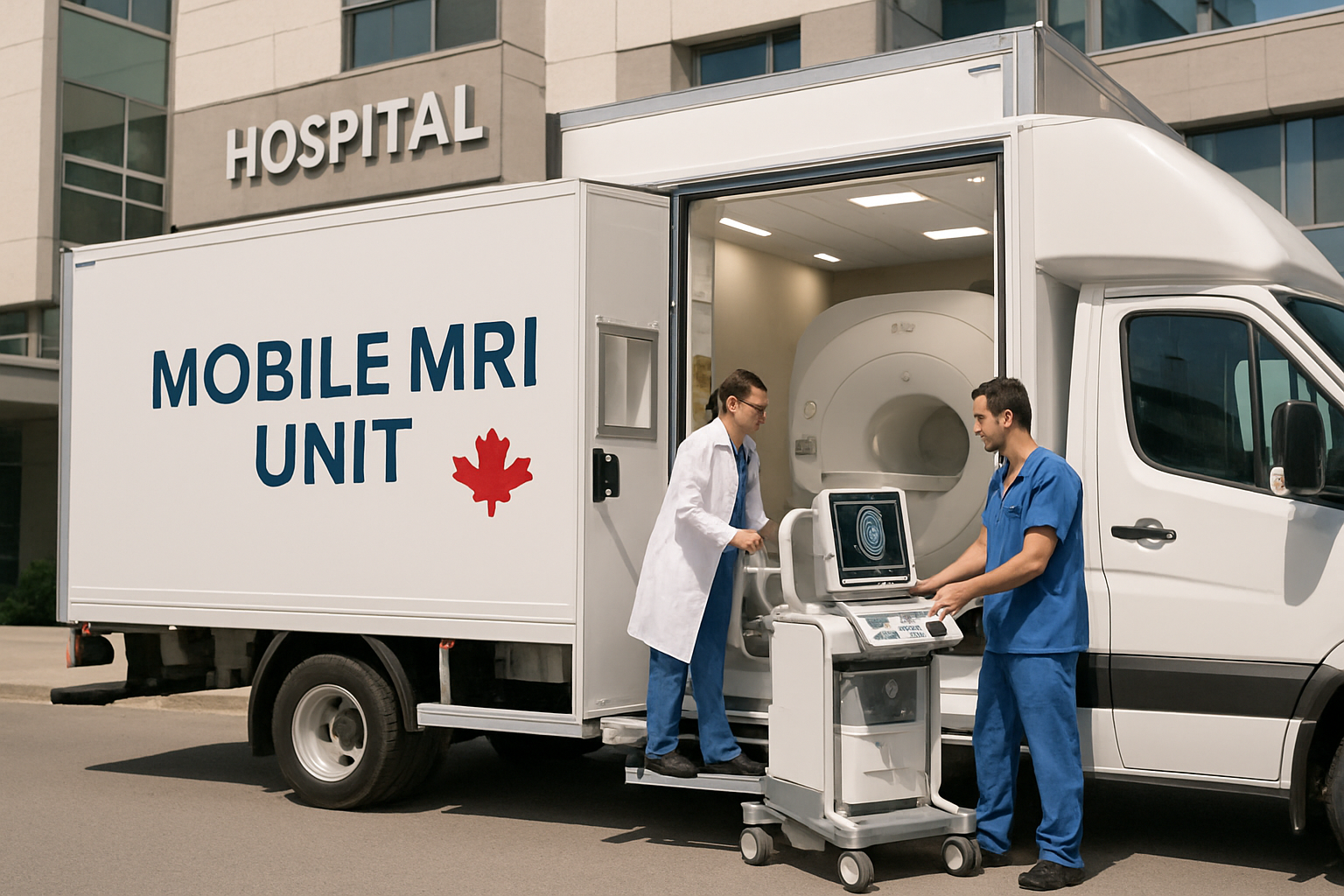
A rising number of Canadian healthcare facilities are revolutionizing patient care through mobile brain scanning technology, offering life-saving MRIs during surgery and enabling stroke diagnosis directly at emergency scenes across the country.
The deployment of portable brain scanning units represents a fundamental transformation in how Canadian healthcare systems deliver critical diagnostic services, particularly benefiting patients in remote areas and emergency situations where traditional hospital-based imaging would prove impossible or dangerously delayed.
Mobile MRI Technology in Operating Rooms
Canadian hospitals are increasingly integrating mobile brain scanners into surgical suites, allowing medical teams to conduct real-time MRI imaging during complex brain operations. This breakthrough technology enables surgeons to verify complete tumor removal, assess surgical progress, and make critical adjustments without relocating patients to separate imaging facilities.
The intraoperative MRI capability has proven particularly valuable for neurosurgical procedures, where precision is paramount and even millimeter-level accuracy can determine patient outcomes. Surgeons can now visualize brain tissue in real-time, ensuring complete resection of tumors while preserving healthy neural tissue.
Roadside Stroke Diagnosis Revolution
Perhaps most revolutionary is the deployment of mobile brain scanning units for emergency stroke diagnosis directly at accident scenes and in ambulances. These portable systems enable paramedics and emergency medical teams to conduct immediate brain imaging, dramatically reducing the critical time between symptom onset and treatment initiation.
Time remains the most crucial factor in stroke treatment, with every minute of delay increasing the risk of permanent brain damage. Mobile brain scanners eliminate the need to transport patients to hospital imaging facilities before diagnosis, potentially saving thousands of lives annually across Canada's vast geographic landscape.
Addressing Healthcare Accessibility Challenges
Canada's expansive geography has long created healthcare access challenges, particularly for residents in remote and rural communities. Mobile brain scanning technology directly addresses these disparities by bringing advanced diagnostic capabilities directly to underserved populations.
The technology proves especially valuable in northern territories and remote provinces where the nearest hospital with MRI capabilities might be hundreds of kilometers away. Mobile units can establish temporary diagnostic centers in community health facilities, schools, or even outdoor locations, ensuring equitable access to life-saving brain imaging services.
Technical Innovations and Capabilities
Modern mobile brain scanners incorporate sophisticated miniaturization technologies that maintain diagnostic quality while achieving unprecedented portability. These units feature advanced magnetic resonance imaging capabilities compressed into transportable systems weighing significantly less than traditional hospital MRI machines.
The latest generation of mobile brain scanners includes AI-assisted diagnostic algorithms that can provide preliminary analysis within minutes, alerting medical teams to critical findings such as hemorrhages, tumors, or stroke-related brain changes. This artificial intelligence integration enhances diagnostic speed without compromising accuracy.
Integration with Existing Healthcare Systems
Canadian healthcare facilities are developing comprehensive integration protocols to seamlessly incorporate mobile brain scanning capabilities into existing medical workflows. This includes establishing communication networks that allow real-time image transmission to specialist neurologists and radiologists for immediate consultation.
The technology connects with provincial health information systems, ensuring that mobile brain scan results are immediately accessible to patients' primary care physicians, specialists, and emergency departments. This connectivity eliminates diagnostic delays and prevents duplicate testing while maintaining comprehensive medical records.
Training and Workforce Development
The deployment of mobile brain scanning technology requires extensive training programs for healthcare professionals, including paramedics, emergency medical technicians, nurses, and physicians. Canadian medical institutions are developing specialized certification programs to ensure safe and effective operation of portable brain imaging systems.
Training encompasses both technical operation of mobile scanning equipment and interpretation of brain imaging results in emergency and surgical settings. Medical schools and continuing education programs are incorporating mobile brain imaging protocols into their curricula to prepare the next generation of healthcare providers.
Economic Impact and Cost-Effectiveness
Mobile brain scanning technology demonstrates significant economic benefits for Canadian healthcare systems through reduced patient transport costs, decreased emergency room wait times, and improved surgical outcomes. Early stroke diagnosis and treatment can prevent long-term disability costs, while intraoperative MRI reduces the need for repeat surgical procedures.
The technology aligns with Canada's broader shift toward prevention-first healthcare strategies, emphasizing early intervention and community-based care delivery. Mobile brain scanners represent a cost-effective solution for extending specialized medical services to underserved populations without requiring massive infrastructure investments.
Patient Outcomes and Success Stories
Initial deployment results demonstrate remarkable improvements in patient outcomes, particularly for stroke victims and surgical patients. Mobile brain scanning enables treatment initiation within the critical "golden hour" for stroke cases, dramatically improving recovery rates and reducing permanent neurological damage.
Surgical patients benefit from more complete tumor resections and reduced need for follow-up procedures. The technology allows surgeons to achieve better surgical outcomes while minimizing patient trauma through reduced anesthesia time and fewer repeat operations.
Future Expansion and Development
Canadian healthcare authorities are planning significant expansion of mobile brain scanning programs, with targets to deploy units in every major metropolitan area and establish rotating schedules for rural and remote communities. Future developments include enhanced AI diagnostic capabilities and improved portability for even greater accessibility.
Research initiatives focus on developing next-generation mobile brain scanners with increased sensitivity for detecting early-stage neurological conditions, including Alzheimer's disease and other neurodegenerative disorders. These advances could enable widespread screening programs for early intervention and prevention.
Regulatory Framework and Safety Standards
Health Canada has established comprehensive regulatory frameworks governing mobile brain scanning technology deployment, ensuring patient safety while promoting innovation. These standards address equipment certification, operator training requirements, and quality assurance protocols for mobile diagnostic services.
Safety protocols include radiation exposure guidelines, equipment maintenance standards, and emergency response procedures. Regular inspections and performance audits ensure that mobile brain scanners maintain the same diagnostic accuracy and safety standards as traditional hospital-based MRI systems.
International Collaboration and Knowledge Sharing
Canada's mobile brain scanning initiative benefits from international cooperation with leading medical technology developers and healthcare systems worldwide. Collaborative research programs share best practices, technical innovations, and clinical outcomes data to accelerate technology advancement.
Canadian expertise in mobile brain scanning technology positions the country as a global leader in accessible healthcare delivery, with potential for technology export and international healthcare partnerships. This leadership role enhances Canada's reputation in medical innovation while benefiting global healthcare advancement.
The revolutionary deployment of mobile brain scanning technology across Canadian healthcare facilities represents a paradigm shift toward more accessible, efficient, and patient-centered medical care. As these systems continue expanding nationwide, millions of Canadians will benefit from faster diagnosis, improved treatment outcomes, and equitable access to life-saving brain imaging services regardless of their geographic location or proximity to major medical centers.