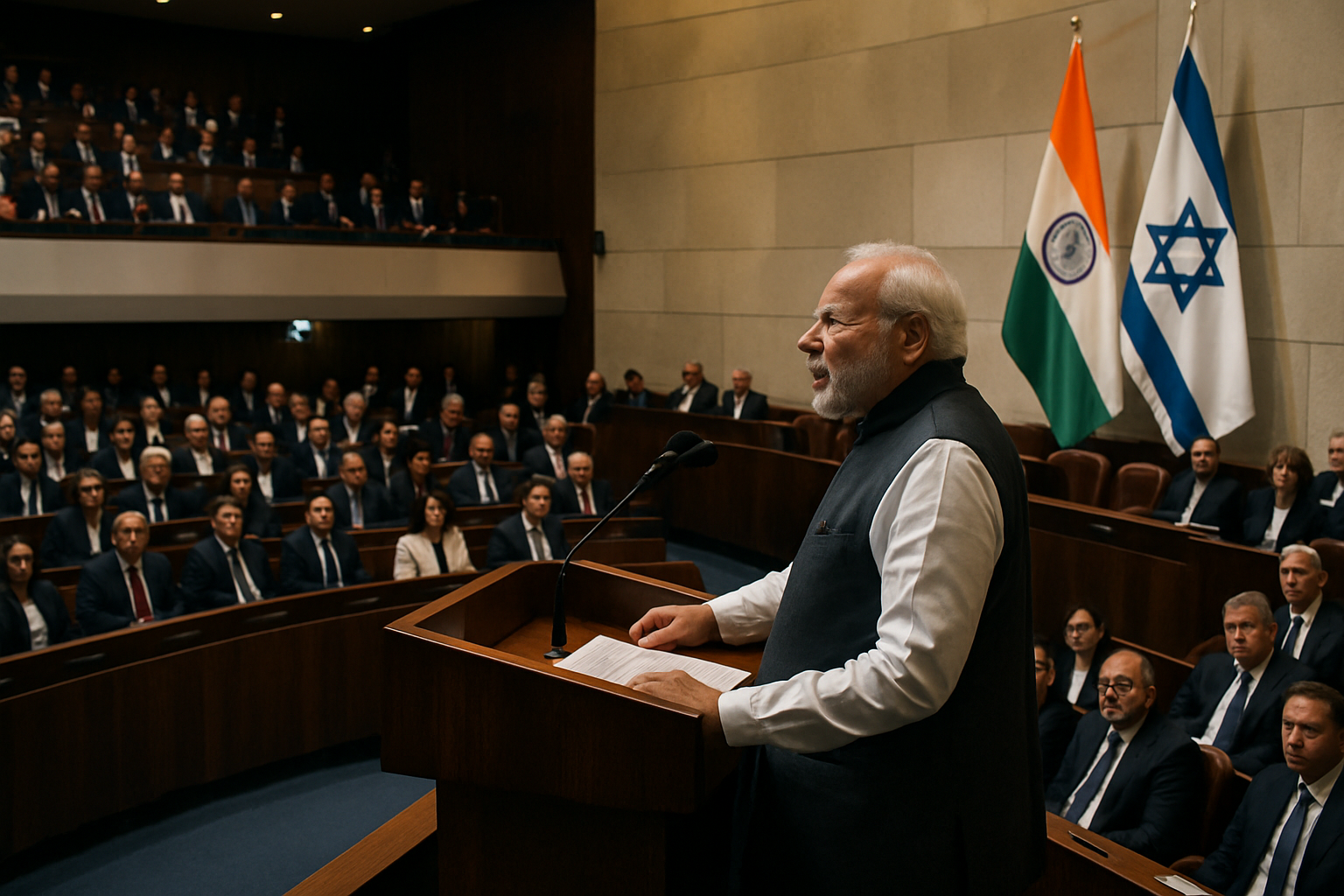
Indian Prime Minister Narendra Modi arrived in Israel on Wednesday for a historic two-day visit that marks a significant strengthening of bilateral ties between the world's largest democracy and the Middle East's only democracy, culminating in an unprecedented address to the Israeli Knesset.
Modi's second official visit to Israel represents the deepening strategic partnership between New Delhi and Jerusalem, coming at a crucial juncture as both nations navigate complex regional and global challenges. The visit, which includes high-level meetings with Israeli Prime Minister Benjamin Netanyahu, underscores India's evolving approach to Middle Eastern diplomacy.
Historic Knesset Address Emphasizes Solidarity
In a powerful speech to Israeli lawmakers, Modi declared that India stands "firmly" with Israel following Hamas's October 7, 2023 attack, marking the first time an Indian Prime Minister has addressed the Israeli parliament. The emotional address carried deep symbolic weight for bilateral relations.
"I carry with me the deepest condolences of the people of India for every life lost and for every family whose world was shattered in the barbaric terrorist attack by Hamas on October 7. We feel your pain, we share your grief. India stands with Israel firmly with full conviction in this moment and beyond."
— Prime Minister Narendra Modi, Israeli Knesset
Modi's address to the Knesset represents a diplomatic milestone, emphasizing shared democratic values and common security challenges faced by both nations. The Indian Prime Minister's words carried particular significance given India's traditionally cautious approach to Middle Eastern conflicts and its historical support for Palestinian statehood.
Strategic Partnership in Complex Regional Context
The visit takes place against the backdrop of Israel's ongoing military operations in Gaza, which have drawn international scrutiny and resulted in tens of thousands of Palestinian casualties. Modi's decision to focus primarily on bilateral cooperation while acknowledging Israel's security concerns reflects India's nuanced diplomatic positioning.
The timing of Modi's visit coincides with heightened tensions in the region, as Israel faces multiple challenges including systematic ceasefire violations documented since October 2025, ongoing military operations across Gaza and the West Bank, and unprecedented international condemnation from 85 UN member states regarding West Bank expansion policies.
Economic and Defense Cooperation Framework
Beyond diplomatic gestures, the visit aims to deepen practical cooperation across multiple sectors. India and Israel have built substantial partnerships in defense technology, agriculture, water management, and innovation since establishing full diplomatic relations in 1992.
The strategic partnership includes:
- Defense technology transfers and joint development projects
- Agricultural innovation and water management systems
- Cybersecurity cooperation and intelligence sharing
- Trade expansion targeting increased bilateral commerce
- Technology partnerships in emerging sectors
Balancing Act Amid Regional Complexities
Modi's visit reflects India's broader strategy of maintaining relationships with all Middle Eastern partners while deepening ties with Israel. This approach has drawn some domestic criticism in India, where significant Muslim populations have traditionally supported Palestinian causes.
The visit occurs as India simultaneously manages its relationships with other regional powers, including its expanding energy partnerships with Gulf states and its traditional non-aligned foreign policy principles. Modi's government has skillfully navigated these competing interests while prioritizing India's strategic and economic benefits.
Historical Context of India-Israel Relations
The relationship between India and Israel has transformed dramatically since the 1990s. While India maintained diplomatic distance during the Cold War era, the end of the Soviet Union and India's economic liberalization opened new possibilities for cooperation.
Modi's first visit to Israel in 2017 marked a turning point, making him the first sitting Indian Prime Minister to visit Israel. That visit established frameworks for enhanced cooperation that have continued to expand under his leadership.
International Reactions and Implications
The visit has generated varied international reactions, with some viewing it as India's continued pivot toward closer alignment with Western democratic partners, while others see it as potentially complicating India's relationships with Arab nations and its traditional non-aligned stance.
European and American officials have generally welcomed the deepening India-Israel partnership as part of broader democratic cooperation networks. However, the visit takes place amid growing international pressure on Israel regarding its military operations and settlement policies.
Future Trajectory of Bilateral Relations
Modi's Knesset address and the broader visit signal India's commitment to maintaining and expanding its strategic partnership with Israel despite regional complexities. The visit establishes frameworks for continued cooperation across multiple sectors while positioning both nations as democratic allies facing similar security challenges.
The success of this diplomatic engagement will likely influence India's broader Middle Eastern strategy and its approach to balancing relationships with Israel, Arab nations, and Palestinian representatives. As both countries face evolving security environments, their partnership represents a significant alignment of democratic values and strategic interests.
The visit concludes with agreements for enhanced cooperation mechanisms, regular consultations, and expanded partnerships across defense, technology, and economic sectors, setting the stage for continued strengthening of one of the most significant strategic partnerships in contemporary international relations.