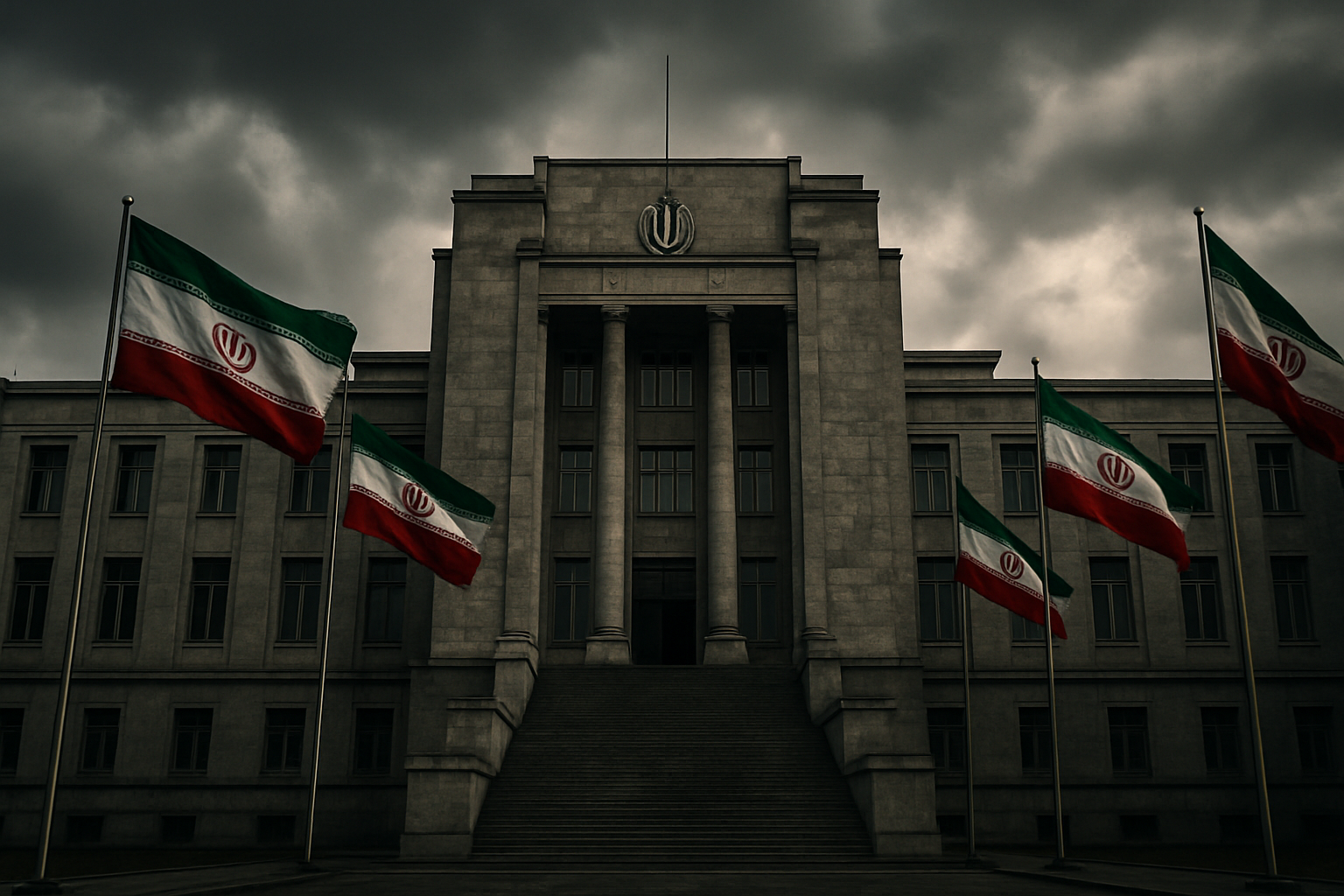
Iran's new Supreme Leader Mojtaba Khamenei issued his first public statement Thursday, delivering a defiant message vowing to "avenge the blood" of Iranian martyrs and maintain the strategic Strait of Hormuz blockade that has disrupted global energy markets for nearly two weeks.
The statement, read by a news presenter on Iranian state television without video of Khamenei himself appearing, marks the first public remarks from the 56-year-old leader since his historic appointment March 9, completing the first hereditary succession in the Islamic Republic's 47-year history.
First Public Declaration Amid Global Crisis
"I assure everyone that we will not neglect avenging the blood of your martyrs," Khamenei declared in the televised statement. "The popular demand is to continue our effective defence and make the enemy regret! The lever of blocking the Strait of Hormuz must continue to be used."
The new Supreme Leader also delivered an ultimatum to regional neighbors, demanding they "must close all U.S. bases on their territory, as Tehran will continue its attacks against them" if they fail to comply. This marks a significant escalation in Iran's confrontational rhetoric toward Gulf states that have maintained U.S. military partnerships.
Khamenei's absence from public view since his appointment has fueled speculation about his condition. Reports from Bosnia and Herzegovina suggest the new leader "suffered a fractured foot and other minor injuries on the first day of the American and Israeli bombing campaign," though these claims remain unverified by independent sources.
Historic Hereditary Succession
Mojtaba Khamenei's rise to power represents an unprecedented break with Islamic Republic tradition. Known as the "invisible soldier," he built his career through Revolutionary Guards channels since the mid-2000s rather than the traditional clerical scholarship route that had defined previous Supreme Leader selections.
The Assembly of Experts, comprising 88 senior clerics, selected Khamenei under extraordinary wartime conditions following his father Ali Khamenei's death March 1 during Operation Epic Fury. Sources indicate Revolutionary Guards pressure was decisive in the selection process, marking a historic shift from clerical to military-influenced governance.
"This breaks the Islamic Republic's founding principle that succession should be based on religious credentials over family connections."
— Regional analyst, speaking on condition of anonymity
Critics describe the transition as transforming Iran from a "theocracy to clerical monarchy," fundamentally altering the revolutionary ideology that established the Islamic Republic in 1979.
Global Energy Crisis Deepens
Khamenei's commitment to maintaining the Strait of Hormuz blockade has intensified the global energy crisis that began when Iran declared the strategic waterway "unsafe" following the death of his father. The strait carries approximately 40% of the world's seaborne oil transit, making it one of the most critical chokepoints in global energy supply chains.
Oil prices have surged past $100 per barrel for the first time since 2014, while natural gas prices have jumped 24% in Europe and 78% in the United States. The International Energy Agency has released 400 million barrels from strategic reserves – the largest intervention in the agency's 50-year history – in an attempt to stabilize markets.
Over 150 oil tankers remain stranded in the Persian Gulf, representing billions of dollars in cargo. Major shipping companies Maersk and MSC have suspended all operations in the region, while Qatar has halted its LNG production, threatening European energy supplies.
International Opposition and Recognition Crisis
President Trump has explicitly rejected Mojtaba Khamenei's appointment as "unacceptable" and described him as a "lightweight," while claiming the United States has the right to choose Iran's next leader. This represents the most direct assertion of American control over Iranian affairs since the 1979 revolution.
European officials have expressed deep concerns about regional stability implications and the prospects for future nuclear negotiations. No major world power has formally recognized Khamenei's appointment, leaving Iran increasingly isolated diplomatically.
The new Supreme Leader inherits an advanced nuclear program with uranium enriched to 60% purity and over 400 kilograms of weapons-grade material – sufficient for multiple nuclear weapons if weaponized. Nuclear diplomacy collapsed despite recent Geneva breakthrough talks, with fundamental disagreements over scope remaining insurmountable.
Domestic Challenges and Legitimacy Questions
Khamenei assumes leadership during one of the most vulnerable periods in the Islamic Republic's history. He inherits over 42,000 arrests from the 2022 protests, a severe sanctions-induced economic crisis, and significant legitimacy questions surrounding the hereditary nature of his appointment.
The spontaneous celebrations in Tehran following his father's death – with residents chanting "tyrant no more" – suggest significant domestic opposition that the new leader must navigate. Revolutionary Guards have maintained strict control over the capital, ordering citizens to leave the city during the most intense phases of the international crisis.
Personal losses have also marked Khamenei's ascension to power. According to Iranian sources, his wife, sister, and other family members were killed in the strikes that targeted his father, adding a deeply personal dimension to his vows of vengeance.
Regional Coalition Under Strain
Iran's retaliation campaign, dubbed "Operation True Promise 4," has severely strained the unprecedented regional coalition of Saudi Arabia, UAE, Qatar, and Egypt that had previously supported diplomatic solutions. Iranian attacks have directly targeted member territories, killing at least one civilian in Abu Dhabi and injuring dozens across Kuwait and Qatar.
Egyptian President Abdel Fattah el-Sisi condemned the attacks on "sisterly Arab countries" and warned of "comprehensive chaos" spreading across the region. The Gulf states now face difficult choices between maintaining their U.S. security partnerships and accommodating Iranian pressure.
Global Crisis Reaches Historic Proportions
The international crisis triggered by the March events has reached unprecedented scale. Over 18,000 flights have been cancelled worldwide – the most extensive aviation disruption since COVID-19 – as eight Middle Eastern countries maintain simultaneous airspace closures.
Dubai International Airport, the world's busiest, remains completely shut down from missile damage. Major airlines including Emirates, Air France-KLM, and Wizz Air have suspended operations indefinitely, affecting hundreds of thousands of passengers globally.
International evacuations have reached the largest scale since the Arab Spring in 2011, with Australia reporting 115,000 nationals trapped in the region and Germany evacuating 30,000 tourists. The European Union activated its ESTIA evacuation protocol for Cyprus for the first time in the bloc's history after Iranian drones struck RAF Akrotiri – the first attack on European territory since World War II.
Congressional Scrutiny and War Costs
In the United States, Congressional scrutiny of Operation Epic Fury has intensified as costs reach $3.7 billion in the first week alone – $891.4 million daily. Pentagon officials have quietly prepared for operations extending through September, far beyond the initial 4-6 week timeline suggested by the administration.
Senator Richard Blumenthal expressed being "more concerned than ever" about the possibility of ground troops deployment, while the conflict maintains "almost unprecedented" unpopularity with only 25% American support according to early polling. Financial markets have emerged as what analysts call the "ultimate constraint" on further escalation.
Nuclear Governance Crisis Context
The Iranian crisis unfolds against a broader nuclear governance crisis. The New START treaty between the United States and Russia expired February 5, marking the first time in over 50 years without nuclear constraints between the superpowers. Combined with China's nuclear expansion, UN Secretary-General António Guterres has declared nuclear risks at their "highest in decades."
The collapse of nuclear diplomacy with Iran, despite achieving "broad agreement on guiding principles" in Geneva talks – the most progress since the JCPOA collapse in 2018 – demonstrates the fragility of diplomatic solutions in the current international environment.
Template-Setting Moment for 21st Century
UN Secretary-General Guterres has called the current crisis the "greatest test of multilateral cooperation and crisis management in the modern era." The rapid transition from diplomatic breakthrough to military escalation demonstrates what experts term the "fragility of crisis management in the multipolar era."
"The success or failure of containing this escalation will determine whether the international community can provide a framework for future nuclear crises, or whether military solutions will become the preferred option, potentially encouraging proliferation globally and undermining diplomatic credibility worldwide."
— Senior UN official, speaking anonymously
The stakes include regional war prevention, global energy security, nuclear governance credibility, and international law enforcement – all tested simultaneously in what many consider the most dangerous international crisis since the end of the Cold War.
Looking Ahead
As Mojtaba Khamenei settles into his role as Supreme Leader, his first statement signals no moderation in Iran's confrontational approach toward the United States and Israel. His commitment to maintaining the Strait of Hormuz blockade and continuing attacks on regional neighbors hosting U.S. bases suggests the international crisis will likely intensify rather than stabilize.
The new leader's military background through the Revolutionary Guards, combined with the circumstances of his selection under wartime conditions, indicates a fundamental shift toward military-influenced governance that could affect Iran's approach to regional proxy networks, nuclear program development, and domestic security for decades to come.
The template being set in March 2026 will likely influence international approaches to conflict resolution, energy security architecture, and nuclear governance mechanisms extending far beyond the current crisis, potentially reshaping diplomatic versus military solutions preference for 21st-century territorial and nuclear disputes worldwide.