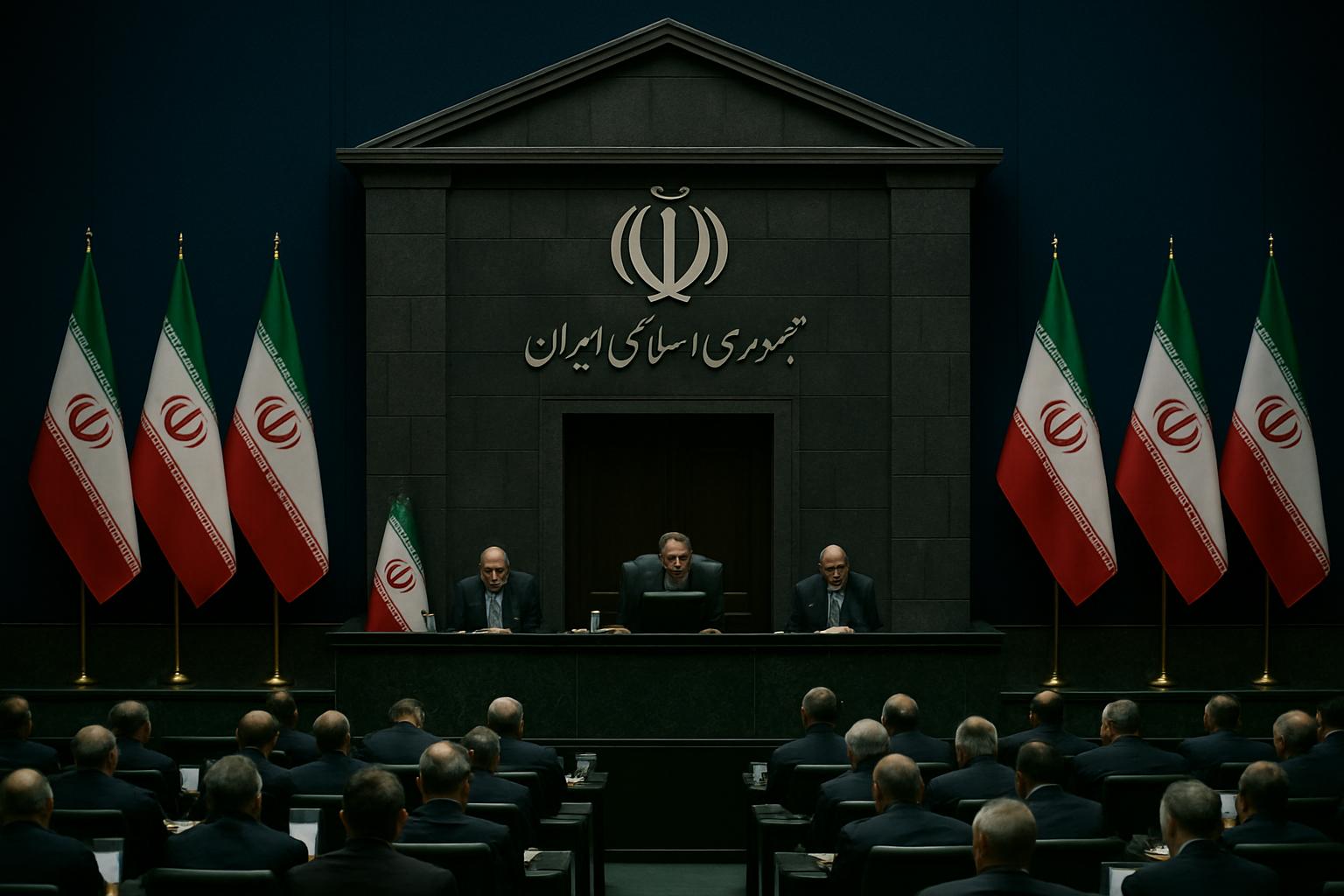
Iran's Assembly of Experts has officially announced the appointment of Mojtaba Khamenei as the Islamic Republic's new Supreme Leader, marking the first hereditary succession in the theocracy's 47-year history and ending a week-long constitutional crisis following his father's death.
The 56-year-old mid-ranking cleric was selected by the 88-member Assembly of Experts following an extraordinary session conducted under wartime conditions, as the country faces its most serious crisis since the 1979 revolution. The appointment breaks with decades of tradition that favored clerical scholarship over family lineage in selecting Iran's highest authority.
Historic First Hereditary Succession
In a lengthy statement Sunday evening, the Assembly declared that "after careful and extensive studies... Ayatollah Seyyed Mojtaba Hosseini Khamenei (may Allah protect him) is appointed and introduced as the third leader of the sacred system of the Islamic Republic of Iran, based on the decisive vote of the respected representatives."
The selection represents a fundamental shift in Iran's governance structure, with multiple sources confirming that the decision was made "under pressure from Revolutionary Guards" according to Iran International and AzerNews reports. This marks the first time military influence has decisively shaped the succession process since the Islamic Republic's founding.
Born on September 8, 1969, in the holy city of Mashhad, Mojtaba Khamenei has operated largely in the shadows of Iranian politics, earning the moniker "invisible soldier" for his discrete but influential role in his father's administration. Unlike previous Supreme Leaders who rose through clerical ranks, Mojtaba built his career through the security apparatus, maintaining close ties with the powerful Islamic Revolutionary Guard Corps since the mid-2000s.
Selection Amid Regional Crisis
The succession process unfolded during the most dangerous Middle Eastern crisis since the Cold War, following the death of Supreme Leader Ali Khamenei on March 1 during Operation Epic Fury - the largest US-Israeli coordinated military operation since 2003. The ongoing conflict has created unprecedented global disruption, with over 18,000 flights cancelled worldwide and oil prices surging past $80 per barrel.
A three-member transitional council comprising President Masoud Pezeshkian, judiciary head Gholamhossein Mohseni Ejei, and Guardian Council representative Ayatollah Alireza Arafi managed the country during the selection period. The Assembly of Experts building in Qom reportedly sustained damage during military operations, but the constitutional process continued uninterrupted.
The selection occurs as Iran executes "Operation True Promise 4," its massive retaliation campaign that has caused casualties across the region, including the UAE, Kuwait, Qatar, and Cyprus - marking the first attack on European territory since World War II.
Breaking Constitutional Norms
Critics have characterized the succession as a dynastic transfer that contradicts the Islamic Republic's founding principles. The system traditionally emphasized clerical qualifications and scholarly achievement over familial connections, with the Assembly of Experts historically selecting leaders based on religious credentials and popular standing among senior clerics.
Political analyst Rami Khouri of the American University of Beirut described the choice as "a kind of act of defiance... telling the Americans and Israelis: 'You wanted to get rid of our system? Well, in your opinion, this is a more radical person than his father who was killed.'" The selection sends a powerful signal that Iran has no intention of moderating its positions despite unprecedented international pressure.
The new Supreme Leader inherits a nuclear program that has achieved 60% uranium enrichment with over 400 kilograms of weapons-grade material - sufficient for multiple nuclear weapons if weaponized. Nuclear diplomacy has completely collapsed despite recent Geneva talks achieving "broad agreement on guiding principles," with fundamental disagreements over scope proving insurmountable.
International Reactions and Implications
The selection has already drawn sharp international criticism, with President Donald Trump rejecting Mojtaba Khamenei's candidacy even before the official announcement. Trump previously described him as "unacceptable" and "lightweight," while asserting America's right to influence Iran's leadership selection - the most direct assertion of American control over Iranian internal affairs since 1979.
The hereditary nature of the succession has raised questions about the Islamic Republic's legitimacy among its own population, particularly following the massive protests of 2022 that resulted in over 42,000 arrests. However, the Revolutionary Guards' decisive role in the selection process suggests the new leadership will prioritize military strength and regional influence over domestic reform.
European Union officials have expressed concern about the implications for regional stability and nuclear negotiations. The selection occurs amid the broader collapse of nuclear governance frameworks, with the New START treaty having expired in February 2026 - the first time in over 50 years without US-Russia nuclear constraints.
Regional Coalition Under Strain
The succession comes as the unprecedented Saudi Arabia-UAE-Qatar-Egypt coalition supporting diplomatic solutions faces severe strain. Iranian retaliation has directly targeted member territories, with Egyptian President Abdel Fattah el-Sisi condemning attacks on "sisterly Arab countries" and warning of "comprehensive chaos" spreading across the region.
The new Supreme Leader will face immediate challenges in managing relationships with Gulf neighbors while maintaining Iran's "axis of resistance" across the Middle East. The ongoing conflict has disrupted global energy markets, with Iran declaring the Strait of Hormuz - through which 40% of global oil passes - "unsafe for shipping."
A Template-Setting Moment
The March 2026 succession crisis represents what UN Secretary-General António Guterres has called "the greatest test of multilateral cooperation and crisis management in the modern era." The rapid transition from diplomatic breakthrough to military confrontation demonstrates the fragility of crisis management mechanisms in the multipolar era.
Success in containing the current escalation could provide a framework for future nuclear crises, while failure may accelerate military solutions and reshape Middle Eastern geopolitics for decades. The stakes include regional war prevention, global energy security, nuclear governance credibility, and the enforcement of international law under post-World War II principles.
As the most dangerous international crisis since the Cold War's end continues to unfold, Mojtaba Khamenei's leadership approach will influence not only Iran's trajectory but also set precedents for conflict resolution, diplomatic engagement, and the balance between military confrontation and negotiated solutions in 21st-century international relations.
The new Supreme Leader assumes power at a watershed moment that will reverberate through international relations for decades, affecting approaches to nuclear proliferation, territorial sovereignty enforcement, and the fundamental architecture of Middle Eastern stability.