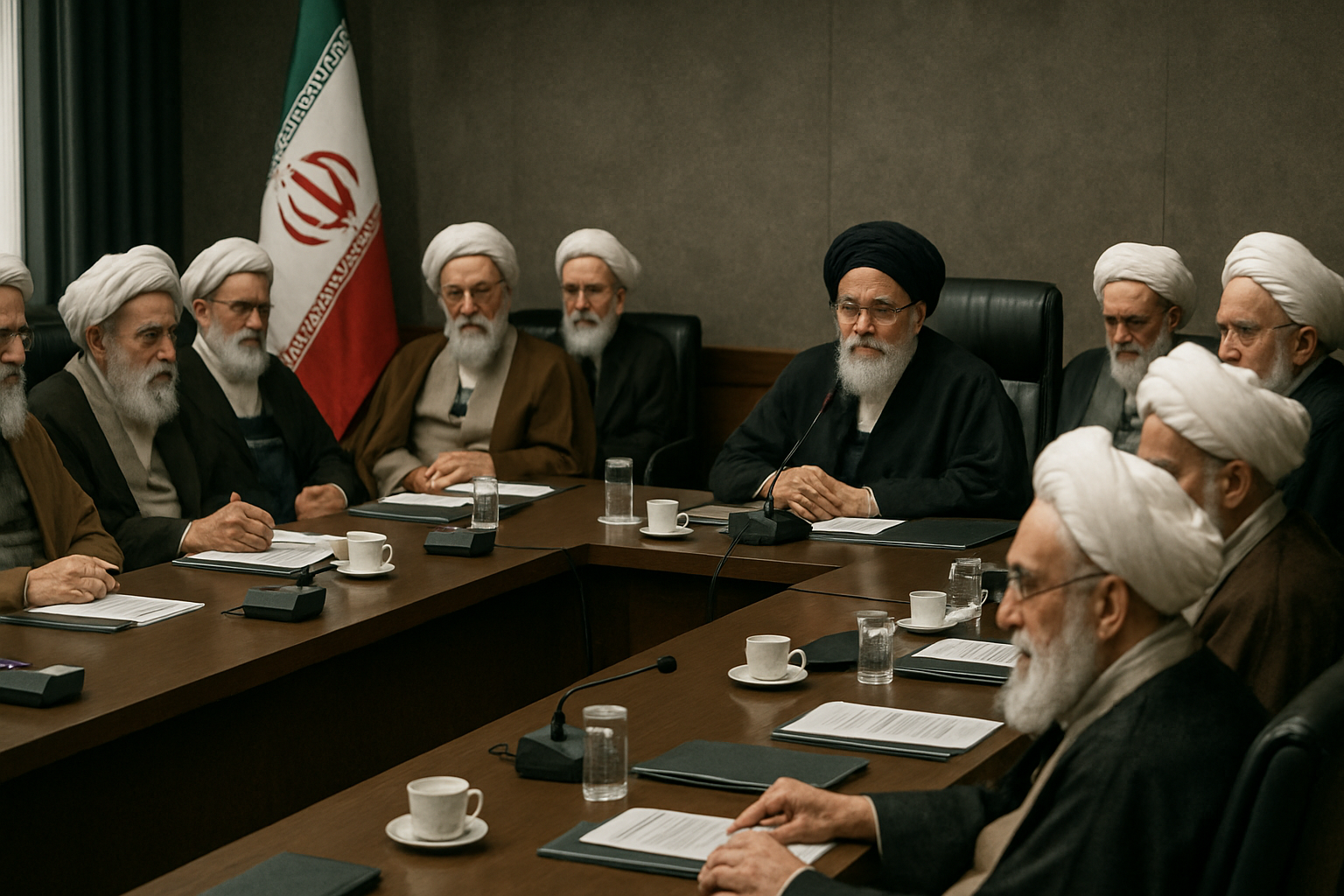
Iran's Assembly of Experts has officially selected Mojtaba Khamenei, 56-year-old son of the deceased Supreme Leader Ali Khamenei, as Iran's new Supreme Leader following his father's death in US-Israeli military strikes, marking an unprecedented hereditary succession in the Islamic Republic's 47-year history.
The selection, confirmed by multiple international sources including opposition media outlets and regional intelligence agencies, represents a dramatic consolidation of power within the Khamenei family during one of the most dangerous periods in Middle Eastern geopolitics since the Cold War.
Revolutionary Guards Pressure Shapes Historic Decision
According to sources from Iran International and AzerNews, the Assembly of Experts made the decision "under pressure from the Revolutionary Guards," signaling the powerful military organization's decisive influence in Iran's constitutional succession process. The 88-member clerical body, responsible for selecting the Supreme Leader under Iran's constitution, convened under extraordinary circumstances following Ali Khamenei's confirmed death on March 1, 2026.
Cyprus-based sources report that Mojtaba Khamenei's selection strengthens "the influence of the Khamenei family within the Islamic Republic and prompts debate over the principles of the theocratic system, which does not formally provide for hereditary succession."
"The Assembly of Experts elected Ali Khamenei's son Mojtaba as the next Supreme Leader under pressure from the Revolutionary Guards."
— AzerNews Intelligence Report
The "Invisible Soldier" Emerges
Mojtaba Khamenei, described by intelligence sources as the "invisible soldier," has spent decades building his political career through Iran's military and security apparatus. Unlike his father's rise through clerical ranks, Mojtaba's path to power represents a fundamental shift toward military influence in Iran's governance structure.
The new Supreme Leader has maintained a deliberately low profile throughout his career, working behind the scenes to help his father control Iran's complex political system since the mid-2000s. His selection indicates that Iran's leadership succession will likely maintain the hardline policies that have defined the Islamic Republic's approach to regional affairs and nuclear development.
Pakistani sources confirmed that despite earlier speculation about Mojtaba Khamenei's health, "new reports surfaced online, saying he in full health and deeply involved in high-level deliberations on national governance and political strategy."
Constitutional Crisis and Wartime Succession
The succession process unfolded under extraordinary circumstances, with the Assembly of Experts meeting in Qom reportedly struck during ongoing US-Israeli military operations. Russian sources cited by The New York Times indicated concerns among council members that announcing Mojtaba's appointment could make him "a target for US and Israeli strikes."
The constitutional transition followed the activation of a three-member transitional council including President Masoud Pezeshkian, judiciary head Gholamhossein Mohseni Ejei, and Guardian Council representative Ayatollah Alireza Arafi, as mandated by Article 111 of Iran's constitution.
This marks the first time in Iran's modern history that supreme leadership has passed from father to son, breaking with the Islamic Republic's tradition of selecting leaders based on clerical scholarship and religious authority rather than familial connections.
Regional and Global Implications
Mojtaba Khamenei assumes leadership during the most severe international crisis Iran has faced since the 1979 Islamic Revolution. The succession occurs amid:
- Ongoing military confrontation with US-Israeli forces
- Global aviation crisis with over 18,000 flights cancelled worldwide
- Energy security threats affecting 40% of global oil transit through the Strait of Hormuz
- Complete breakdown of nuclear negotiations despite recent diplomatic progress
- Unprecedented strain on regional coalitions supporting diplomatic solutions
Intelligence assessments suggest that Mojtaba Khamenei's leadership will likely emphasize military solutions over diplomatic engagement, given his close ties to the Revolutionary Guards and security apparatus that facilitated his selection.
Nuclear Program Continuity
The new Supreme Leader inherits a nuclear program that has advanced significantly during the recent crisis period. Iran currently enriches uranium at 60% purity—approaching the 90% threshold required for weapons-grade material—with an estimated 400+ kilograms of enriched uranium that international experts say provides sufficient material for multiple nuclear weapons if weaponized.
The collapse of Geneva framework negotiations, despite achieving what diplomats described as "broad agreement on guiding principles," leaves the nuclear issue unresolved as Mojtaba Khamenei takes power. Iran has maintained that ballistic missiles and regional proxy relationships remain "red lines" excluded from nuclear-focused discussions.
International Response and Recognition
The international community faces the challenge of responding to Iran's new leadership amid ongoing military operations and diplomatic breakdown. No major world powers have yet issued official statements recognizing Mojtaba Khamenei's appointment, with many capitals focusing on immediate crisis management rather than long-term political recognition.
The succession decision will likely influence international approaches to future negotiations with Iran, particularly given the new Supreme Leader's military background and the circumstances of his selection under Revolutionary Guards pressure.
Domestic Challenges Ahead
Mojtaba Khamenei inherits significant domestic challenges, including:
- Over 42,000 arrests since the 2022 nationwide protests
- Economic crisis exacerbated by international sanctions
- Questions about legitimacy given the hereditary nature of his succession
- Need to maintain unity within Iran's complex political system during wartime
The new Supreme Leader's ability to navigate these challenges while managing international crises will likely determine both his political survival and Iran's future trajectory in regional and global affairs.
Historical Precedent and Future Implications
Mojtaba Khamenei's selection represents a watershed moment in Middle Eastern politics, establishing a precedent for hereditary succession in what was previously a theocratic system based on clerical authority. The decision reflects the Revolutionary Guards' growing influence in Iran's political system and may signal a shift toward more military-oriented governance.
As the Middle East faces its most dangerous crisis since the Cold War, the new Iranian Supreme Leader's leadership approach will significantly influence regional stability, nuclear proliferation risks, and international diplomatic efforts to resolve ongoing conflicts through negotiated solutions rather than military confrontation.
The coming weeks will be critical in determining whether Mojtaba Khamenei's leadership can navigate Iran through its current crisis while maintaining domestic stability and managing complex international relationships that will shape Middle Eastern geopolitics for decades to come.