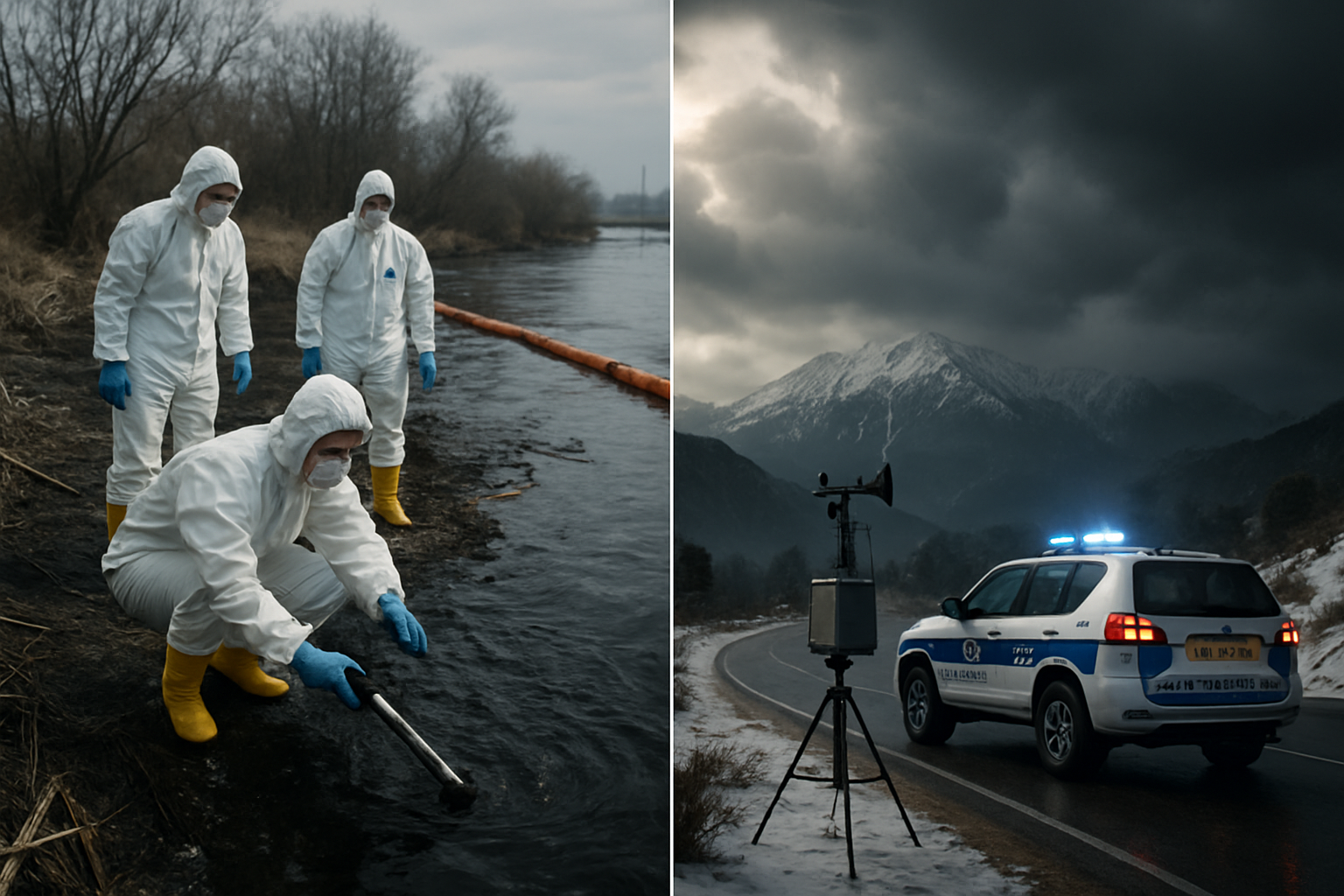
Moldova's government declared an unprecedented 15-day environmental emergency for the Dniester River basin on Sunday, March 15, as petroleum pollution continues to spread downstream from war-torn Ukraine, while Cyprus simultaneously battles severe weather conditions that have prompted multiple emergency responses and rare mountain snowfall.
The environmental crisis in Moldova represents the latest escalation in a cascade of environmental disasters affecting Eastern Europe since the intensification of the Russian invasion of Ukraine. According to Romanian news outlet Digi24, the Moldovan government unanimously approved the environmental alert during an extraordinary meeting on Sunday, citing the urgent need to "more effectively counter the pollution currently being faced, caused by Russia's war in Ukraine."
Dniester River Contamination Crisis
The Dniester River, a crucial water source for millions in Moldova and Ukraine, has been severely contaminated with petroleum products since fighting escalated near critical infrastructure in Ukraine. Alexandru Munteanu, the Moldovan Environment Minister, directly attributed the contamination to actions by the Russian Federation, calling it an environmental catastrophe that threatens the entire regional water supply.
The 15-day emergency declaration, beginning Monday, March 16, 2026, grants Moldovan authorities enhanced powers to coordinate cleanup efforts, monitor water quality, and protect downstream communities. The contamination has already spread across international boundaries, requiring unprecedented cooperation between Moldova, Romania, and Ukraine to manage the crisis.
According to Moldova Live, the pollution stems from attacks on petroleum infrastructure that have created massive spills entering the river system. The contamination includes heavy hydrocarbons, benzene derivatives, and toxic combustion compounds that pose severe health risks to both human populations and aquatic ecosystems.
Cyprus Severe Weather Emergency
Meanwhile, Cyprus faced its own environmental emergency as severe weather systems brought rare snowfall to the Troodos mountains and caused widespread disruption across the island. The Mediterranean island, typically known for its mild winter climate, experienced dramatic weather conditions that overwhelmed emergency services and infrastructure.
Cyprus fire services responded to 43 weather-related incidents by 5:30 PM on Sunday, according to Fire Service spokesman Andreas Kettis. The incidents included fallen trees, wind-damaged structures, water pumping operations, and electrical hazards caused by strong winds and heavy precipitation.
Larnaca recorded the highest number of incidents with 18 emergency responses, followed by Famagusta with 14, Limassol with nine, Nicosia with eight, and Paphos with three. The emergency response highlighted the vulnerability of Mediterranean infrastructure to increasingly severe weather events.
Unprecedented Mountain Snowfall
The Troodos mountain range turned white on Sunday after heavy snowfall began around midday, creating winter scenes rarely witnessed on the Mediterranean island. Snow fell heavily across mountainous areas above 1,000 meters elevation, creating dangerous conditions for residents and tourists unprepared for such weather.
Images and videos published by KitasWeather showed thick snow accumulation across the Troodos range, with temperatures dropping significantly below seasonal averages. The unusual weather pattern reflects broader atmospheric disruptions affecting the Eastern Mediterranean region.
"The conditions in Troodos are extremely unusual for this time of year. We're seeing snow accumulations that typically only occur during the coldest winter months."
— Local Weather Observer, KitasWeather
Regional Pattern of Environmental Stress
The simultaneous environmental emergencies in Moldova and Cyprus represent part of a broader pattern of environmental stress affecting Eastern Europe and the Mediterranean. The pollution crisis in the Dniester River joins a growing list of war-related environmental disasters, while Cyprus's severe weather reflects intensifying climate volatility across the region.
Cyprus faced additional challenges over a 24-hour period as fire services handled 38 separate weather-related incidents. The Cyprus Mail reported that emergency crews across multiple regions dealt with fallen trees, damaged vehicles, and structural threats from unprecedented wind conditions.
In Nicosia, emergency services responded to water pumping operations, fallen trees, vehicle recoveries, and electrical hazards. The Famagusta region experienced particularly intense conditions, with 14 incidents in the Paralimni-Deryneia area alone, plus two additional calls in Ayia Napa and five cases requiring specialized electrical crew intervention.
Cross-Border Environmental Cooperation
The Dniester River pollution crisis has necessitated unprecedented cooperation between Moldova and Romania. Romanian authorities confirmed providing emergency assistance to Moldova following the contamination, with the Romanian National Water Administration (ANAR) monitoring the situation as pollutants continue to discharge from conflict zones.
The transboundary nature of the pollution demonstrates how environmental consequences of armed conflict extend far beyond battlefield boundaries. Water supplies for northern Moldovan communities face potential disruption, requiring emergency management protocols and alternative water source development.
Europa Liberă Moldova reported that Romanian technical assistance includes specialized water treatment equipment, environmental monitoring technology, and expert personnel to help manage the unprecedented contamination levels.
Climate Context and Future Implications
These environmental emergencies occur during what climate scientists have identified as the 20th consecutive month of global temperatures exceeding 1.5°C above pre-industrial levels—the longest sustained warming streak in recorded human history. The combination of war-related pollution and extreme weather reflects the compound environmental challenges facing Europe.
The Cyprus weather crisis, featuring both flooding risks and rare snowfall, exemplifies the increasing unpredictability of Mediterranean climate patterns. Traditional infrastructure and emergency response systems, designed for historical weather patterns, face growing challenges from conditions that exceed operational parameters.
Environmental experts warn that the current pattern of compound crises—combining human-caused disasters like the Dniester pollution with climate-driven extreme weather—represents a preview of increasingly common environmental emergencies requiring enhanced regional cooperation and adaptive management strategies.
Economic and Social Impact
The economic implications of both crises extend across multiple sectors. In Moldova, agricultural communities dependent on Dniester River water face immediate threats to irrigation systems and livestock. The tourism sector in regions near the contaminated river confronts potential long-term reputation damage and health concerns.
Cyprus tourism and transportation sectors experienced immediate disruption from the severe weather, with flight delays, hotel evacuations in mountain areas, and infrastructure damage requiring substantial repair investments. The rare snow conditions, while potentially attractive to some visitors, created dangerous driving conditions and overwhelmed heating systems not designed for extended cold periods.
Local businesses across both countries reported significant operational challenges, from water treatment costs in Moldova to storm damage repair expenses in Cyprus. The compound nature of these environmental challenges highlights the need for comprehensive emergency preparedness and climate adaptation strategies.
International Environmental Response
The simultaneous environmental emergencies have prompted calls for enhanced regional environmental cooperation mechanisms. The European Union has been monitoring both situations, with potential activation of the EU Civil Protection Mechanism if conditions deteriorate further.
Environmental organizations have emphasized that both crises—war-related pollution and extreme weather—require immediate international attention and long-term adaptation strategies. The interconnected nature of environmental systems means that pollution in the Dniester River and severe weather in Cyprus represent regional challenges requiring coordinated responses.
The Moldova environmental emergency declaration provides a framework for rapid international assistance, while Cyprus's weather crisis demonstrates the need for enhanced emergency response capabilities across the Mediterranean region. Both situations underscore the growing importance of environmental security as a component of regional stability.
Looking Forward
As Moldova implements its 15-day environmental emergency measures and Cyprus recovers from unprecedented weather conditions, both countries face the challenge of building resilience against future environmental threats. The Dniester River cleanup will likely require months or years of sustained effort, while Cyprus must prepare for the possibility of more frequent extreme weather events.
The convergence of war-related environmental damage and climate-driven severe weather represents a preview of 21st-century environmental challenges. Success in managing these compound crises will depend on rapid deployment of technical expertise, enhanced regional cooperation, and long-term investment in environmental resilience infrastructure.
Both Moldova and Cyprus are adapting their emergency response capabilities in real-time, providing valuable lessons for other European nations facing similar environmental vulnerabilities. The current crises serve as stark reminders that environmental security has become inseparable from regional peace, stability, and prosperity.