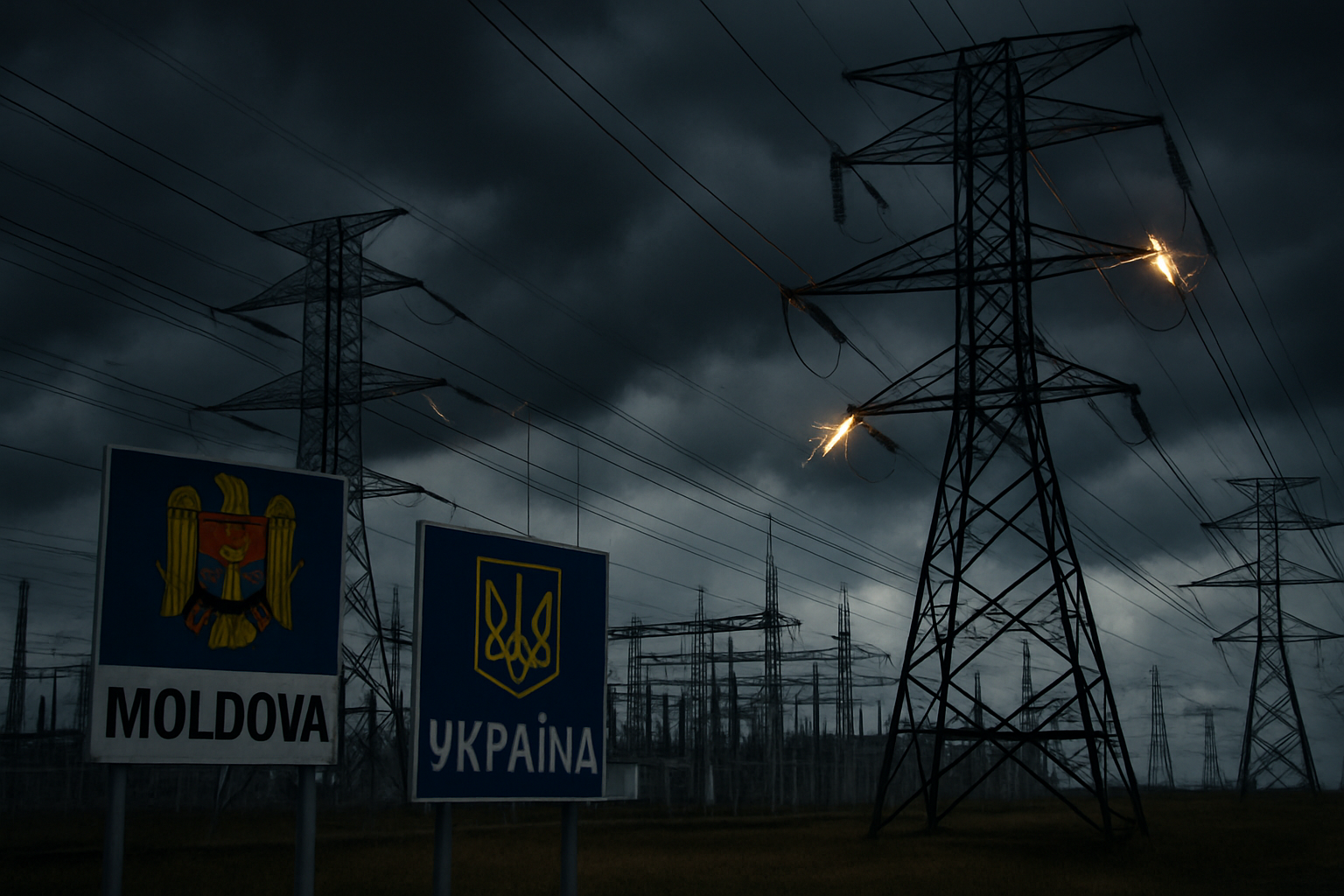
Moldova's government announced it will propose to parliament a 60-day state of emergency in the energy sector starting Wednesday, following Russian attacks on Ukrainian power infrastructure that damaged the critical Vulcănești-Isaccea power line connecting Moldova to European energy networks.
Prime Minister Alexandru Munteanu stated Monday that the energy sector situation in the Republic of Moldova remains "complicated" and that risks to energy security are "real." He warned that cascading outages remain possible and that new attacks on energy infrastructure cannot be ruled out.
"The situation is critical and we must take all necessary measures to ensure the security of our energy supply," Munteanu said during an extraordinary Cabinet meeting called for 1:00 PM Monday. The Cabinet is expected to approve the emergency declaration, which will then be submitted to parliament for ratification.
Russian Strikes Damage Critical Infrastructure
The crisis emerged after overnight Russian strikes on southern Ukraine caused significant damage to the Issacea-Vulcanesti power line, Moldova's primary energy connection to the European grid via Romania. This strategic transmission line serves as Moldova's main pathway for electricity imports and represents a crucial component of the country's energy security architecture.
President Maia Sandu placed direct responsibility on Russia for disrupting the country's energy link with Europe, which has led to instability in Moldova's power grid. "Russia's deliberate targeting of energy infrastructure puts all of Europe at risk," Sandu stated, echoing warnings from Ukrainian officials about the broader regional implications of systematic infrastructure attacks.
The damage to the transmission line has created immediate concerns about Moldova's ability to maintain stable electricity supplies, particularly given the country's heavy dependence on energy imports and its vulnerable geographic position between Ukraine and Romania.
Emergency Cabinet Session and Government Response
The extraordinary Cabinet session, chaired by Prime Minister Munteanu, will focus on implementing emergency protocols to safeguard Moldova's energy supply. The proposed 60-day state of emergency would grant the government expanded powers to manage energy resources, coordinate with international partners, and implement contingency measures to prevent widespread blackouts.
Government sources indicate the emergency declaration will include provisions for:
- Enhanced coordination with Romanian and European energy authorities
- Activation of emergency energy reserves and alternative supply routes
- Expanded powers for energy sector management and crisis response
- Potential energy conservation measures if supply disruptions worsen
The timing of the emergency declaration underscores the urgency of the situation, as Moldova faces potential energy shortages during a critical period when European energy markets remain volatile due to ongoing regional conflicts.
Regional Energy Security Context
Moldova's energy emergency comes amid a broader pattern of Russian attacks on Ukrainian energy infrastructure that have systematically targeted civilian power systems throughout the winter months. These attacks have not only affected Ukraine's domestic energy security but have also disrupted regional energy networks that serve neighboring countries.
The targeting of the Vulcănești-Isaccea line represents a significant escalation in the regional impact of Russia's "energy terrorism" strategy, as Ukrainian officials have termed the systematic attacks on civilian infrastructure. This critical transmission line serves as a lifeline connecting Moldova to European energy markets and ensuring the country's energy independence from Russian supplies.
Energy experts warn that the damage to this transmission infrastructure could have cascading effects across the broader European energy network, potentially affecting electricity flows and market stability in southeastern Europe. The incident highlights the vulnerability of interconnected energy systems to military attacks and the need for enhanced protection of critical infrastructure.
Historical Context and Energy Independence
Moldova has been working to diversify its energy sources and reduce dependence on Russian supplies, particularly following the full-scale Russian invasion of Ukraine in February 2022. The Vulcănești-Isaccea connection has played a crucial role in this diversification strategy, allowing Moldova to access European energy markets and reduce its reliance on Russian gas and electricity.
The current crisis recalls previous energy security challenges Moldova has faced, including deliberate supply disruptions and price manipulation tactics used as political leverage. However, the direct military targeting of transmission infrastructure represents a new dimension of energy security threats that Moldova and other regional countries must now confront.
The emergency declaration reflects lessons learned from previous energy crises, with the government moving quickly to implement protective measures and coordinate with European partners rather than waiting for supply disruptions to become critical.
International Implications and Support
The attack on Moldova's energy connection to Europe demonstrates how regional conflicts can have immediate impacts on neutral countries and smaller states caught between larger geopolitical tensions. Moldova's experience serves as a stark reminder of the vulnerability of energy infrastructure in conflict zones and the need for enhanced protection measures.
European Union officials have indicated support for Moldova's emergency measures and have emphasized the importance of maintaining energy security cooperation during the crisis. The incident is likely to accelerate discussions about strengthening energy infrastructure protection and developing alternative supply routes for countries in vulnerable geographic positions.
The crisis also highlights the interconnected nature of European energy security, where attacks on infrastructure in one country can have immediate consequences for neighboring states. This reality underscores the importance of coordinated regional approaches to energy security and infrastructure protection.
Economic and Social Impact
The energy emergency declaration comes at a challenging time for Moldova's economy, which has already been affected by regional instability and rising energy costs. The potential for energy supply disruptions could impact industrial production, increase costs for businesses and households, and strain the country's economic recovery efforts.
Government officials have not yet announced specific energy conservation measures, but the emergency powers would allow for the implementation of rationing or priority allocation systems if supply shortages become severe. Such measures could affect both residential and industrial consumers, with essential services likely to receive priority access to available energy supplies.
The crisis also raises concerns about Moldova's energy infrastructure resilience and the need for additional investments in alternative supply routes and storage capacity to reduce vulnerability to external shocks.
Looking Forward: Security and Resilience
As Moldova prepares to implement its energy emergency measures, the crisis serves as a crucial test of the country's energy security preparations and its ability to coordinate with European partners during periods of stress. The 60-day emergency period will provide time to assess damage, implement repairs, and develop longer-term resilience measures.
The incident underscores the urgent need for enhanced protection of critical energy infrastructure and the development of more resilient energy networks that can withstand both natural disasters and deliberate attacks. For Moldova and other countries in vulnerable positions, diversifying energy sources and supply routes has become not just an economic necessity but a critical national security imperative.
The government's rapid response to the crisis, including the immediate convening of emergency sessions and coordination with European partners, demonstrates institutional preparedness that may prove crucial in managing the immediate challenges while working toward longer-term energy security solutions.