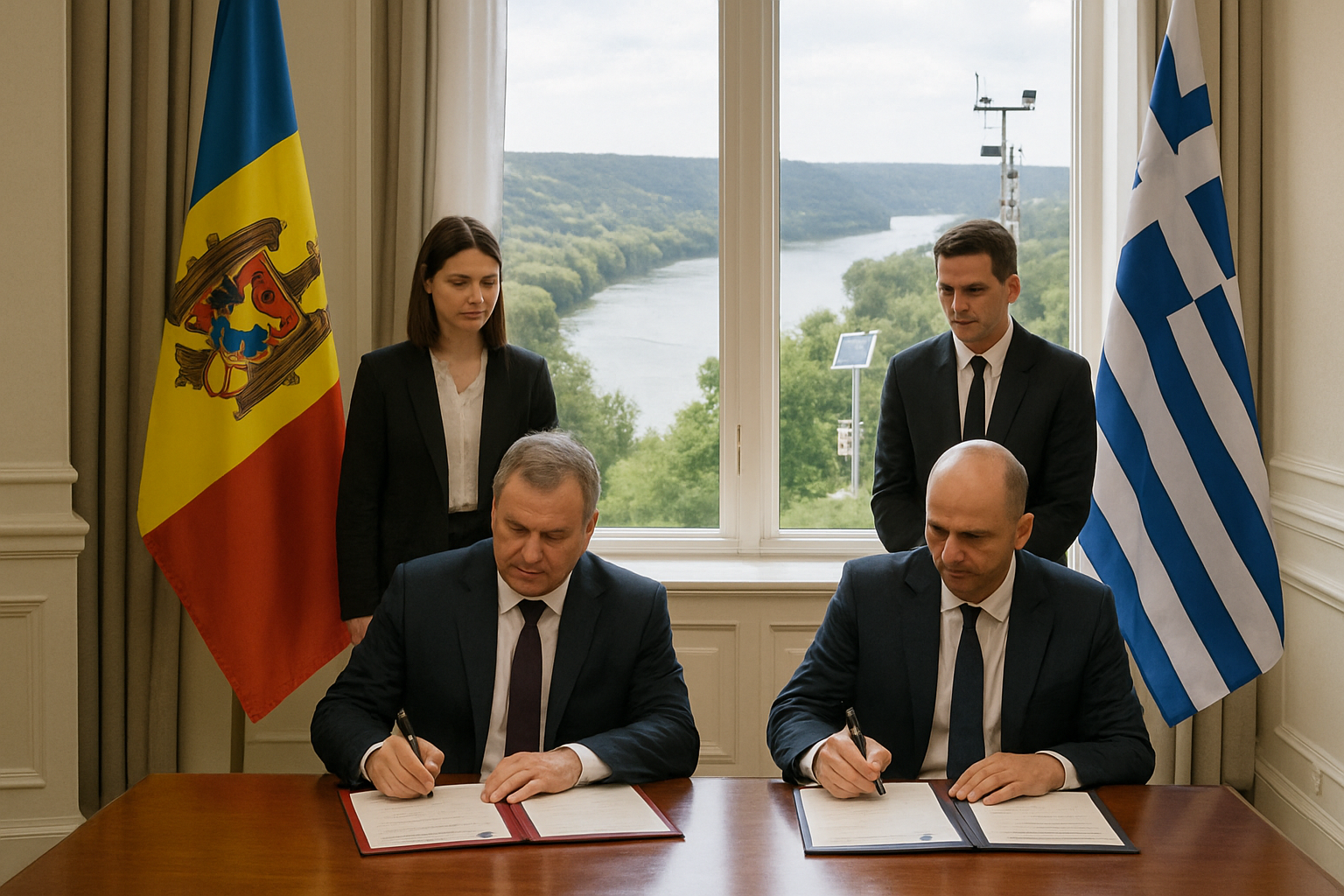
Moldova continues to expand its regional partnerships while confronting serious environmental challenges, as the nation signs a landmark cultural cooperation agreement with Greece while European officials directly blame Russia for ongoing Dniester River pollution affecting millions.
The dual developments on March 16, 2026, highlight Moldova's complex geopolitical position as it pursues European integration while managing the environmental consequences of the ongoing conflict in neighboring Ukraine. The timing underscores how cultural diplomacy and environmental security have become intertwined in Moldova's strategic agenda.
Historic Cultural Partnership with Greece
In a significant diplomatic milestone, Moldova's Ministry of Culture and Greece's Ministry of Culture signed a comprehensive memorandum on heritage conservation and restoration. The agreement, formalized by Moldova's Culture Minister Cristian Jardan and his Greek counterpart Lina Mendoni, establishes frameworks for collaborative preservation projects and knowledge sharing between the two nations.
The partnership represents Moldova's continued effort to strengthen ties with EU member states while building technical expertise in cultural preservation. Greece brings extensive experience in archaeological conservation and heritage management, skills increasingly valuable as Moldova works to preserve its own cultural sites amid regional instability.
"This cooperation opens new possibilities for our cultural heritage preservation," said Ministry sources, noting that the partnership includes provisions for joint restoration projects, technical training exchanges, and shared research initiatives.
Environmental Crisis Deepens on Dniester
While Moldova celebrated diplomatic progress, European Commissioner for Enlargement Marta Kos delivered a stark assessment of the ongoing environmental crisis affecting the Dniester River basin. In direct comments that reflect growing European frustration with Moscow's actions, Kos explicitly blamed Russia for the pollution crisis that has contaminated waters serving millions of people.
The Dniester contamination represents part of a broader pattern of environmental damage linked to Russian military operations in Ukraine. The river system, which provides critical water resources for both Moldova and Ukraine, has experienced unprecedented pollution levels since the conflict began, with petroleum-based contaminants threatening long-term water security.
"The environmental damage we're seeing in the Dniester basin is a direct result of Russian actions. This is not just an environmental crisis—it's an act of environmental warfare that affects innocent civilians."
— Marta Kos, European Commissioner for Enlargement
The pollution crisis has forced Moldova to implement emergency water management measures and seek international assistance for environmental remediation. Romanian authorities have provided technical support through the National Water Administration (ANAR), demonstrating the transboundary nature of the environmental challenge.
Broader Environmental Context
The Dniester pollution occurs amid what environmental experts describe as an unprecedented convergence of environmental challenges across Eastern Europe. Moldova's situation exemplifies how the ongoing conflict has created compound environmental crises affecting multiple countries simultaneously.
Previous reports documented a 15-day environmental emergency declared in March 2026 due to petroleum contamination in the Dniester River basin. The current contamination includes heavy hydrocarbons, benzene derivatives, and toxic combustion compounds that threaten regional water supplies for decades to come.
Environmental Minister Alexandru Munteanu has directly blamed the Russian Federation for what he termed an "environmental catastrophe affecting millions." The crisis requires massive international cooperation and sustained financial commitment, with cleanup efforts estimated to cost tens of billions of dollars over 20-30 years.
Regional Cooperation as Response Strategy
Moldova's cultural agreement with Greece represents part of a broader strategy of deepening regional partnerships to build resilience against ongoing challenges. The nation has increasingly turned to bilateral cooperation with EU members to address both immediate security concerns and long-term development goals.
This approach aligns with trends across Eastern Europe, where countries are strengthening ties with established EU partners while managing the fallout from regional conflicts. The cultural cooperation framework provides a foundation for broader collaboration on issues ranging from environmental protection to economic development.
Greece's expertise in managing cultural heritage sites while dealing with environmental challenges offers valuable lessons for Moldova. The Greek experience with balancing preservation needs against economic pressures provides templates that could prove crucial as Moldova continues its European integration process.
International Support Mechanisms
The European Union has increasingly positioned itself as Moldova's primary partner in addressing both environmental challenges and development objectives. Commissioner Kos's direct attribution of blame to Russia reflects a hardening of European positions on environmental accountability in conflict zones.
Romania's technical assistance through ANAR represents the type of practical cooperation that has become essential for managing transboundary environmental crises. These partnerships demonstrate how regional cooperation can provide rapid response capabilities that might otherwise be unavailable.
The cultural agreement with Greece includes provisions for EU funding and technical assistance, showing how cultural diplomacy increasingly serves as a vehicle for broader European integration initiatives. This multilayered approach allows Moldova to build institutional capacity while addressing immediate challenges.
Looking Ahead
The dual developments highlight Moldova's complex navigation of regional challenges while pursuing European integration goals. The nation continues to face the immediate consequences of environmental damage while building long-term partnerships that could prove crucial for future stability and development.
Environmental experts warn that the Dniester contamination represents a preview of 21st-century environmental challenges where war-related damage combines with climate-driven changes to create compound crises. Success in managing these challenges depends on rapid deployment of technical expertise and enhanced regional cooperation mechanisms.
The cultural partnership with Greece provides a framework for the type of institutional cooperation that experts say will be essential for addressing future challenges. As Moldova continues its European integration process, such partnerships offer pathways for building resilience against both environmental and security challenges.
As March 2026 developments demonstrate, Moldova's future depends on successfully balancing immediate crisis management with long-term partnership building. The nation's ability to maintain diplomatic momentum while addressing environmental emergencies may determine its trajectory in an increasingly complex regional environment.