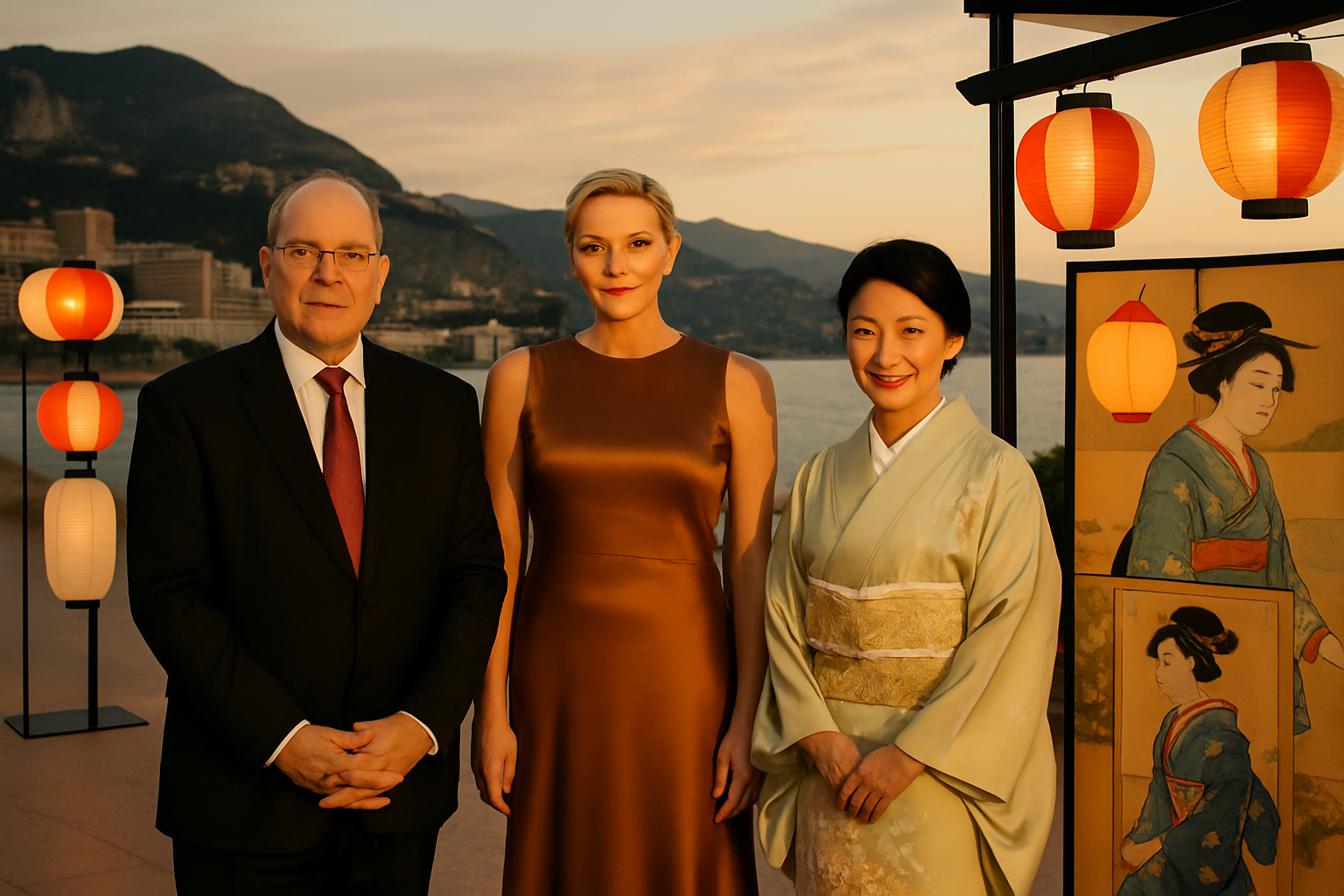
Monaco transformed into a bridge between European and Japanese cultures as Prince Albert II and Princess Charlene officially launched a year-long celebration of Japanese heritage on Saturday, March 21, marking two decades of diplomatic ties between the Principality and Japan in the presence of Her Imperial Highness Princess Akiko of Mikasa.
The opening ceremony on the esplanade of the Grimaldi Forum offered a striking introduction to an ambitious cultural program that positions Monaco as a sophisticated hub for international diplomatic cooperation. The event represents the culmination of Monaco's strategic approach to cultural diplomacy, building on the principality's established reputation for fostering meaningful international relationships through artistic and cultural exchange.
A Weekend of Royal Engagements
The Japanese cultural celebration marked the beginning of an exceptionally busy weekend for Monaco's royal family, demonstrating their commitment to maintaining the principality's position as both a premier destination for international diplomacy and high-society social events.
Saturday evening saw Monaco's Princely Family gather for the 70th edition of the Rose Ball, one of the Principality's most established charity events, held at the Salle des Étoiles at Sporting Monte-Carlo. Presided over by Princess Caroline of Hanover, the evening once again raised funds for the Princess Grace Foundation, continuing a tradition that has become synonymous with Monaco's commitment to philanthropic excellence.
Earlier that day, Their Serene Highnesses Prince Albert II and Princess Charlène played a central role in the closing moments of the 14th Sainte Dévote Tournament, attending the final stages of the competition and presenting prizes at Stade Louis II. Their presence brought extra significance to one of Monaco's best-known youth sporting events, as Singapore claimed the championship title in this prestigious international youth football tournament.
Cultural Diplomacy at Its Finest
The Japanese cultural festival represents more than mere ceremonial exchange—it embodies Monaco's sophisticated understanding of how cultural programming can strengthen diplomatic relationships while creating lasting economic and social benefits. The presence of Princess Akiko of Mikasa, a member of Japan's imperial family known for her cultural patronage, underscores the importance both nations place on this anniversary.
"Cultural exchange creates the foundation for lasting diplomatic partnerships that extend far beyond formal agreements."
— Prince Albert II, during the opening ceremony
The year-long program planned around this anniversary includes exhibitions, performances, and educational exchanges designed to deepen understanding between Mediterranean and Japanese cultures. This initiative builds on Monaco's established track record in cultural diplomacy, including recent successful collaborations with nations across multiple continents.
Monaco's Cultural Renaissance Continues
The Japanese cultural celebration continues what cultural observers have termed the "February 2026 Cultural Renaissance," a period of unprecedented international cultural activity coordination. Monaco has positioned itself at the forefront of this movement, leveraging its unique status as a sovereign city-state to create meaningful cultural bridges between diverse traditions.
Recent months have seen Monaco host the Oceanographic Museum conference focusing on heritage and environmental awareness, the revival of the vintage Espresso Riviera train service achieving 92% occupancy with over 3,000 passengers, and preparations for major cultural festivals including the inaugural "Mona in Wonderland" electronic music festival.
Strategic International Positioning
Monaco's approach to cultural diplomacy reflects broader strategic thinking about how smaller nations can achieve outsized international influence through sophisticated programming that honors traditions while embracing contemporary opportunities. The principality has demonstrated remarkable organizational sophistication in managing simultaneous high-level cultural events, diplomatic ceremonies, and accessible community programming.
The success of events like the Rose Ball—now in its 70th edition—alongside innovative cultural partnerships demonstrates Monaco's ability to balance exclusive luxury experiences with meaningful international engagement. This dual approach has created sustainable models for cultural tourism that benefit both the local community and international visitors.
Economic and Social Impact
Cultural events of this magnitude generate significant economic multiplier effects through enhanced tourism, international media attention, and reputation enhancement. Monaco's investment in authentic cultural programming combined with luxury hospitality creates competitive advantages that position the principality beyond a traditional luxury destination toward serious cultural credibility.
The integration of business and cultural programming reflects Monaco's sophisticated understanding of how international relations function in the 21st century, where soft power influence through cultural exchange often proves more durable than purely commercial relationships.
Looking Forward
As Monaco embarks on this year-long celebration of Japanese culture, the principality continues to demonstrate how strategic cultural programming can serve multiple functions simultaneously: strengthening diplomatic ties, creating economic opportunities, fostering community engagement, and maintaining international relevance in an increasingly connected world.
The success of the opening weekend, which seamlessly integrated Japanese cultural celebration with the prestigious Rose Ball and international youth sports, suggests that Monaco's approach to cultural diplomacy will continue to set standards for how smaller nations can maximize their international influence through comprehensive cultural engagement.
With additional cultural initiatives planned throughout 2026, including expanded partnership programs and educational exchanges, Monaco's commitment to cultural diplomacy appears positioned to yield lasting benefits for both the principality and its international partners, creating templates for sophisticated cultural cooperation that other nations may seek to emulate.