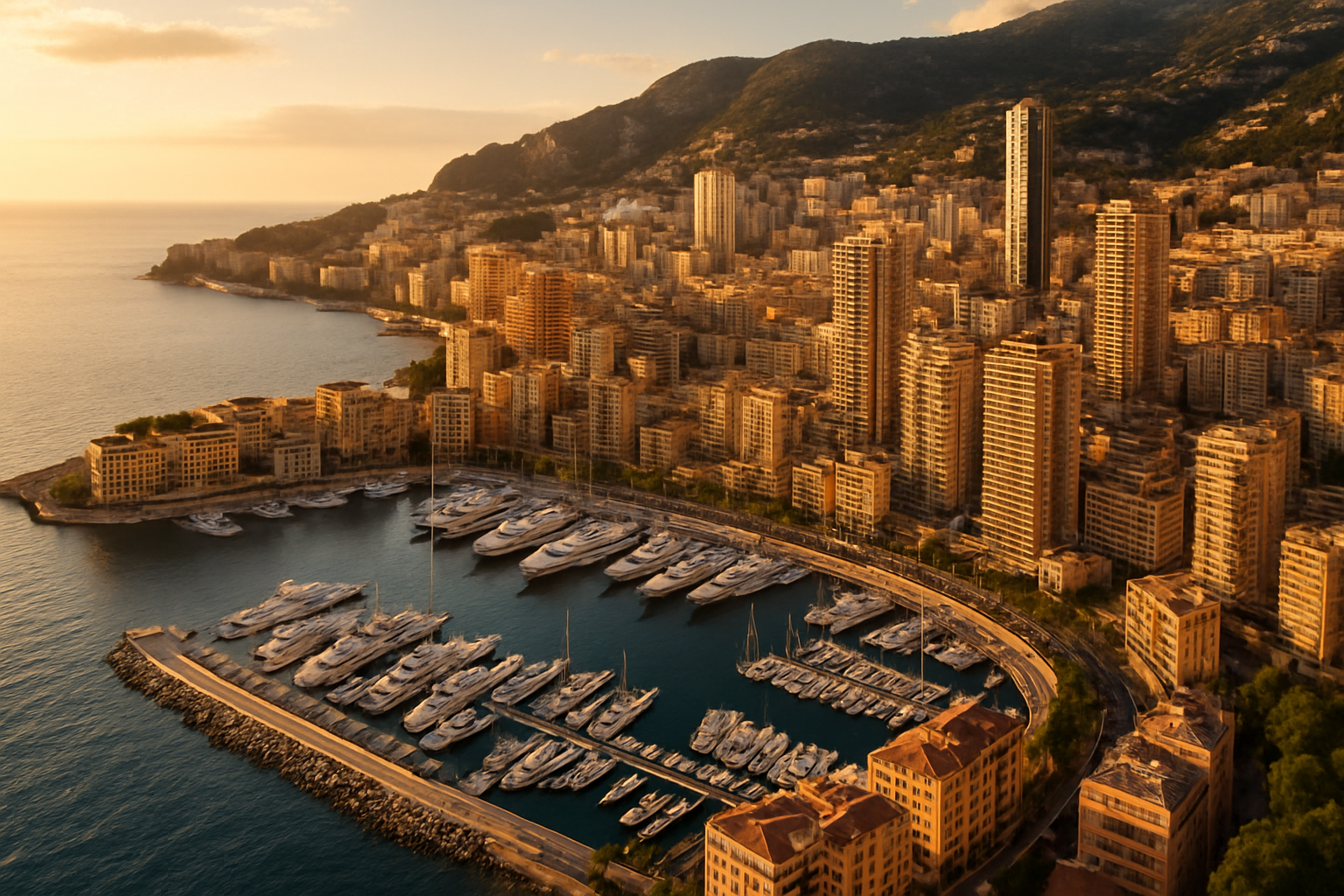
Monaco's luxury property market has reached historic heights with new homes commanding an average price of €40 million while Monte-Carlo district alone generated over €1 billion in resales during 2025, marking the strongest performance in over a decade for the world's most exclusive real estate market.
According to the Monegasque Institute of Statistics (IMSEE) Real Estate Observatory released Monday, February 16, the Principality's property market demonstrated remarkable resilience with 493 transactions worth €5.9 billion in 2025, representing a 5.8% increase from the previous year. The data reveals a fundamental restructuring of the market, with fewer new construction sales offset by an explosive 24.2% surge in the secondary market.
Monte-Carlo Leads Historic Resale Surge
Monte-Carlo, Monaco's crown jewel housing district, recorded 164 resales in 2025—the highest figure since 2014. With 314 buildings and 453,500 square meters of living space, Monte-Carlo represents the neighborhood with the most housing stock in Monaco, ahead of La Rousse's 389,300 square meters. Together, these two districts account for more than 40% of the Principality's total residential space.
The resale boom in Monte-Carlo contributed significantly to breaking the €1 billion threshold for secondary market transactions, demonstrating renewed confidence in Monaco's luxury property sector after several lackluster years. Nearly two out of every five apartments resold in the Principality were located in Monte-Carlo, cementing its position as the epicenter of Monaco's real estate activity.
New Construction Reaches Stratospheric Price Levels
While resales surged, the new construction market told a different story characterized by reduced volume but astronomical pricing. New homes in Monaco now average €40 million, representing what analysts describe as a permanent shift toward ultra-luxury positioning rather than temporary market fluctuation.
"This observatory allows us to objectively assess the dynamics of the market over the past year, and we know how much attention this market attracts,"
— Céline Caron-Dagioni, Minister of Equipment, Environment and Urban Planning
The dramatic pricing reflects Monaco's unique position as a luxury safe haven amid global economic uncertainties. Despite the construction industry facing negative profit margins worldwide due to rising material costs, Monaco's appeal to ultra-high-net-worth individuals has sustained demand at unprecedented price levels.
Mediterranean Development Pressures
Beyond Monaco's rarefied atmosphere, the broader Mediterranean region faces different but related property market pressures. In Malta, controversial development projects illustrate the tension between growth and community preservation that characterizes modern real estate markets.
The Fgura Council recently secured a €1 million land deal with developer Joseph Portelli for a major apartment complex featuring 60 apartments, 14 penthouses with pools, shops, and commercial outlets. The revised application represents a compromise between development ambitions and public space requirements, with the local council successfully negotiating for dedicated community areas within the massive project.
This development, located on the corner of Triq Hompesch and Triq Nazzereno Farrugia, includes basement garages and an underground reservoir, demonstrating the sophisticated infrastructure required for modern high-density housing. The project reflects broader trends toward comprehensive mixed-use developments that balance residential demand with community needs.
Market Dynamics and Global Context
Monaco's €5.9 billion market performance occurs within a broader global context of housing market challenges. While the Principality maintains its ultra-luxury positioning, other European markets face affordability crises and supply constraints that Monaco has effectively insulated itself from through exclusivity and strict development controls.
The apparent stability in Monaco's total transaction volume—maintaining €5.9 billion despite market restructuring—masks the significant shifts occurring beneath the surface. The marked decline in new construction sales was almost perfectly offset by the explosion in secondary market activity, suggesting a mature market where existing properties increasingly change hands rather than expanding the housing stock.
Investment Implications and Market Outlook
For investors and real estate professionals, Monaco's performance provides several key insights into luxury property markets. The €40 million average for new homes establishes a new benchmark for ultra-prime real estate, while the robust secondary market indicates strong liquidity and confidence among existing property owners.
The concentration of activity in Monte-Carlo and La Rousse—accounting for over 40% of all housing stock—demonstrates the continued importance of location even within an already exclusive market. These established neighborhoods benefit from infrastructure, prestige, and accessibility that newer developments may struggle to replicate.
Malta's approach to managing development pressures through public-private partnerships offers a different model for balancing growth with community interests. The Fgura project's integration of public space requirements within private development could serve as a template for other Mediterranean markets facing similar pressures.
Future Challenges and Opportunities
Looking ahead, Monaco's property market faces the challenge of sustaining growth at these elevated price levels while managing the practical constraints of limited land availability. The shift from new construction to secondary market activity may represent a natural evolution toward a more mature market structure.
The global construction crisis affecting material costs and developer margins has largely bypassed Monaco due to the Principality's unique demand dynamics. However, even Monaco cannot remain entirely immune to broader economic forces, making the 2026 performance crucial for determining whether current trends represent a new normal or temporary peak.
As Minister Caron-Dagioni noted, the attention Monaco's property market attracts reflects its role as a bellwether for luxury real estate globally. The record-breaking 2025 performance sets a high bar for continued growth while highlighting the resilience of truly scarce, premium assets in an uncertain economic environment.